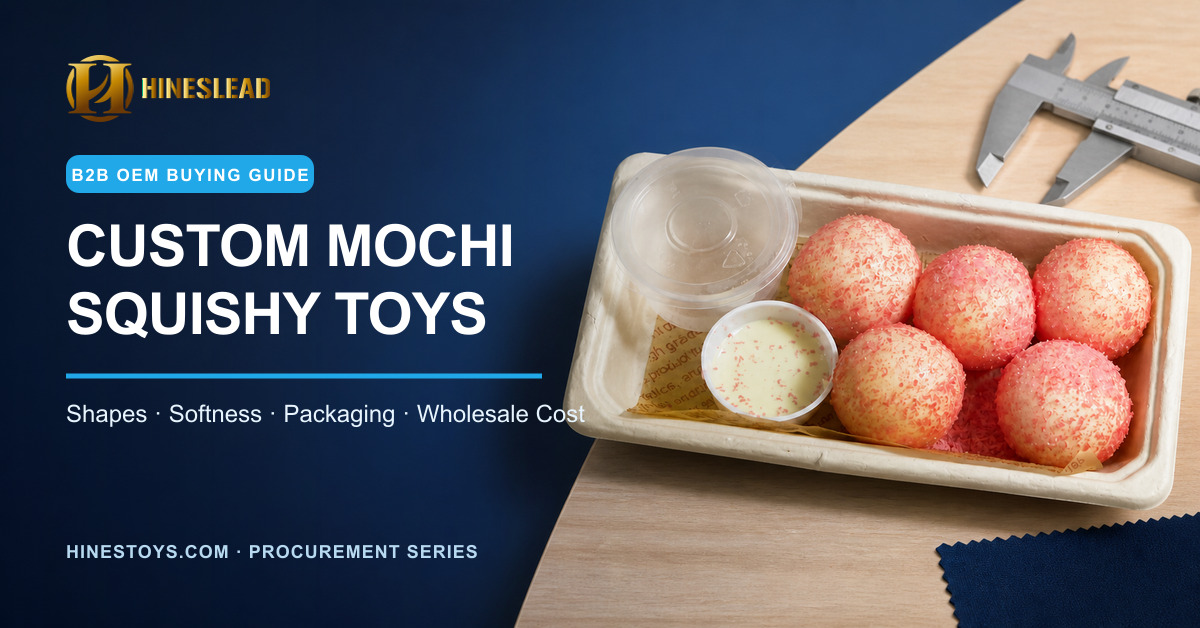
On a product page, a mochi squishy seems almost self-explanatory. It is little, soft, and made to be squeezed. Then a purchasing team places it on a desk. Somebody notices that the ears are difficult to pack. The logo will not sit flat. Six colors mean six assortment counts. A clear box that looked inexpensive has pushed the freight estimate in the wrong direction. This is the real beginning of the project.
I wrote this guide for the people who have to turn that sample-table conversation into an order: importers, distributors, retail teams, promotional buyers, subscription-box planners, and brand owners. It follows the decisions in the order they tend to arise during development, including the awkward ones that a glossy catalog skips. You will see how shape, hand feel, decoration, packing, testing, and quotation details connect—and why the lowest number in a price column may not survive a fair comparison.
The central lesson is straightforward: define the use case before asking a factory to define the toy. A counter display for an independent gift shop, a branded event giveaway, and a collectible series sold online may all use a TPR mochi construction, but they should not share the same specification.
Quick answer: what should a buyer specify first?
Before requesting a quote, decide five things: the selling channel, intended age grading, target dimensions, decoration level, and pack format. Then give the supplier a realistic order quantity by design and color—not only one combined total. These details determine whether an existing shape, a modified mold, or a fully custom mold is the sensible starting point.
For an early comparison, ask each supplier to quote the same three scenarios: an existing design with standard color, an existing design with custom color or print, and a new molded design. Ask for tooling, samples, testing, inner packing, export carton, and freight to be listed separately. A transparent quote is more useful than a low number that later acquires six surcharges.
Planning a mochi squishy range?
Send your shape references, target market, quantity by design, packaging idea, and delivery country. We will help turn them into a quote-ready brief.
Request a TPR Sample Set & OEM Quote →Table of contents
- Mochi squishy construction in plain language
- Shape strategy: stock, modified, or fully custom
- Softness, wall design, and the feel buyers are really selecting
- Color, face details, printing, and surface finish
- Packaging formats and landed-cost consequences
- How wholesale cost is built
- Sampling and quality-control plan
- Market compliance and documentation
- Supplier comparison and RFQ checklist
- Frequently asked buyer questions
1. What is a mochi squishy, from a sourcing point of view?
In trade conversations, “mochi squishy” usually describes a compact, very soft, stretchable squeeze toy with a smooth or lightly textured skin. Many products in this family are made from a thermoplastic rubber formulation, commonly shortened to TPR. That material label is only a starting point.Different formulations, pigments, processing conditions, wall sections, surface treatments, and product geometries can produce noticeably different results.
This matters because a buyer cannot approve “TPR” as if it were a complete specification. Two samples can both be described as TPR yet feel different when pinched, return differently after compression, attract different amounts of dust, and behave differently after being stored in a warm carton. The commercial brief should therefore describe observable performance as well as material category.
A useful tactile brief might say: soft enough for one-hand compression; no uncomfortable hard seam under normal handling; surface should release cleanly from a kraft-paper insert; no visible oil transfer after sealed-pack storage under the agreed test condition; printed facial features remain legible after a defined rub test. Those points can be inspected. “Premium softness” cannot.
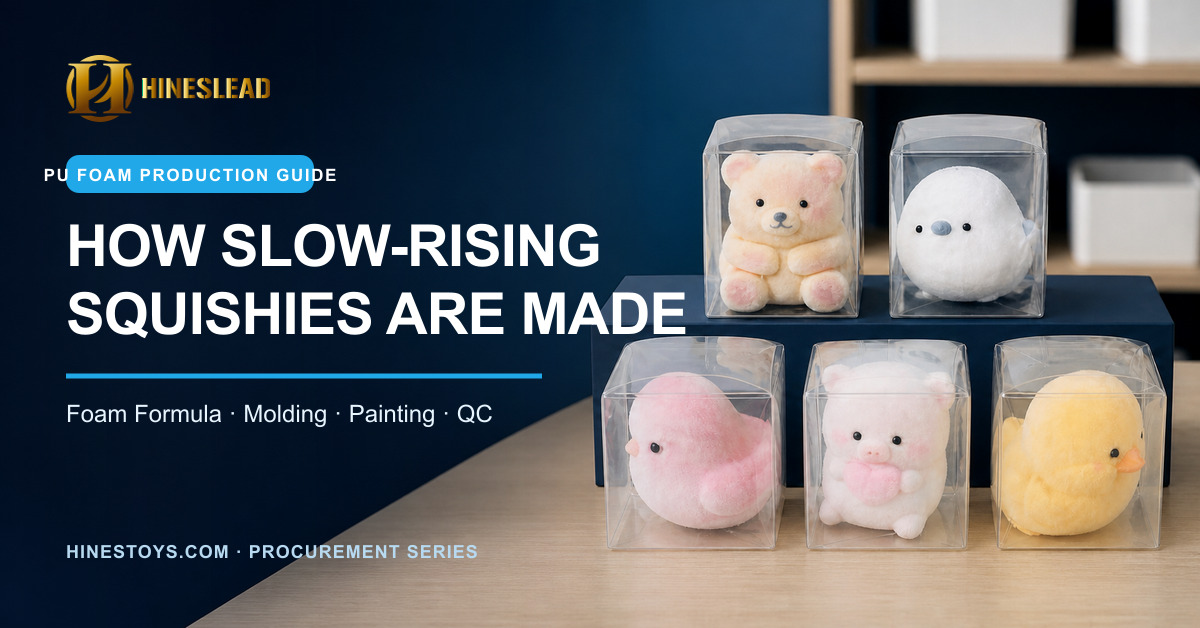
Mochi toys also should not be confused with slow-rising polyurethane foam products. TPR pieces generally deform and recover in a different way; they feel denser and more elastic, while PU foam is selected when a slow, visible rise is the hero feature. If the retail concept depends on a ten-second recovery video, start with the foam route. If it depends on a tiny, smooth, stretchable pocket character, TPR may fit better.
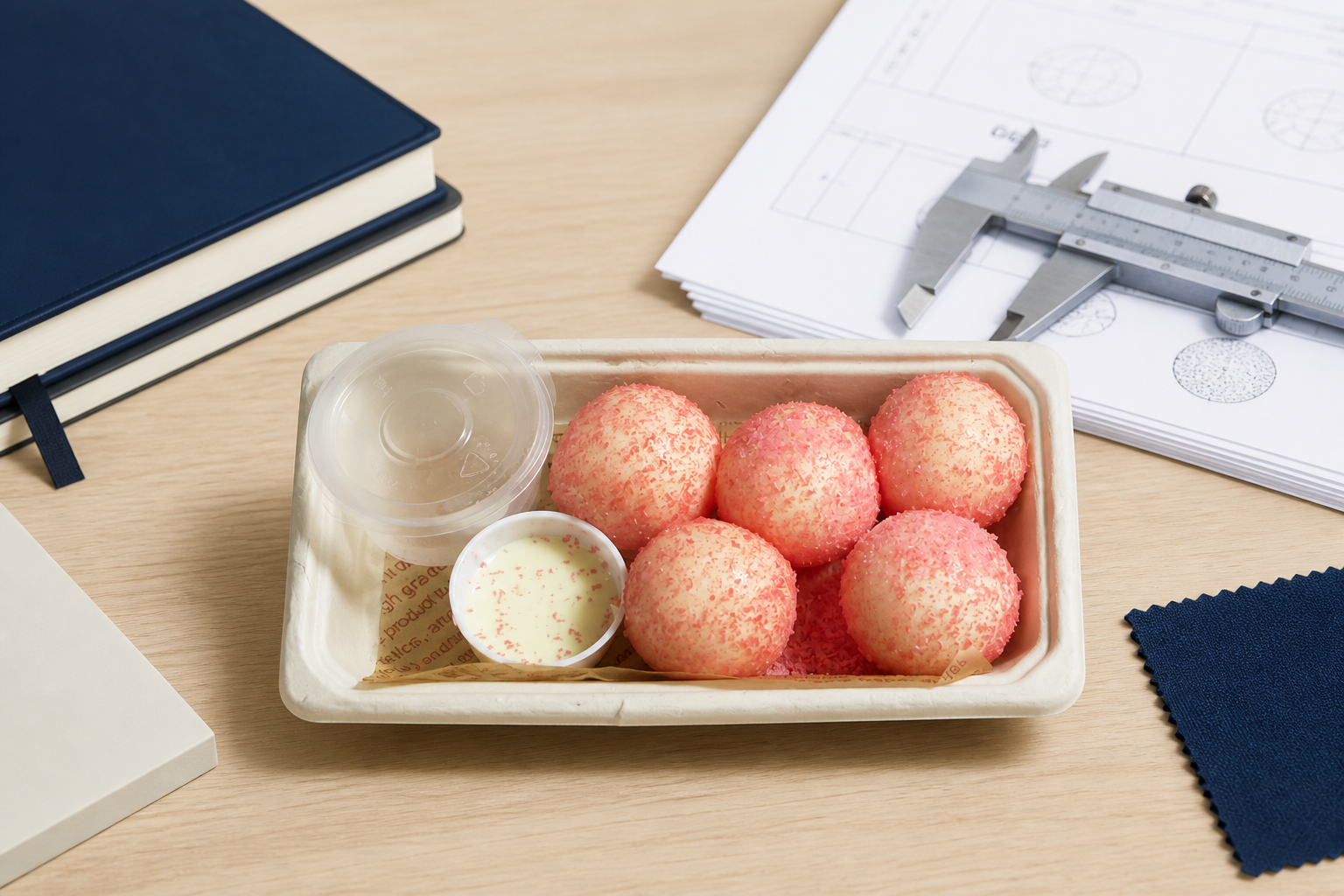
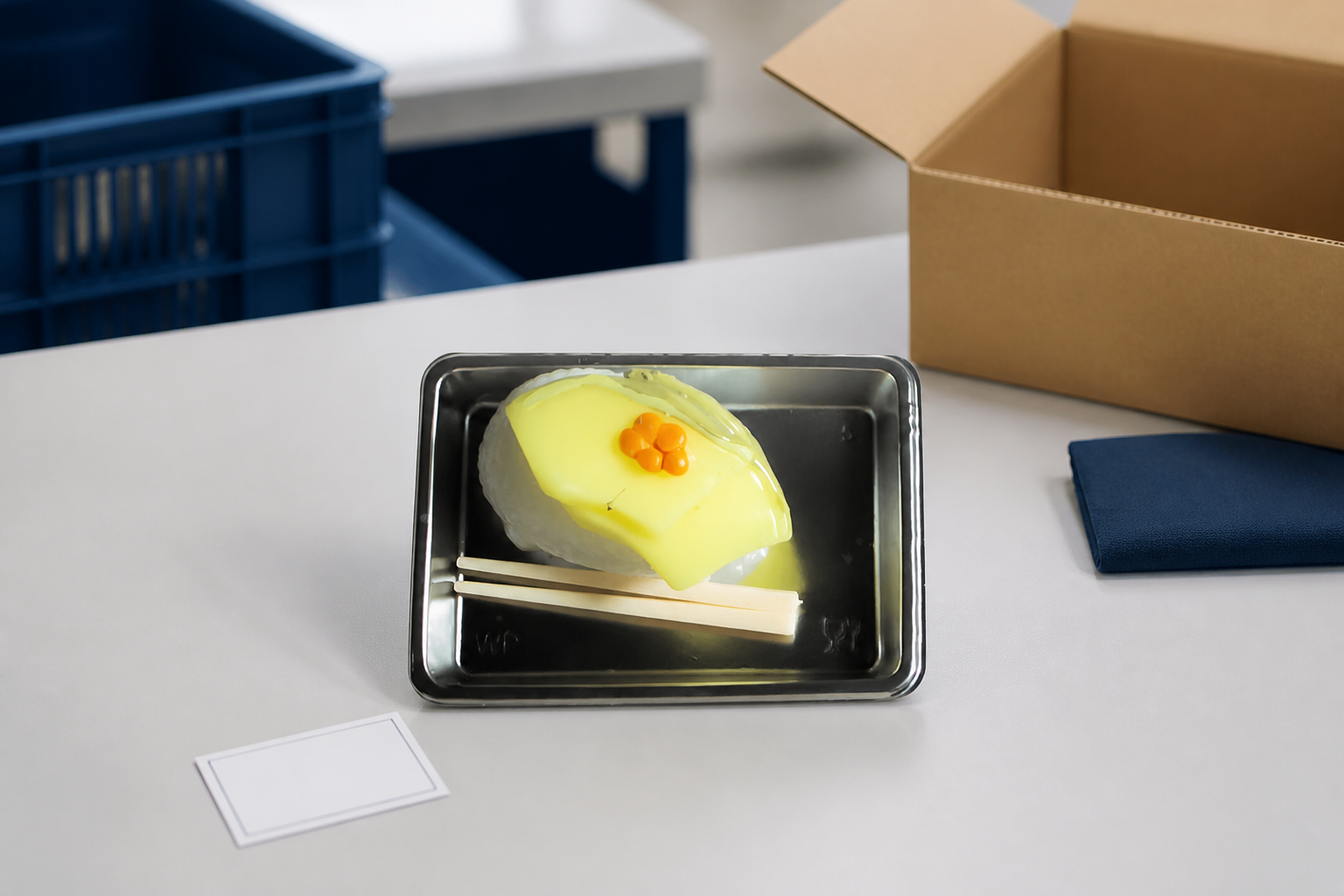
Scene based on an actual Hines Toys product image; the setting illustrates a buyer sample review.Final specifications must be confirmed against approved production samples.
2. Begin with the commercial job, not the catalog photograph
Good development starts with an uncomfortable question: what must this item do after it leaves the factory? A collectible must look consistent across a series. A checkout item must be understood in two seconds. A promotional giveaway needs dependable logo visibility. A mail-order product needs packaging that controls dust and resists deformation. A school-oriented sensory assortment needs an especially careful age, labeling, and compliance review.
Write one sentence that defines the job. For example: “A six-character food-themed series for North American specialty retail, individually bagged, displayed in a counter box, with a target retail price supplied by the buyer.” That sentence gives a supplier more direction than a folder containing fifty disconnected screenshots.
The channel changes the right trade-offs. A clear individual box improves display and protects the surface, but it adds volume and packing labor. A simple sealed bag is compact, but it may not deliver the shelf presence a licensed character needs. A blind-bag series can encourage repeat purchase, yet assortment control, code management, and master-carton ratios become more demanding. None of these formats is universally best.
Brand owners should also separate “visual identity” from “manufacturing complexity.” A character can be memorable because of silhouette, color, and two facial details. It does not need twelve tiny projections and four microprinted panels.When a design is simplified intelligently, it often becomes easier to mold, decorate, inspect, pack, and recognize at thumbnail size.
3. Shape strategy: existing, modified, or fully custom
There are three practical development routes.
Existing shape
An existing shape is the fastest route to a physical sample and a realistic cost baseline. It works well for assortment testing, smaller launches, seasonal promotions, or buyers who care more about theme and packaging than exclusive geometry. Custom color, a printed mark, a tag, or branded packaging may still create differentiation.
Ask whether the shown mold is active, whether the photographed version reflects current production, and whether the shape can be supplied without third-party intellectual property. A stock-looking character is not automatically free of rights concerns. The buyer remains responsible for artwork and brand permissions it supplies.
Modified platform
A modified platform retains a proven basic volume but changes ears, toppings, a face panel, texture, or another recognizable feature. This can reduce development uncertainty, although it may still require new tooling. It is useful when the buyer wants a family resemblance across several SKUs without paying for six unrelated engineering paths.
Do not assume “small change” means small tooling work. Moving a projection can alter parting, demolding, wall flow, and decoration access. Ask the technical team to confirm the mold plan before the commercial team promises a launch date.
Fully custom shape
Fully custom work is appropriate when the silhouette is central to the brand or when an owned character must be reproduced. The cleanest process begins with orthographic views, dimensions, color references, and a statement of which details are critical. A single perspective rendering hides too much.
For a character project, identify protected zones: eye spacing, logo clear space, trademarked contour, color boundary, and any feature that cannot be softened for manufacturing. Then identify flexible zones. A supplier can solve moldability more effectively when it knows where adaptation is permitted.
4. Geometry decisions that quietly affect cost and durability
Tiny shapes can create large production differences. Deep undercuts complicate demolding. Very thin ears, stems, or tails may feel weak or fill inconsistently. Abrupt transitions between thick and thin areas can influence appearance and deformation. A recessed face may be harder to print cleanly than a gently raised face. A narrow bottom may make the toy fall over in a display photograph.
Review geometry in four views, not just the hero view. Turn the sample upside down. Squeeze it near the seam. Put it in the proposed tray. View it through the packaging window. Photograph it at the size used on a mobile product page. This exposes practical problems before an enthusiastic team approves a beautiful render.
A sensible design review covers:
- overall length, width, height, and weight range;
- expected parting line and gate or closure area;
- minimum practical thickness at appendages;
- areas that receive printing or hand-applied decoration;
- base stability and orientation inside the pack;
- deformation risk during bulk packing;
- features that could be detached or become small parts after abuse testing;
- cleaning and dust-attraction expectations;
- acceptable visual variation for soft molded pieces.
The supplier should not be asked to make safety decisions in a vacuum. Intended age, market, foreseeable use, and packaging claims belong in the buyer’s brief because they influence the applicable assessment.
5. What “soft” should mean on a purchase specification
Softness is a sensory impression, not a universal number. Durometer can help characterize a material, but the reading alone does not describe a hollow toy’s hand feel. Wall construction, geometry, temperature, surface finish, and compression method all influence perception. A buyer comparing samples should therefore use both instrumental information, where appropriate, and a repeatable handling protocol.
Create a reference sample set. Mark one piece as the approved benchmark, photograph it, assign a sample code, and keep it away from general handling. Record the date and storage condition. When later samples are compared, use the same sequence: visual inspection, surface touch, one-hand compression, release, stretch within the agreed range, seam check, and recovery observation.
Use descriptive boundaries. “Slightly firmer than approved sample” is useful only when both parties possess the same approved sample. “No hard spot felt during compression at the top, sides, and base” is even clearer. If a specific force or deformation test is important, agree the fixture and procedure with a qualified laboratory or technical team rather than inventing a number in the purchase order.
Temperature deserves attention. A soft elastomer may feel different in a cold inspection room than in a warm container. Samples should be conditioned consistently before comparison, and transit simulation should match the risks of the actual route. The goal is not to eliminate every change; it is to know which change is commercially acceptable.
6. Surface feel, dust, tack, and storage
Mochi products invite touch, so surface behavior becomes part of the product promise. Yet “silky,” “dry,” “powdery,” and “tacky” mean different things to different teams. Put a vocabulary and a test beside the adjective.
For instance, agree how the sample will be exposed to paper fibers or household dust, how it will be cleaned, and what appearance is acceptable afterward. Check whether the toy sticks to the inner bag after storage. Inspect for transfer to printed cards and discoloration where two colors touch. If the surface is treated, confirm whether that treatment changes the artwork adhesion or cleaning instructions.
Storage trials should use final packaging materials.A sample sitting loose on a desk tells you little about contact between the toy and a printed polybag, PVC window, coated paper insert, or another colored piece. Put production-representative samples into the proposed pack, condition them for an agreed period, and inspect odor, color transfer, tack, distortion, and print condition.
This is also why broad words such as “non-toxic” or “eco-friendly” should not be placed on a product page simply because a raw-material vendor used them in a brochure. Claims must match the finished product, target market, applicable limits, and supporting evidence. Request documents by exact material, color, batch, and finished construction where relevant.
7. Color development: make approval measurable
Screens lie. Lighting lies. Even two printed color books can look different after years of use. For custom color, specify the reference system and viewing condition, then approve a physical sample. A digital RGB value is helpful for communication but is not a sufficient production tolerance.
Ask the supplier how pigment affects translucency and surface appearance. A pale opaque pink, a clear candy pink, and a fluorescent pink may require different formulation and may behave differently under lighting. If a series contains six characters, decide whether every piece shares one base color family or each SKU receives an independent match.
Record acceptable and unacceptable boundaries. A sealed “master” color sample, signed shade card, or instrument-based tolerance can be used depending on project needs.For a small launch, the buyer may choose a visual standard under controlled light. For a national retail program, a more formal color-control plan may be justified.
Color decisions also affect assortment risk. A carton that contains equal quantities of six colors is easy to explain, but retail demand may not be equal. If sales data suggests two hero colors, ask whether the factory can pack a weighted ratio and how carton labels will identify it. A pretty assortment that cannot be replenished intelligently creates markdowns later.
8. Faces, logos, and decoration methods
Decoration should be designed around touch and deformation. A mark placed on the most frequently stretched zone faces a harder life than a small feature on a protected recess. Very fine lines may look excellent in artwork and weak on a soft curved surface. Large solid areas can reveal coverage variation. Multiple colors add registrations, handling, and inspection points.
For each decorated area, define:
- artwork file and version number;
- print position measured from a physical feature;
- maximum print area or approved scale;
- spot colors or approved physical reference;
- acceptable registration shift;
- rub or adhesion test method if required;
- treatment of minor pinholes, edges, and curved boundaries;
- whether the mark must remain readable after compression.
A logo can be molded, printed, applied on packaging, or combined across product and pack. The cheapest-looking route is not always the lowest-cost route.A tiny two-color logo on a highly curved toy may require more handling than a crisp one-color mark on a header card. Ask for both options and compare the total delivered presentation.
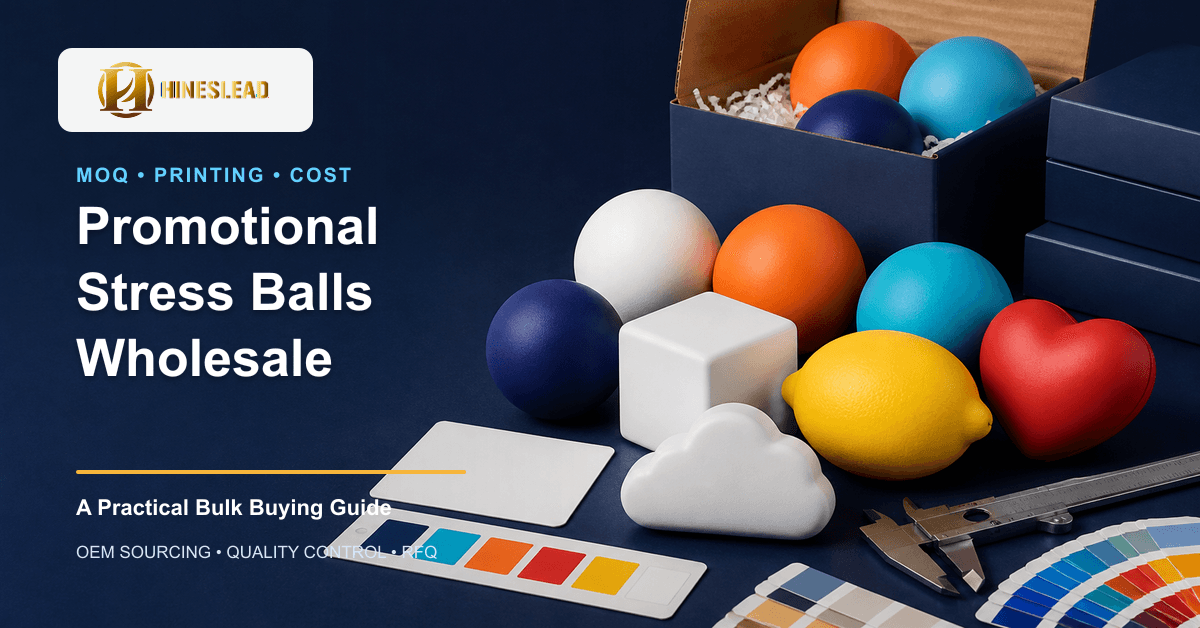
When a buyer wants a promotional program, the related guide on custom stress balls with logo explains artwork size and marking questions for another squeeze-toy format. Buyers comparing campaign quantities can also review promotional stress balls wholesale before deciding whether a mochi character or a classic ball gives the better printable area.
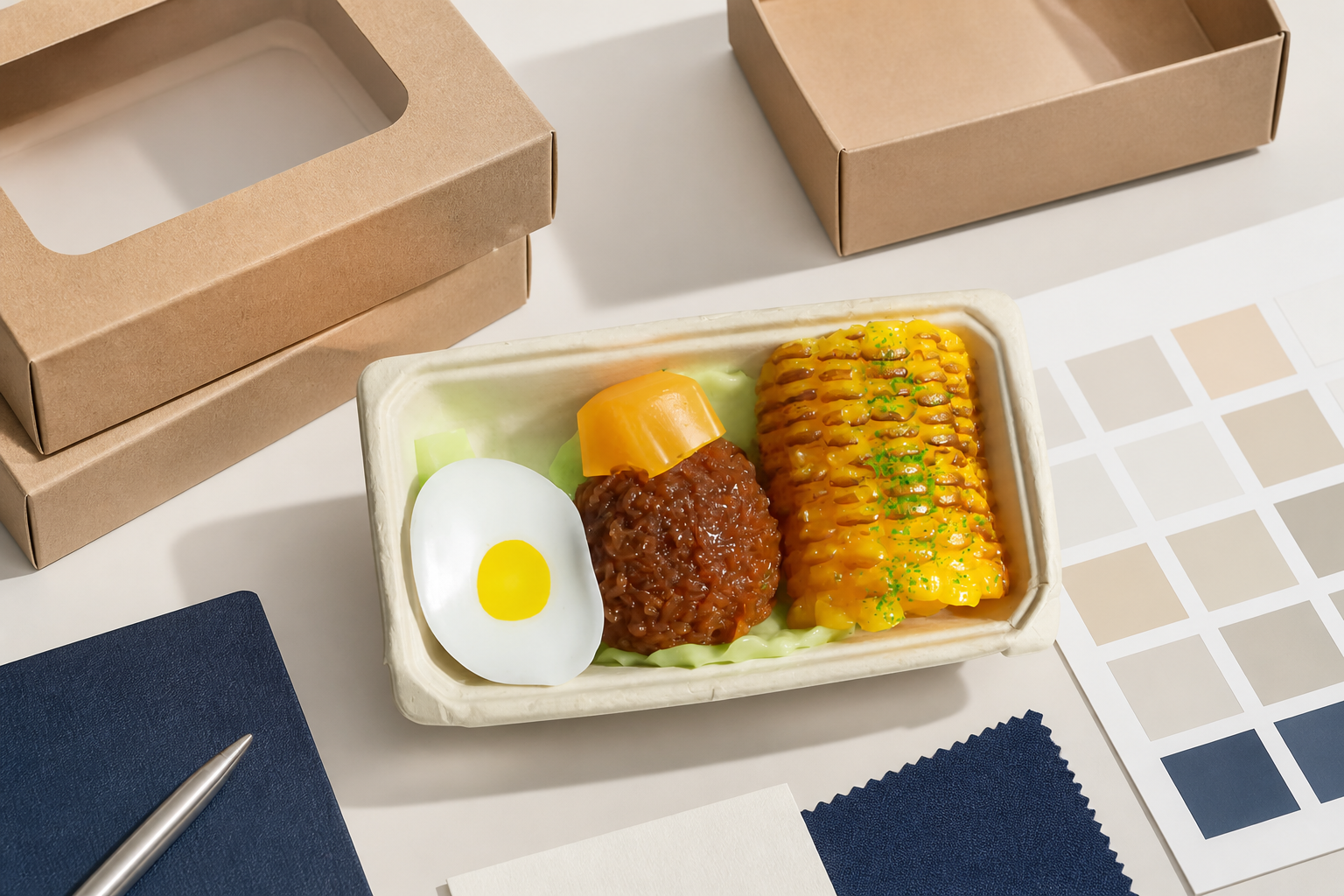
Packaging should be reviewed with the actual product, not as a separate graphic-design exercise.
9. Packaging: protection, display, and freight in one decision
Packaging has four jobs: protect the surface, communicate the product, support the channel, and travel efficiently. Buyers often brief only the second job.
Individual sealed bag
A sealed bag uses little cube and can control direct dust exposure. It may suit promotional distribution or a product placed inside a larger kit. Confirm film type, thickness, sealing performance, warning and label space, suffocation-warning requirements where applicable, print treatment, and whether the product contacts inked areas.
Header bag
A header bag adds hanging display and brand space. Ask for the finished hole type, board thickness, fold, staple or adhesive arrangement, and pack-out orientation. Test the hanger with the loaded product, not an empty mockup. A header that tears during transport is not saved by attractive graphics.
Clear box or window carton
Rigid presentation can improve shelf appearance and reduce direct handling. It also increases unit cube and may create scuff or contact points. Request a packed sample and a transit test based on the distribution route. Inspect the product after it has remained in contact with the window or insert.
Blind bag and collectible assortment
Blind packaging changes operations. The buyer must define character ratios, code policy, display-box count, master-carton mix, and whether a consumer can identify the variant from the outside. If the assortment includes a rare design, document the ratio and verify it during packing. Marketing language should reflect the actual pack-out system.
Counter display
A counter display is both packaging and furniture. Test loaded stability, tear resistance at folds, replenishment access, barcode visibility, and the way the last few units present. Confirm whether the display ships erected or flat and who performs the assembly. The lower material price of flat shipment may be offset by labor at the distribution center.
10.A packaging specification table buyers can use
| Decision | What to state in the RFQ | What to approve before production |
|---|---|---|
| Unit protection | Bag, tray, box, tissue, or insert | Packed sample after storage check |
| Retail display | Hang hole, counter box, shelf-ready tray | Loaded display and barcode position |
| Artwork | Dieline version, language, colors, legal copy | Signed print proof and physical sample |
| Assortment | Quantity of each design/color per inner and master | Pack-out map and carton label |
| Shipping | Inner count, master count, carton limits | Carton dimensions, gross/net weight, drop plan |
| Traceability | Lot/date/PO marking requirement | Location, format, legibility |
| Consumer information | Age grade, warnings, importer details, care | Market-specific compliance review |
The right pack is discovered by testing the whole system. A thicker box can reduce crushing yet increase dimensional freight. A tighter tray can stop movement yet leave a pressure mark. A matte card may fit the brand but shed fibers onto a tacky surface. Make decisions with packed samples and actual logistics assumptions.
11. How wholesale cost is really built
The quoted unit price is usually the visible result of several cost blocks. Ask to see those blocks whenever the project is custom.
Tooling and development. New geometry may require design work, prototype work, molds, fixtures, print plates, or packaging dies. Clarify ownership, maintenance, storage period, and what happens if the design changes after approval.
Material and piece weight. Size alone does not determine material use. Geometry and construction matter. Request the approved piece-weight range as part of the specification and confirm whether sample weight represents production.
Color and decoration. Standard colors and simple features may be economical; custom shades, multiple print passes, complex masking, or hand-applied details add work and yield risk.
Packing labor and materials. Individual boxes, inserts, tags, assortment sorting, display loading, and barcode labels add both direct cost and process steps.
Testing and compliance documentation. Laboratory scope depends on market, age grading, materials, and product design. A report for another product or color is not automatically transferable. Ask a qualified laboratory to define the applicable scope.
Quality assurance. More formal inspections, tighter cosmetic standards, pre-shipment testing, or third-party inspection add cost but may reduce downstream loss. Specify the plan instead of assuming it is included.
Freight and duty. Packaging cube, gross weight, shipping mode, destination, Incoterm, and customs classification affect landed cost. Compare proposals on the same Incoterm and destination.
12.Why MOQ is not one fixed factory number
MOQ is often the intersection of material preparation, color setup, decoration setup, packaging print quantities, labor efficiency, and commercial risk. A supplier may accept a modest total quantity but require a minimum per color. A custom printed box supplier may impose a higher minimum than the toy production itself. A six-design assortment can therefore have a very different workable quantity from a single-shape order.
Ask four separate questions: minimum total order, minimum per molded color, minimum per printed design, and minimum custom-packaging run. Then ask for a paid-sample or pilot option if the normal minimum exceeds launch needs.
Buyers can reduce minimum pressure by using an existing shape, one base color, a universal package, a sticker or sleeve for differentiation, and fewer launch SKUs. These are not compromises if they preserve the proposition. They are ways to place the expensive uniqueness where consumers can see it.
Do not split a first order into too many variants merely to make the catalog look larger. Every variant needs forecasting, sample approval, production control, carton identification, inventory space, and replenishment logic. Three clear winners are often more valuable than twelve nearly identical pieces.
13. A quote-comparison example
Imagine three proposals for 12,000 units across four designs. Supplier A shows the lowest piece price but excludes printed boxes, inspection, and testing. Supplier B includes a clear box and display tray but quotes a larger carton. Supplier C has a higher tooling fee and a lower repeat-order piece price.
Normalize the bids in a worksheet:
| Cost line | Supplier A | Supplier B | Supplier C |
|---|---|---|---|
| Tooling and artwork setup | Enter separately | Enter separately | Enter separately |
| Production units | Same quantity and mix | Same quantity and mix | Same quantity and mix |
| Unit packaging | Same specification | Same specification | Same specification |
| Display/inner/master cartons | Include all levels | Include all levels | Include all levels |
| Required testing | Same agreed scope | Same agreed scope | Same agreed scope |
| Inspection | Same inspection level | Same inspection level | Same inspection level |
| Freight to same destination | Same mode/Incoterm | Same mode/Incoterm | Same mode/Incoterm |
| Estimated landed total | Calculate | Calculate | Calculate |
Then compare risk as well as arithmetic: sample accuracy, response quality, change-control discipline, packaging engineering,documentation traceability, and how clearly assumptions are stated. A supplier who identifies an ambiguity before quoting may be protecting the project, not slowing it down.
14. Sampling: build evidence in stages
A disciplined sample path prevents one beautiful handmade sample from becoming a false promise.
Reference sample. Use an existing product to align on material family, scale, and tactile direction.
Design or prototype review. Check proportion, branding, printing access, and packaging fit. A prototype may not represent final material or production finish; label it honestly.
Mold sample. Review actual geometry, seam, closure, wall behavior, color, and decoration plan. List every change in one controlled document.
Pre-production sample. This should represent approved material, color, decoration, and pack as closely as agreed. Give it a version code and approval date.
Production reference. Keep a sealed sample for inspection. Buyer and supplier should be able to identify the same standard without relying on a chat history.
Limit feedback rounds by consolidating comments. “Eyes too low” is vague; a marked photograph and dimension from a stable datum are actionable. When a change is approved, update the specification and artwork version. Do not leave an old PDF, a revised message, and a newer screenshot competing for authority.
15. Quality control for soft TPR pieces
Incoming checks can cover material identification documents, approved color references, packaging components, and artwork versions.In-process checks can monitor piece weight, gross appearance, seams, print position, and assembly or filling steps if the design uses them. Final checks should reflect the approved specification and shipment condition.
A buyer-oriented final inspection commonly considers:
- quantity and assortment ratio;
- dimensions and weight within agreed tolerance;
- color against approved physical reference;
- surface condition, dust, tack, oil transfer, stains, or foreign matter;
- seam condition, deformation, leakage where relevant, and detached features;
- print completeness, position, registration, and adhesion;
- pack orientation, seals, labels, barcodes, and warnings;
- inner and master-carton count;
- carton marks, gross weight, and dimensions;
- functional handling after the agreed conditioning and test sequence.
Cosmetic expectations need photographs. Soft molded products can show minor process marks that are irrelevant to use but visible under extreme lighting. Define critical, major, and minor defects with examples. The point is not to accept poor work; it is to prevent two teams from applying different hidden standards at the shipping deadline.
A final inspection should connect the approved toy, approved packaging, assortment map, and shipment labels.
16. Compliance is a product-and-market question
Toy requirements vary by destination, intended age, materials, construction, and claims.For the United States, the CPSC explains that the toy safety standard is the version of ASTM F963 incorporated by 16 CFR part 1250; toys primarily intended for children 12 and under generally require third-party testing by a CPSC-accepted laboratory and certification to applicable rules. Buyers should check the current CPSC toy safety business guidance and define the applicable sections with a qualified laboratory.
For the European Union, the European Commission states that toys must meet the safety criteria in the applicable toy legislation before being placed on the market and must also comply with other relevant EU legislation. The Commission’s toy safety legislation page should be reviewed because chemical requirements and legal frameworks can change.
For markets using ISO-based requirements, ISO 8124-1 addresses mechanical and physical safety aspects for toys and links requirements to age and foreseeable use. It is not a substitute for a destination-specific compliance plan.
Do not request “all certificates.” Send the laboratory the product, age grading, destination markets, materials, coatings, packaging, and claims. Ask it to identify the applicable standards and sample quantity. Reports should be matched to the finished product and production variables.A report bearing a supplier’s name but covering a different substrate, coating, color, or design may not support your shipment.
17. Comparing mochi with other custom toy constructions
The best material family is the one that fits the experience, decoration, risk profile, and channel. Buyers building broader programs can use the following links to compare routes.
| Sourcing route | Typical reason to investigate it | Hines Toys category or guide |
|---|---|---|
| Compact elastic squeeze pieces | Small collectible shapes and soft stretchable feel | TPR squeeze toy manufacturer and mochi squishy toys wholesale |
| Slow visible recovery | Video-friendly deformation and larger sculpted forms | slow rising squishy toys wholesale and squishy toy manufacturer |
| Molded PU concepts | Customized shapes, densities, and painted surfaces | PU foam toys manufacturer and custom PU foam toys |
| Lightweight closed-cell foam | Cut or molded foam formats for specific projects | EVA foam toys wholesale and custom EVA foam toys |
| Silicone concepts | Washable-feel or molded silicone sensory formats, subject to design | silicone squishy toy manufacturer and custom silicone sensory toys |
| Soft sewn characters | Textile expression, embroidery, fill, and complex silhouettes | custom plush toy manufacturer and plush toys OEM |
| Sports and ball promotions | Recognizable sports forms and broad logo opportunities | custom foam sports toys and foam balls wholesale |
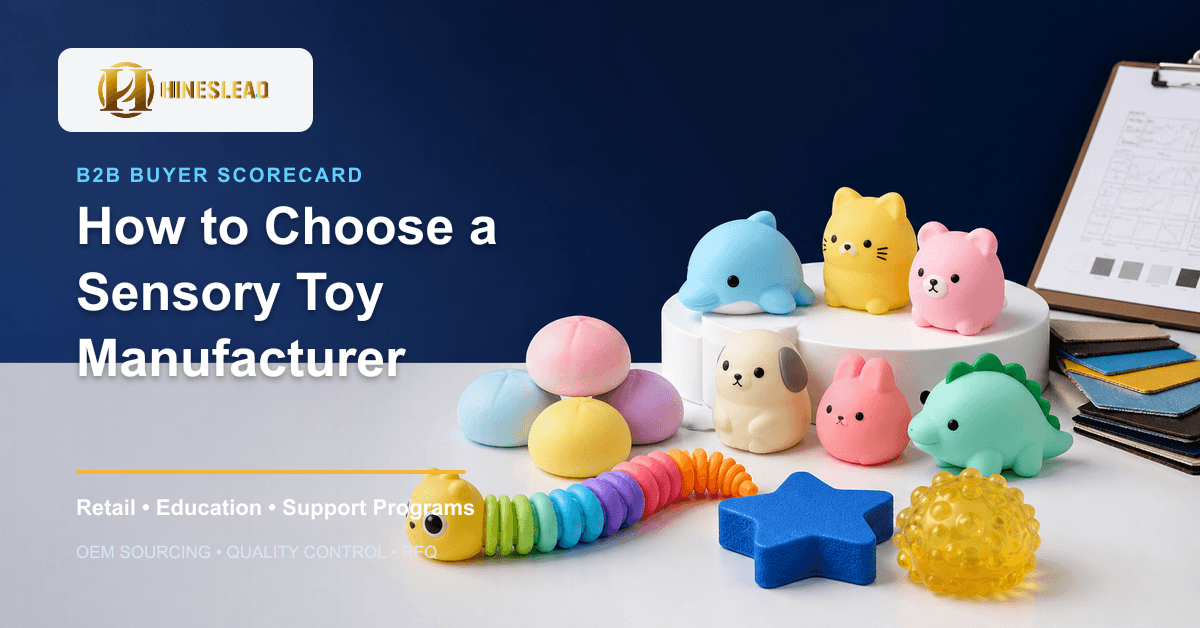
Buyers who are still defining the category can browse sensory toys wholesale options or discuss material selection with a sensory toy manufacturer. For mixed-material programs, an OEM toy manufacturer China sourcing discussion should begin with the performance brief, while a broader custom toy manufacturing project should separate requirements by SKU and construction.
These links are starting points, not an assertion that one construction can replace another.Ask for representative samples and compare them against the same use case.
18. The RFQ that gets a useful answer
An efficient inquiry gives the supplier enough information to expose assumptions. Include:
- Company, country, website, and buyer role.
- Sales channel and intended consumer context.
- Destination market and intended age grading.
- Product reference images plus ownership or authorization statement for protected artwork.
- Target dimensions and approximate weight or tactile reference.
- Existing, modified, or custom shape route.
- Quantity by design and by color, plus repeat-order expectation.
- Color reference and decoration files.
- Packaging type, languages, barcode, assortment, and display needs.
- Required compliance plan or laboratory discussion.
- Target shipment date, destination, and preferred Incoterm.
- Items to quote separately: tooling, samples, print setup, packaging, testing, inspection, and freight.
If target price is commercially important, share the range together with the required pack and market. A factory can then propose value engineering—perhaps one print color instead of three, a common pack across the assortment, or a slight size adjustment. Hiding the target while requesting a fully engineered proposal often produces irrelevant options.
19. Red flags in a mochi squishy quotation
Be cautious when a quote does not identify the product dimensions, piece weight, material description, decoration, pack, assortment, Incoterm, or validity period.Be cautious when a test report is offered before the final material and construction are known. Be cautious when a custom mold is promised with no design review or when every change is described as free.
Other warning signs include a unit price that silently assumes bulk loose packing, an MOQ expressed only as a grand total, no distinction between prototype and production sample, and no process for artwork approval. A serious supplier may ask more questions at the beginning. Those questions reveal the work needed to protect the order.
Buyers should also avoid creating their own risk through fragmented approvals. If the product manager approves shape, marketing approves color, compliance approves labels, and purchasing changes packaging without a single controlled specification, the supplier receives conflicting authority. Assign one approved document set to the purchase order.
20. A practical development timeline
Calendar estimates should be built from gates, not slogans. A project may include brief confirmation, design review, tooling, mold trial, corrections, color matching, decoration trials, packaging proof, pre-production sample, testing, production, final inspection, and shipping. Some stages can overlap; others should not.
Ask the supplier to state both working time and buyer-response assumptions. Three days of factory work can become three weeks if artwork changes repeatedly. Protect the launch date by setting internal approval owners and response deadlines. Freeze the specification before mass production and define how post-freeze changes affect price and schedule.
For seasonal launches, work backward from the date inventory must reach the distribution center, not the date it leaves the factory. Add laboratory time, inspection, documentation, customs, and contingency appropriate to the route. The cheapest rush plan is usually the one that was not needed.
21. Frequently asked questions
What is the best MOQ for a first mochi squishy order?
There is no universal best number. The commercial minimum depends on mold status, color count, decoration, packaging, and assortment. Ask for minimum total quantity and minimum per design/color, then compare an existing-shape pilot with the fully custom route. Order enough to produce and pack consistently without creating inventory that the channel has not validated.
Can I put my logo directly on a mochi toy?
Often a mark can be considered, but feasibility depends on curvature, stretch, surface treatment, size, and required durability. Supply vector artwork and desired dimensions. Ask for a decorated sample and an agreed adhesion or rub assessment. Packaging may deliver a sharper brand result when the toy’s usable print area is very small.
How do I compare softness between two suppliers?
Use conditioned physical samples and the same handling sequence. Keep a sealed approved reference. Record construction, dimensions, weight, and any relevant material or instrument data. Avoid choosing by material name alone.
Are stock mochi shapes ready to ship immediately?
Not necessarily. “Stock design” can mean an existing mold, not finished inventory.Confirm active mold status, current sample availability, production schedule, color, pack, and shipment date in writing.
Which package prevents dust best?
A sealed individual pack limits direct exposure, but film compatibility, seals, ink contact, and storage behavior still need review. Test the actual toy in the actual pack. Dust control also depends on production and packing conditions.
Can one laboratory report cover every color and character?
Do not assume it can. Coverage depends on materials, pigments, coatings, construction, market rules, and the laboratory’s technical judgment. Give the lab a complete SKU matrix and ask it to define representative sampling.
How should tooling ownership be documented?
Put ownership, use restrictions, maintenance, storage duration, modification charges, and end-of-life treatment in the commercial agreement. Connect the tooling record to the design revision and purchase order.
What information helps Hines Toys quote quickly?
Send your company and market, product reference, intended age, size, quantity by design, colors, logo/artwork, packaging, compliance needs, destination, and target date. If any point is unknown, label it as open rather than letting it become a hidden assumption.
Final buyer checklist
Before issuing a purchase order, confirm that the approved package includes the product drawing or reference, dimensions, weight range, material description, color standard, decoration file, print position, packaging dieline, assortment map, carton details, labels, warnings, testing responsibility, inspection standard, sample code, Incoterm, delivery window, and change-control procedure.
The strongest mochi squishy programs are not built by squeezing cost out of one line on a quotation. They are built by aligning the tactile experience, recognizable design, pack format, compliance plan, and channel economics before production. That alignment gives a supplier something concrete to manufacture and gives a buyer something concrete to inspect.
Turn your mochi squishy idea into a quote-ready specification
Tell us the destination market, intended age, shape, dimensions, quantity by design, color, decoration and packaging. Attach artwork or reference photos, and ask for costs to be separated clearly.
Contact Hines Toys for Samples & an OEM Quote →