Custom Stress Balls with Logo: OEM Manufacturing and Bulk Buying Guide
The first stress-ball sample on a buyer's desk can look perfect. Trouble often appears later: the logo creeps toward a seam, the blue looks purple under exhibition lighting, or a tightly packed carton leaves the pieces flat on one side. None of that is obvious in a catalog thumbnail. This guide is for the people who must place the order and answer for the result—promotional distributors, brand teams, retailers, event agencies and importers. It explains how to specify, sample and inspect custom stress balls with logo before a modest giveaway turns into an expensive rework.
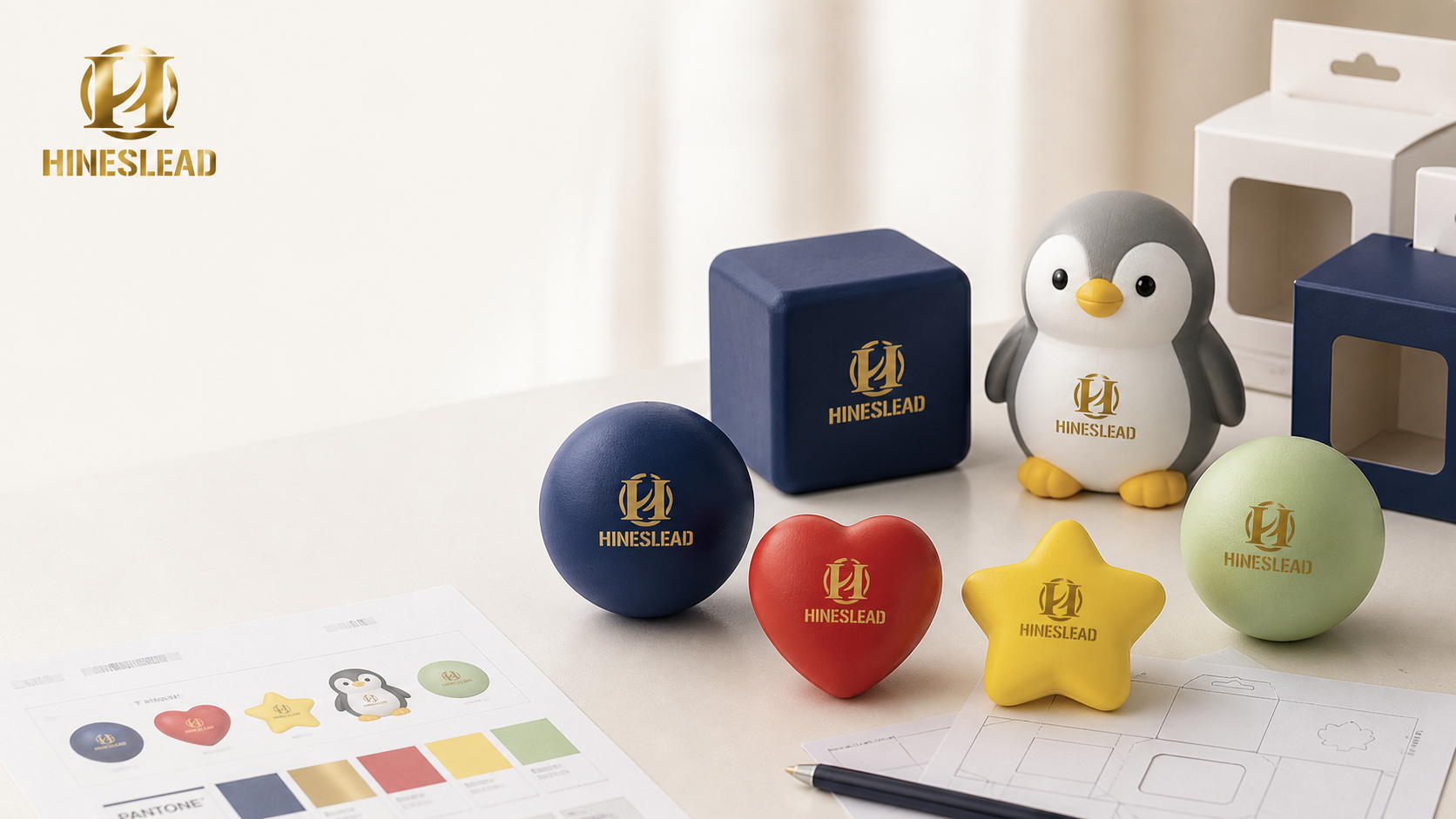
Why use one at all? Because it earns repeated contact. A leaflet may be read once; a desk toy is picked up again and again. The shape can also do some of the communication before the recipient reads the logo—a house for real estate, a helmet for construction, a heart for a clinic or a ball for a sports campaign. That repeated handling is exactly why buyers should care about squeeze feel, recovery, odor, surface finish and print adhesion. A good-looking photograph is only the starting point.
There is one early question that cannot be postponed: what is the item, legally, in its destination market? Calling it a corporate gift does not automatically remove toy or consumer-product duties. A cute shape may attract children even when the campaign was written for adults. The answer depends on design, claims, age grading, channel and country.HINESLEAD can build the manufacturing brief and coordinate samples, while the buyer and responsible economic operators should confirm the final requirements with a competent laboratory or adviser.
Begin with the Campaign, Not the Catalog
Start with the moment the recipient gets the product. Will booth staff hand out ten thousand pieces in two days? Will a retailer hang one unit from a peg? Is it going into a mailed welcome kit, a clinic reception area or an employee box? Those are not minor marketing details. They change the unit-cost ceiling, packaging, print complexity, documentation, acceptable defects and, above all, the schedule.
An exhibition with a fixed opening date rewards restraint. A stock round ball, one print color and bulk packing may be the commercially smart choice, even if the custom penguin sketch is more exciting. A repeat retail line is different; tooling, a proprietary silhouette and a stronger pack can repay their development cost over several orders.Healthcare, education and child-facing programs need another layer of review because the claims, age grade and supporting documents can influence the entire project.
Walk through distribution before asking for a quote. In a mailed kit, the ball must not crush a card or arrive with a box-shaped dent. At a conference, staff need to open cartons quickly and the item must fit the attendee bag. Retail adds a barcode, legal copy, shelf orientation and sometimes tamper control. Direct mail brings thickness and postage limits. Put these facts in the RFQ; resolving them after sample approval usually means paying twice.
Turn marketing language into a measurable brief
“Premium,” “very soft” and “bright blue” sound clear in a meeting. On an inspection sheet they mean almost nothing. Replace them with a signed sample, a physical color reference, dimensions, a mass range, the measured print area and photographs of acceptable and rejected surfaces. Do the same for recovery and odor. Foam will never behave like a machined metal part; the useful question is how much variation the project can live with.
| Campaign question | Procurement decision | Specification output |
|---|---|---|
| Who receives it? | Audience, age, channel, and foreseeable use | Age grade, claims, warnings, test plan, size, and feel |
| What should it communicate? | Brand message and visual hierarchy | Shape, color, logo location, print method, and packaging copy |
| How long should it stay useful? | Giveaway versus retail durability | Surface, print adhesion, rebound, storage, and inspection criteria |
| How will it be distributed? | Event, mail, retail, employee kit, or multipack | Pack-out, barcode, carton, dimensional weight, and transit checks |
| When must it arrive? | Fixed event date or flexible launch | Stock or custom route, approval calendar, shipping buffer |
| What is the real budget? | Target landed cost rather than unit price alone | Tooling, printing, package, test, inspection, freight, and contingency |
Request an Artwork Proof and Bulk Quote
A workable first email needs more than a logo and quantity.Include the shape, a physical color target, print positions, pack style, destination and the date goods must arrive—not merely the preferred ship date. HINESLEAD can then price a stock-shape route, a custom-mold route or both, with the trade-offs stated openly.
✉ Get a Custom Stress Ball QuoteUnderstand the Foam Before Approving the Logo
Most classic promotional squeezies are molded polyurethane foam, yet “PU foam” is not a single recipe. Change the mix, mold temperature, part thickness, cure or coating and the same basic material can feel surprisingly different. Geometry matters too. A round ball pushes material evenly; a mascot with a thick body and thin ears will not compress or recover in quite the same way.
Bring a physical reference whenever feel matters. A capable PU foam toys manufacturer can compare it with two or three controlled trials and explain what the new shape may change. If there is no reference, request deliberately different options—firmer, medium and softer is more useful than three samples all described as “soft.” Number the chosen sample and make it the golden standard.
Density, mass, and perceived quality
Density is useful, but buyers sometimes give it too much authority. A skin or coating can make a lower-density part feel firm, and a badly filled part can feel uneven regardless of the number on a material sheet. Record finished weight and dimensions beside the tactile sample.Then squeeze the awkward areas—the points of a star, a mascot's ears, the corners of a cube. That is where inconsistent filling usually becomes obvious.
Rebound behavior
Do not time rebound casually with one person squeezing harder than another. Condition the samples in the same room, compress them in the same manner, hold for an agreed period and then watch the return. The method need not be laboratory theatre, but it must be repeatable. Keep the approved piece beside the trial units because a stopwatch alone does not capture the way the surface and thin sections recover.
A classic promotional ball and slow rising squishy toys wholesale may sit in the same buyer's range, but they answer different briefs. A squishy toy manufacturer may emphasize a very slow return and a decorative coating. A trade-show order may value a clean logo, fast output and predictable packing instead. Slower is not automatically better; it is simply a different tactile promise.
Surface skin, coating, and odor
Run a finger over the surface before studying the logo. Is it tacky? Does it collect lint? Can you see the mold seam under normal light? Small pores may be natural to the process, while large pinholes, rubbed coating or contamination are another matter. Odor also needs a real packing trial. A sample that smells acceptable after airing can be unpleasant after a week in a sealed bag, so inspect it in the package the customer will open.
Compression and storage
Efficient cartons lower freight, but there is a point where “efficient” becomes damaging. Ask the factory to pack a trial carton at the proposed count and leave it closed for a realistic period. Open it, photograph the first hour and check again the next day. A promotional distributor may be able to air the goods before an event. A retailer usually expects every piece to look saleable as soon as the inner carton opens.
| Foam attribute | What the buyer experiences | How to control it |
|---|---|---|
| Softness / squeeze force | Ease of one-hand compression | Golden sample, agreed conditioning, comparison method |
| Recovery | Fast return or slow-rise effect | Defined compression/hold/release observation and approved range |
| Mass and fill | Substantial feel and even compression | Finished weight range, dimensional checks, cut-section validation during development if appropriate |
| Surface | Matte/gloss feel, pores, seam, coating, dust pickup | Visual defect guide, rub check, reference sample |
| Color | Brand consistency across the lot | Physical color standard, lighting condition, approved tolerance |
| Odor | Unboxing impression and usability | Material control, cure/ventilation, sealed-pack evaluation, acceptance language |
| Compression recovery | Presentation after shipment | Realistic pack-out and storage simulation |
Stock Shapes or a Custom Mold?
A silhouette can sell the idea before the logo is readable. It can also create most of the project's technical risk. Round balls, hearts, stars and other stock molds shorten development and have known print areas. A proprietary product shape or mascot may be far more memorable, but it brings engineering, tooling and another approval loop.The right answer depends on whether distinctiveness or delivery certainty matters more for this order.
When a stock shape is the better decision
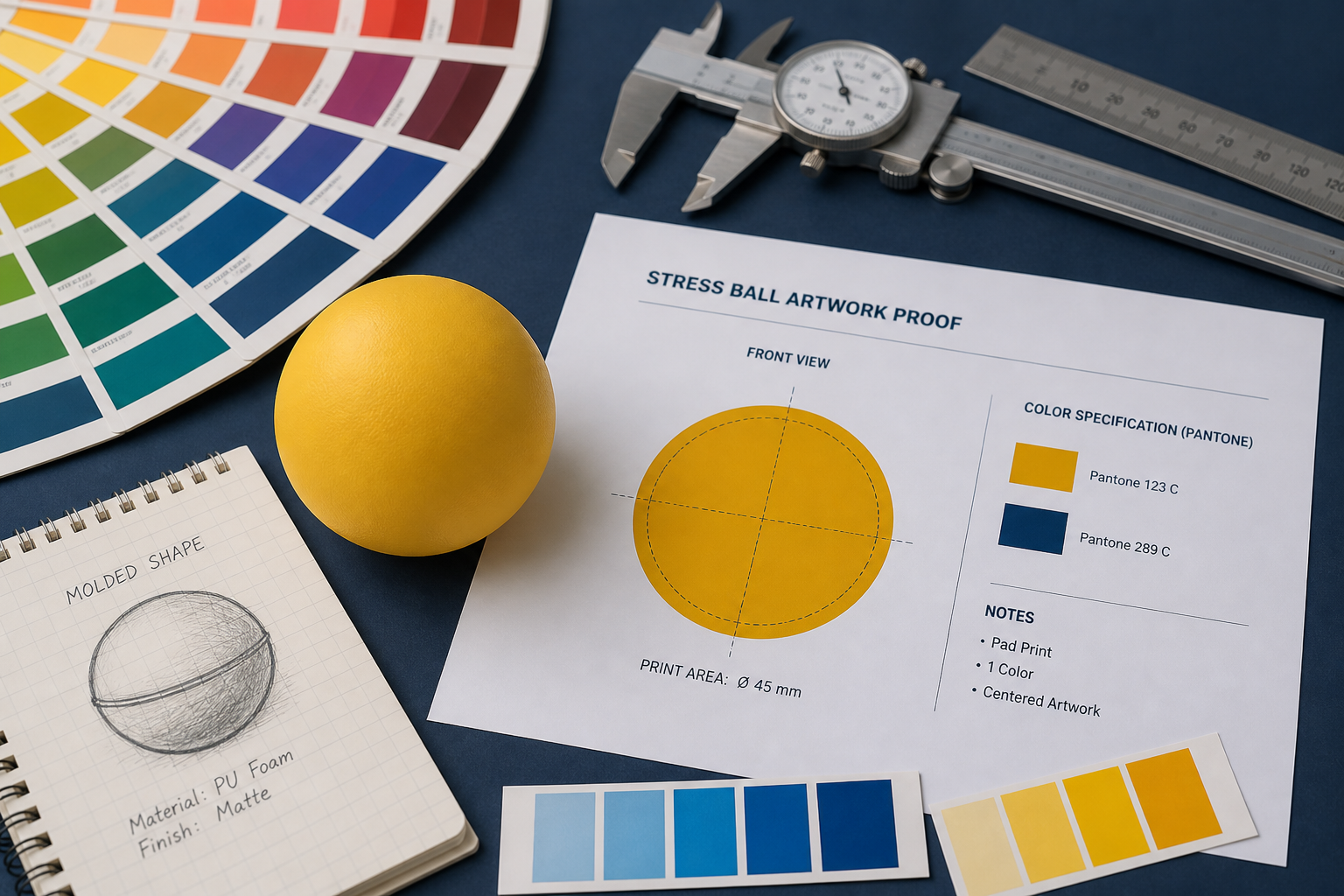
Use a stock mold when the calendar is tight, the first quantity is cautious or the logo carries the message. Color, printing and packing still leave room for a branded result. Ask to see the exact available mold, though. Two “heart” molds can differ enough in curvature that artwork fitting one looks cramped on the other.
When a custom shape earns its tooling
Custom tooling begins to make sense when the outline itself carries brand value or the program is expected to repeat. Spread the tooling across likely lifetime volume, not only the first purchase order. A mold that supports four campaigns can be economical. The same mold for a one-off, low-volume dinner gift may never earn back its time or cost.
Send front, side and top views, plus a 3D file if one exists. Mark the dimensions that cannot move and draw the intended print zone. Then invite the mold engineer to challenge the design. Deep recesses, sharp changes in thickness, thin projections and hidden undercuts may trap air or tear during demolding.Removing a tiny decorative groove often makes the part cheaper and more consistent without changing what the customer recognizes.
Prototype in stages
Every prototype answers a different question. A rendering settles appearance. A hard 3D print checks proportion and logo placement. A soft model gives an early handling clue. None of those proves how the production foam, skin and coating will behave. Write the purpose on the approval record and save final sign-off for a pre-production piece made through the intended process.
Use a numbered revision system. Comments such as “make the logo a little higher” become ambiguous after several rounds. A controlled approval sheet should show the current drawing, dimensions, Pantone or other color reference, artwork version, print size, print location, body finish, package, and sign-off date.
Logo Printing: Design for a Soft, Curved Surface
Foam is a difficult printing surface: it curves, compresses and varies slightly from piece to piece. Artwork that looks razor sharp on a monitor can close up in reversed type or break along a thin line. Move the print toward a steeper curve and it may stretch. That is why the logo zone should be discussed while the shape is still being developed, not after tooling is finished.
Pad printing
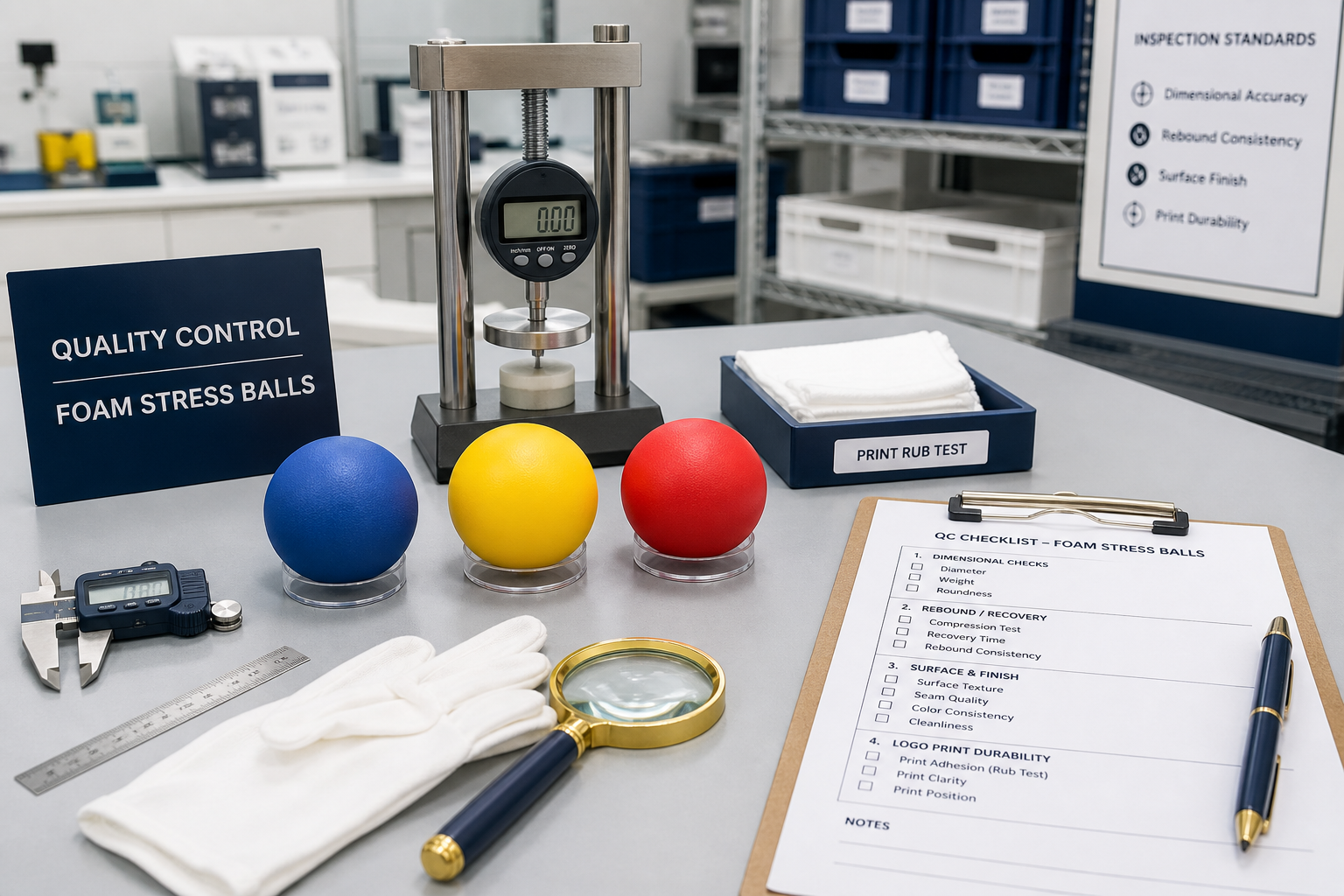
Pad printing is often the practical choice for a small mark on a three-dimensional item. The flexible pad reaches a moderate curve, while a fixture keeps the foam in roughly the same position. “Roughly” matters: the part can compress in the fixture, and that affects placement. One bold color usually survives this reality better than several tiny elements that must register perfectly.
Ask the printer to mark the safe image area on a photograph of the actual shape. A generic “40 mm print” claim is not enough if the last five millimetres cross a steep shoulder. For several colors, look at a decorated sample and agree what small movement is acceptable. A little separation between colors—or deliberate trapping—can hide normal registration movement far better than touching hairline edges.
Screen printing, transfer, spray masks, and other decoration
Other shapes may call for screen print, a transfer, decal, spray mask, airbrush, flocking or a full coating. The process name alone tells the buyer very little. Ask what it costs to set up, how it follows the curve, what edges will look like and how the decoration behaves after squeezing. The only persuasive proof is a sample made on the intended foam and surface finish.
Sometimes the most faithful solution is not to print everything on the ball. Let the foam carry a bold icon and brand color; put fine copy, a QR code and legal text on the card or box. The product then does the tactile work, while the packaging handles information that a soft curved surface was never meant to reproduce.
Prepare artwork that the factory can use
Send an editable vector file with fonts outlined and spot colors named. Also include a visual brand reference so the prepress operator can see what the finished mark is supposed to communicate. If a trademark symbol or legal line has a minimum size, say so. A screenshot copied from a presentation is not production artwork; it leaves the factory guessing at edges, type and color.
A Pantone number is a target, not a magic spell. Foam color, coating, ink thickness and even the light above the inspection table change what the eye sees. Approve the body and printed logo together under agreed lighting. If the two cannot both be exact, decide in advance which one carries more brand importance and what range remains acceptable.
Control print position and durability
“Centered” needs a picture. On a character it might mean centered between the eyes, centered on the mold or centered on the visible belly; those are three different positions. Mark two physical reference points and add dimensions. Set print-durability checks with the same care. A severe improvised tape pull may reject a perfectly usable ink, while a gentle finger rub can miss a failure customers will notice after ten squeezes.
| Artwork feature | Production risk | Buyer-friendly adjustment |
|---|---|---|
| Very fine lines | Breaks or incomplete transfer | Increase line weight; simplify secondary detail |
| Small reversed text | Ink closes the negative space | Use larger type or move detailed copy to packaging |
| Several touching colors | Registration variation becomes visible | Add separation or trapping; approve realistic tolerance |
| Large image on a curve | Distortion and edge loss | Reduce image area or redesign around the curvature |
| Low-resolution file | Ragged edges and uncertain geometry | Provide vector art with outlined fonts |
| Exact screen color expectation | Substrate and ink change appearance | Approve a physical decorated sample under defined light |
Compliance, Age Grading, and Claims
Compliance starts with the exact product and the way it will be sold. In the United States, the Consumer Product Safety Commission publishes toy safety guidance for businesses. A children's product may bring applicable rules, third-party testing by a CPSC-accepted laboratory, certification and tracking information; toy requirements involving ASTM F963 may also apply. Do not build the test plan from the generic words “stress ball.” Build it from the finished design, age grade, claims and channel.
For an EU program, review the European Commission's toy safety resources and obtain product-specific advice on conformity assessment, technical files, labels and CE marking. REACH or other chemical restrictions may enter the discussion. The UK, Canada, Australia and individual U.S. states have their own layers. A report accepted by one customer or country should not be assumed to cover the next order.
Decoration can change the tested configuration. New ink, pigment, coating, glue, package or accessory may matter even when the foam shape already has an old report. Ask the laboratory how it wants colors and variants grouped. Then read the report rather than collecting the PDF: model number, sample photograph, materials, date, method and result should all match the order. A report for a cousin product is useful history, not automatic coverage.
Adult promotional item or children’s toy?
An adult audience in the campaign plan does not prevent a child from picking up a cute foam animal. Size, graphics, channel and claims all influence how the item is perceived. If the program is genuinely adult-only, its design and presentation should support that position. Even then, a “not a toy” line is not a substitute for risk assessment. Ask for advice on the actual piece.
Be careful with wellness and medical claims
“Stress ball” is a familiar product description.Claims that it treats anxiety, rehabilitates an injured hand or delivers a clinical benefit are a different matter and may need evidence or additional review. Keep ordinary copy factual: squeezable foam, hand-held format, tactile surface, branded desk item. If a healthcare or therapy campaign wants to go further, have the claim reviewed before artwork and packaging are approved.
Document control belongs in the purchase order
The purchase order should point to the approved bill of materials, drawing, artwork, sample, package, label and test plan. Add one unglamorous but vital rule: no change of pigment, coating, ink, subcontractor or process without written approval. Retain a sample from the production lot and keep its identity. Compliance is maintained through these small controls; it is not created by finding a PDF after the cartons have shipped.
A test report describes the submitted sample. Repeatable production requires material control, process records, change approval, traceability, inspection, and a final product that matches the tested configuration.
MOQ, Tooling, Price, and Lead Time
Quantity and target price are the usual opening lines in an inquiry for promotional stress balls wholesale. They are not enough for a fair comparison. One supplier may be pricing a stock white ball with a single print; another may have included custom color, two print positions, testing and a retail box. Put size, color, artwork, package, destination, inspection and delivery basis on the same sheet before deciding which quote is lower.
Why MOQ changes
MOQ is rarely one arbitrary factory number. Foam and pigment are mixed in batches; print plates and fixtures need setup; a printed box has its own supplier minimum. Ask for the minimum per shape, color, logo version and package. Five thousand identical balls can run smoothly. Five thousand pieces divided among ten colors and five logos is a collection of tiny jobs wearing one purchase-order number.
For a pilot, simplify the assortment before forcing the quantity below an efficient batch. One body color and one clean print produce better market evidence than twenty miniature SKUs with unstable costs. Learn which shape and message customers keep, then add colors or packs to the repeat order.
Tooling and ownership
Tooling quotes deserve a line-by-line read. Does the fee include design cleanup, a prototype, the production mold, holding fixtures and print plates, or only the mold itself? Record who owns each item, where it will be stored, how long the factory keeps inactive tooling and who pays for repair. These questions feel distant during development and become urgent when a repeat order is placed two years later.
What belongs in a landed-cost comparison
| Cost element | Questions for the quotation | Common omission |
|---|---|---|
| Product | Exact size, mass, foam, finish, body color, and quantity split? | Price based on a smaller or lighter stock item |
| Decoration | Colors, positions, print area, plates, setup, and proof included? | Second side or extra color quoted later |
| Tooling | Prototype and production tooling separated? Ownership defined? | Custom mold excluded from headline price |
| Packaging | Individual pack, insert, barcode, labels, carton, pallet? | Bulk bag used for quote while buyer expects retail pack |
| Compliance | Which tests, laboratory, sample count, and reports? | Testing described vaguely or not included |
| Inspection | In-line, final random inspection, functional methods, reinspection? | Third-party cost and correction delay omitted |
| Logistics | Incoterm, carton dimensions, gross weight, destination, duty? | Unit price compared without dimensional freight |
| Schedule risk | Revision, retest, holiday, and event buffer? | Optimistic production time treated as arrival date |
Build the schedule backward from arrival
Put the required warehouse or event date at the right-hand side of a calendar and work backward.Allow for destination handling, customs, freight booking, inspection, packing, production, testing and sample approval. Custom tooling adds design and revision time before that. Give the buyer's decisions deadlines as well. A factory cannot replace three lost days when warning copy or a Pantone chip arrives late.
A stock mold removes one part of development; it does not remove the project. Material still needs to be available, the color mixed, the print proved and the pack checked. Your logo and coating create a new configuration even if thousands of blank balls were made before. Approve a decorated sample rather than relying on the mold's history.
Quality Control: Protect the Brand After Artwork Approval
The recipient does not know which factory mixed the foam. They only see the logo printed on a cracked, smelly or misshapen product. In that moment a manufacturing defect becomes a brand defect. The inspection plan should therefore protect both product function and the reputation attached to it.
Approve a controlled golden sample
The golden sample should be boringly complete: correct foam, color, coating, logo and package. Sign and date it. Keep one with the buyer and one at the factory; an inspection company may need a third. Add photographs and measurements because foam can age and a physical reference can be lost or damaged.
Create a visual defect guide
Do not write “perfect surface” and expect two teams to imagine the same thing. Foam has natural variation. Photograph a seam that passes and one that fails; do the same for pores, dents, incomplete fill, coating marks and distorted prints.Agree the defect classes and sampling before production. Critical safety or compliance defects need their own treatment and will normally have no acceptable occurrence under the agreed plan.
Inspect the function, not only the appearance
An inspector should squeeze the product, not merely photograph it. Listen for cracking, watch the thin and thick sections recover, and look for coating or print transfer on the hand. Measure weight and critical dimensions on a sample from the lot. The rub or adhesion method must suit the actual ink and expected handling; inventing a harsher test on inspection day is as unhelpful as using one that never challenges the print.
Control print quality
Check more than whether a logo exists. Measure its size and location; look at orientation, ink coverage, edges, smears and registration. On an irregular shape, compare it with the approved landmarks or fixture rather than judging by eye. Repeat the check after the ink has cured and after packaged pieces have rubbed against their neighbours.
Validate packing and transit
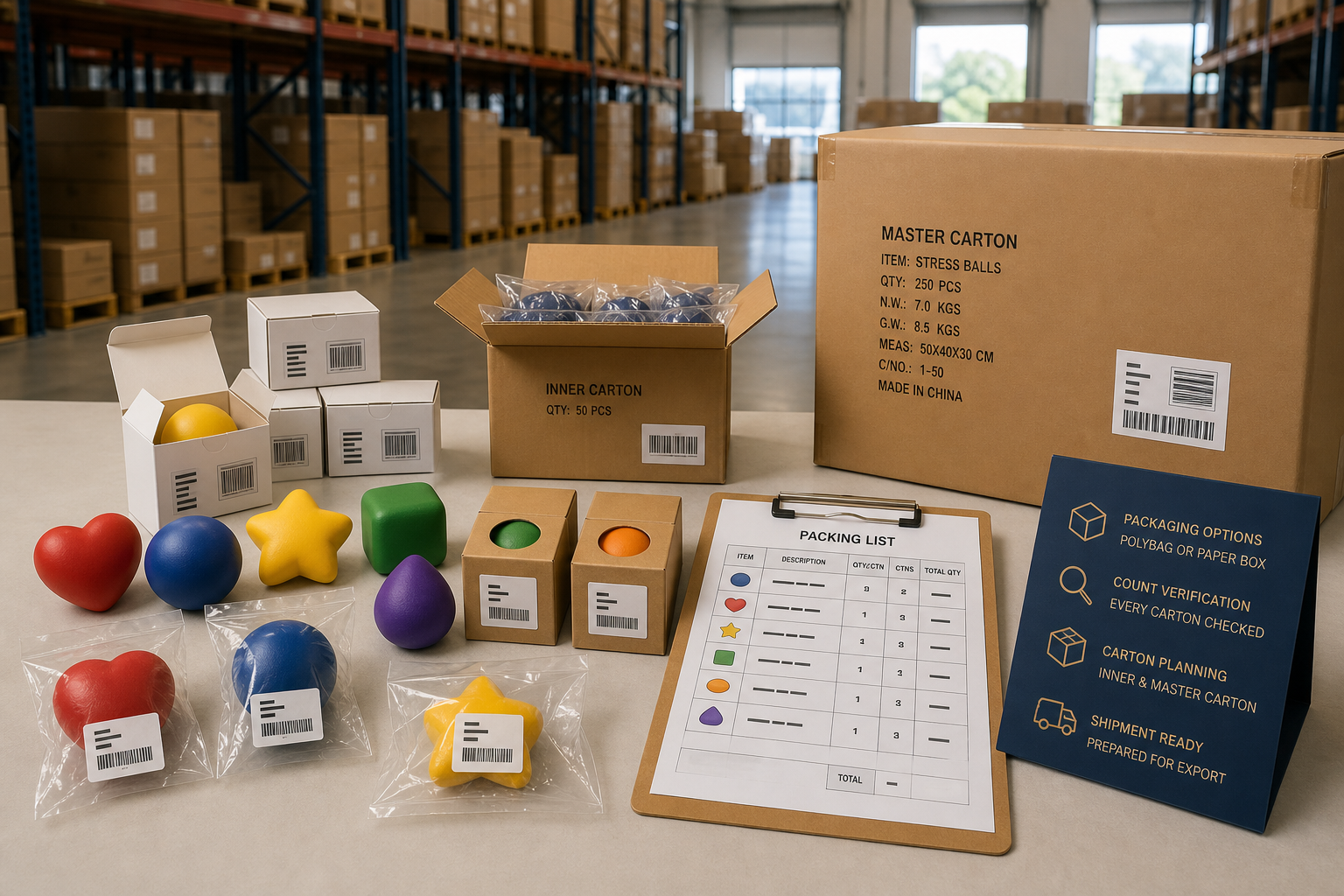
Open the carton as a warehouse employee would. Count the inner packs, confirm the color and logo mix, scan the barcode and read the carton marks. Check bag closures and any required warnings.Transit testing should match the route—drop, vibration, stacking, heat or humidity where appropriate. For a compressed pack-out, a five-minute recovery check proves very little; repeat it after the proposed storage period.
Keep retained units and lot records after shipment. If a customer sends a photograph six weeks later, the team should be able to trace the material batch, production window, print setup and inspection result. Replacing a handful of pieces may settle one complaint; finding the root cause prevents the next one.
| Inspection area | Representative checks | Evidence |
|---|---|---|
| Identity and quantity | SKU, body color, logo version, pack count, carton count | PO, packing list, approved assortment |
| Foam construction | Dimensions, mass, squeeze, recovery, cracks, permanent deformation | Specification, golden sample, test method |
| Surface | Color, pores, seams, coating, odor, contamination, tackiness | Defect guide, color standard, acceptance notes |
| Decoration | Artwork, size, position, color, coverage, registration, adhesion | Approved artwork proof and printed sample |
| Package | Bag/box, label, barcode, warning, insert, presentation | Approved packaging files and sample |
| Carton and transit | Pack-out, marks, dimensions, weight, drop/compression, recovery | Carton spec and test/inspection record |
| Compliance | Model/material match, label, traceability, required documents | Test plan, reports, certificates/declarations as applicable |
Packaging Choices for Promotional and Retail Programs
Packaging changes the price, the freight cube and the first impression. Bulk bags are efficient when event staff will unpack everything backstage. An individual bag protects the print but adds material and can trap odor. A paper sleeve carries copy yet may rub a soft coating.A box gives the best presentation and the most room for instructions, though the buyer pays for volume as well as cardboard.
Test the pack in its real job. Mail the complete kit to a colleague and see what presses against the foam. Hang a retail sample on the intended peg, scan the barcode and check which face points outward. Time how long booth staff take to open one inner. Sustainability decisions also need facts: material weight, collection in the destination and damage prevention tell buyers more than an unsupported “eco-friendly” badge.
Ask the converter to name the paper, film, coating and print process. Then describe only what can be supported. A technically recyclable film may not be collected where the product is sold, and a paper card may include coatings or mixed components. Cutting packaging weight is useful until it allows more products to arrive damaged. The best claim is a specific, documented one.
Supplier Evaluation for Bulk Promotional Stress Products
A polished catalog proves that someone can make a polished catalog. It says little about what happens when foam, pigment, printing and packing must stay consistent across a large order. Ask the supplier to walk through those steps in order. Find out what is done in-house and what leaves the factory. Subcontracting can work well; hidden subcontracting cannot be managed.
Ask to see a previous development trail with customer names removed. Versioned drawings, dated artwork proofs and a signed sample reveal more than a showroom wall.Pose an awkward scenario: what happens if the first print setup smears or the box supplier misses its date? A useful partner explains the options and consequences early. Silence until the shipping week is not reassurance.
Annual capacity figures can be misleading. The factory may have plenty of molding capacity but only one suitable print fixture in the week your campaign needs it. Ask for capacity by process and a milestone owner. On a large or highly visible order, an in-line inspection catches trouble while there is still time to act. A perfect final report is impossible when the entire lot was made incorrectly.
| Evaluation area | Questions to ask | What a strong answer includes |
|---|---|---|
| Feasibility | What details are difficult to mold or print? | Specific geometry and process risks with recommended changes |
| Material | How are foam and pigments controlled? | Specifications, approved sources, lot records, change control |
| Decoration | How is position and color controlled? | Fixtures, proofs, physical standards, cure and adhesion checks |
| Compliance | How will the test plan be built? | Final-product configuration, market, age grade, qualified lab input |
| Quality | Where can defects be caught early? | Incoming, first-piece, in-line, final, and retained-sample controls |
| Schedule | Which approvals drive the critical path? | Milestones, owner, buffer, and escalation path |
| Transparency | Which processes are subcontracted? | Named process scope and supplier-control method |
A useful factory-floor question: “Show me the first piece from the last logo-printing setup, and then show me what changed before production continued.” The answer is often more revealing than a general quality presentation. On a real setup, the first print may sit a few millimetres low because the foam compresses in the holder. A careful operator adjusts the fixture, prints several more pieces, waits for the ink to settle and records the approved result.The useful evidence is not that an error never happened; it is that someone saw it early, understood why it happened and stopped it from spreading through the order. Buyers should look for that habit in molding, color mixing and packing as well. A factory that can explain yesterday's small correction usually gives a clearer picture of its controls than one promising that problems are impossible.
A note from an actual print review: the drawing said the logo was centered. Held at arm's length, it did not look centered at all. The buyer pointed at the sample and asked, “Can it go a little higher?” The printer moved the holder about two millimetres, made three pieces and put both versions on the table. Everyone chose the second one. No new artwork, no meeting, no long report. The catch was that the character's eyes—not the widest part of the foam—controlled what looked level. Record that sort of decision with a photo. Otherwise the measurement can be correct and the product can still look wrong.
Custom Stress Balls with Logo: RFQ Checklist
The fastest quotations usually come from the most complete questions. Copy the fields below, attach the actual vector art and mark what can move. If shape, packing or color is flexible, ask for two or three named routes. “Good, better, best” gives a sourcing team something it can compare; one vague unit price does not.
- Campaign: use case, audience, distribution method, quantity, and fixed event or launch date.
- Destination: countries, sales channel, retailer protocol, and responsible importer or distributor.
- Product status: adult promotional item, children’s product, or undecided pending assessment.
- Shape: stock reference or custom concept with drawings, dimensions, and critical details.
- Foam experience: target softness, mass, recovery behavior, surface, and odor expectation with a reference sample where possible.
- Body color: physical color target, number of colors, and quantity split.
- Artwork: vector logo, print colors, positions, target size, minimum text, and trademark requirements.
- Decoration: preferred method if known, durability expectation, and whether a simplified art version is acceptable.
- Packaging: bulk or individual, bag/card/box, barcode, warnings, inserts, carton marks, and sustainability requirements.
- Compliance: target standards or retailer protocols, laboratory preference, documentation, traceability, and audit needs.
- Quality: golden sample, defect categories, sampling, print checks, functional checks, and pre-shipment inspection.
- Commercial: target landed cost, Incoterm, quotation currency, tooling ownership, payment proposal, and forecast.
- Schedule: artwork approval, sample, testing, production, inspection, ship, and required arrival milestones.
Send Your Logo and Receive a Structured Proposal
Send the real vector file, not a screenshot, and list the quantity for each logo or color. Add shape, print positions, package, destination and required arrival date. HINESLEAD can then show which assumptions are driving MOQ, tooling, samples and price instead of hiding them inside a headline figure.
➜ Request Artwork Proof + Bulk QuoteRelated OEM Toy and Sensory Product Options
Do not make the material decision from a catalogue photograph. Put the intended use on the table first. Is the piece squeezed at a trade-show desk, washed after a classroom session, stretched, thrown, or hugged? A buyer searching sensory toys wholesale should ask a sensory toy manufacturer for a small comparison set. Handle it. Leave it in its pack overnight. Then choose.
- For the familiar light squeeze and slow return, speak with a PU foam toys manufacturer about custom PU foam toys. This is the route used in the stress-ball brief above.
- For a firmer, closed-cell part that may meet water or repeated classroom handling, compare EVA foam toys wholesale with fully custom EVA foam toys.
- For a tiny stretchy figure, find a TPR squeeze toy manufacturer that already understands the soft surface and packing quirks of mochi squishy toys wholesale.
- When washing, a dense feel or an uncoated surface matters, sample a silicone squishy toy manufacturer's work and compare it with other custom silicone sensory toys.
- A soft character with stitched features is a different job. It belongs with a custom plush toy manufacturer whose records show real plush toys OEM production.
- For an event built around throwing, catching or team play, look at custom foam sports toys and foam balls wholesale. Do not borrow the acceptance rules from a desk stress ball.
An OEM toy manufacturer China may consolidate cartons, colors and brand files across that range. It should not collapse the specifications into one generic sheet. PU foam can show pinholes; silicone may collect lint; TPR can feel tacky; plush has seam and filling risks. Different failures, different checks. Sensible custom toy manufacturing keeps a separate bill of materials, approved sample and inspection method for each construction, even when the outer cartons carry the same brand.
Frequently Asked Questions About Custom Stress Balls
What is the minimum order for custom stress balls with a logo?
There is no useful universal MOQ. A stock ball with one logo uses fewer setups than a custom mascot divided among several colors and packs. Ask for the minimum by shape, body color, artwork version and packaging style. That breakdown shows which choice is creating the constraint and where a pilot can be simplified.
How much do promotional stress balls cost in bulk?
A unit price without a specification is only a conversation starter. Size, weight, foam feel, shape, print, package, testing and delivery basis all move the number. Share the target budget and request separate lines for tooling, samples, testing, setup, packaging and inspection. Buyers can then compare landed assumptions instead of two figures built on different products.
Can HINESLEAD match our brand color exactly?
The factory can target a physical brand color, but foam, coating, ink film and lighting all affect the result. Approve the molded color first and then view the printed sample beside it. A signed physical reference or agreed range is more reliable than an RGB value viewed on two different screens.
What logo file should we provide?
AI, EPS, SVG or an editable PDF is usually useful when the paths and text remain clean. Outline the fonts and name the spot colors.Send the brand guide as a reference, not as a substitute for artwork. If the only available file is a JPEG, provide the largest original and allow time for redrawing. The buyer must also own or license the mark; a factory cannot solve an intellectual-property problem through prepress.
How many print colors are possible?
There is no meaningful answer without seeing the art and shape. One or two bold colors are often forgiving in pad print. More colors are possible, although each brings another setup and another registration relationship to judge. Ask to see the decorated sample from normal viewing distance. If the tiny color detail only works under magnification, move it to the package.
Can the logo cover most of the stress ball?
The logo can be large until it reaches the part of the surface that turns away from the printing pad. Beyond that point, edges stretch or disappear. Have the supplier draw the safe area on the actual shape, then approve a physical print. In practice, a crisp 32 mm mark often looks more confident than a distorted 40 mm one.
How long does a custom-shaped stress ball take?
Count from the delivery date backward. That is more honest than asking for a single lead-time number. A new shape has to pass feasibility, 3D drawing, prototype, mold, foam and color trials, logo proof, testing, production and inspection before freight even begins. A stock mold removes the drawing and tooling steps, but it does not remove artwork approval or quality checks. Put the buyer's reply dates on the calendar too; three quiet days waiting for a logo decision are still three lost days.
Why did the sample recover differently from the round catalog ball?
Because the round ball is not the same object. A mascot may have a heavy body, thin ears and a narrow neck, and each area moves differently after a squeeze. Coating, cure, room temperature and the way the sample was packed matter as well. Use the catalog ball to explain the general feel, then put it aside. The signed sample in the real production shape is the one that should sit beside the line and the inspection table.
Can the stress balls be packed under compression to lower freight?
Possibly. Test the exact carton before taking the saving. Fill it to the proposed count, close it for the likely storage period and open it the way the receiving warehouse will. Are there flat sides? Has coating moved from one piece to another? Are two logos touching? Write down the recovery time. “They came back later” is not an answer if an event team must unpack 5,000 pieces at eight o'clock the next morning.
Are custom stress balls safe for children?
Do not infer that from the word “foam.” Age grade, size, construction, materials, foreseeable misuse, destination and labels all enter the decision. Even an adult giveaway deserves another look if booth staff are likely to hand it to children. Have a qualified person set the risk assessment and tests around the finished, decorated and packed item—not around an unprinted material sample.
Can we claim that a stress ball reduces anxiety or improves hand strength?
Use plain product language unless the claim has been properly reviewed.“Squeezable desk accessory” tells the customer what is in the pack. “Treats anxiety” promises an outcome and moves the discussion somewhere else entirely. Therapy, rehabilitation and medical wording may need evidence and specialist advice. Settle the copy before the package plate is made. Removing one sentence from 10,000 printed cards is a physical rework, not a quick website edit.
How do buyers check print durability?
First, abuse the decorated sample in the way a customer will: squeeze it repeatedly, rub the mark with a controlled motion and let it touch the actual bag or neighbouring pieces. Depending on the ink, a tape check or short aging trial may add useful evidence. The important bit is consistency. Write the method down during sampling, because “rub it a few times” will mean something different to every inspector.
What causes strong odor in foam products?
The source might be the foam mix, cure, coating, ink or simply a sealed bag holding everything in. An open sample that has sat on a desk for a week proves very little. Seal a production-like piece, wait, then open it close to the way a customer will. If the smell is still unacceptable, find the source. Adding fragrance usually creates a second material problem; it does not repair the first one.
Should we use individual bags or bulk packing?
Follow the handling route. An individual bag keeps fingers and neighbouring prints away, carries a label neatly and can make event distribution easier. It also adds material and labor, and may trap odor.Bulk packing costs less and can work beautifully when staff open cartons in a clean room before the event. Neither pack is automatically premium. The better one is the pack that survives the real workflow with the least waste and damage.
How can we protect our custom shape and logo?
Start with boring file discipline. Call the approved drawing something unambiguous—brand-mascot-v07-approved, for example—and retire the older versions. “Final-final-new” is how the wrong face gets molded. Limit access, record who owns the mold and say in writing whether it can ever be shown or reused. Keep the email that approved the logo. The buyer, of course, must own or license every mark and character. When the property is valuable or the order crosses several legal systems, ask an IP adviser in the relevant markets; a short purchase-order footer is not tailored advice.
What should be included in the final inspection?
Open a random shipping carton and begin with the label. Right customer? Right item? Right quantity? Then pick pieces from different layers rather than admiring the clean ones on top. Check the agreed dimensions and weight, squeeze and return, pores, smell, logo, bag, barcode and carton marks. Count every color and artwork version against the purchase order. The sampling level and the meaning of critical, major and minor should already be on the signed sheet. If those words are being invented beside a sealed container, stop. That is not an inspection plan.
Final Takeaway
If only three notes survive this guide, keep these. Approve the feel on the real shape. Approve the logo on a physical decorated piece.Test the packing before a full production run. Those three objects—the tactile sample, print proof and packed carton—settle more arguments than a long string of adjectives.
Next, tell the supplier what truly cannot move. A fixed exhibition date often favours a stock mold. A mascot-led campaign deserves prototype time. A fixed budget may mean one less print color or a simpler bag; it should not quietly erase testing or inspection. Ask HINESLEAD to put the stock route beside the custom route and label every assumption. Read the two quotations with the product in mind, not just the last number in the price column.
Authoritative references: U.S. Consumer Product Safety Commission, Toy Safety Business Guidance; European Commission, Toy Safety; California Office of Environmental Health Hazard Assessment, Proposition 65; Google Search Central, Creating Helpful, Reliable, People-First Content. These are general references; confirm current product-specific obligations with competent laboratories and advisers.
Start Your Custom Stress Ball Project
Send the actual vector logo and tell us where the pieces will go. Add the shape idea, body and print colors, quantity, package and the date the goods must be in hand.If timing or budget is tight, request two answers: one using a ready mold and one using your own shape. The differences in MOQ, tooling and calendar will be visible from the start.
✉ Contact HINESLEAD