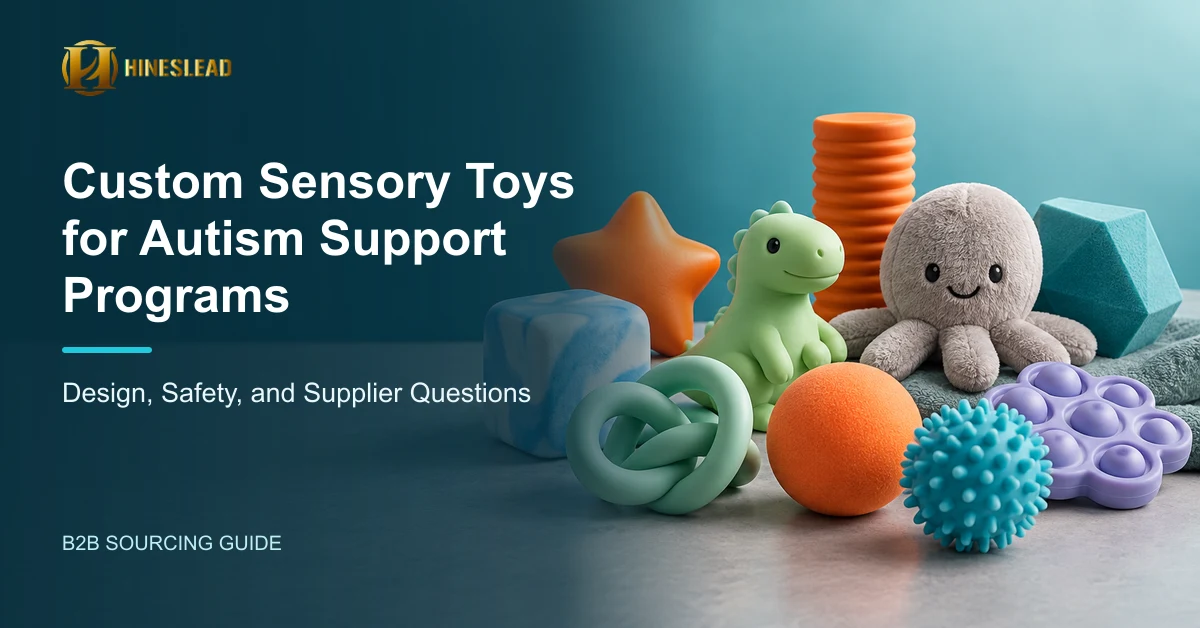
The practical answer: skip the trendy-product list for now. Picture an ordinary day in the program. Who opens the kit, where is it kept, what is the activity, who supervises it, and what happens to an item after it has been handled? Then write down the failures the team cannot accept. Firm resistance can feel welcome to one participant and tiring to the next. Some people dislike sticky surfaces; others avoid bright color or a noise that arrives without warning. A purchasing team therefore needs a working assortment brief, not a promise that one object somehow fits every autistic person. Define the use, choose features the team can actually judge, map the compliance route for each sales market, and let the responsible professionals and families try the proposed assortment.
This guide is for distributors, educational suppliers, nonprofit purchasing teams, retailers, therapy-practice buyers, workplace inclusion programs, and private-label brands sourcing sensory toys wholesale. The aim is deliberately practical: give the buyer, factory, inspector, and laboratory the same set of concrete details. This is not diagnosis or therapy advice. Nor does it suggest that a toy can, by itself, change medical, developmental, or behavioral outcomes.
Have a sensory-toy assortment on your desk?
Send the intended age range, use setting, product types, materials, quantities, target markets, packaging, cleaning expectations, and launch date. A complete brief allows the product and compliance questions to be reviewed before sampling.
Get a Sensory Toy Catalog and Compliance ChecklistStart with the program, not the diagnosis
The phrase “sensory toys for autism” is a search category, not a design specification. There is no common preference sheet for everyone on the spectrum. On its autism signs-and-symptoms page, the U.S. Centers for Disease Control and Prevention mentions differing reactions to sound, smell, taste, appearance, and feel. Buyers can translate that point into a sensible caution. The texture, color, noise, or squeeze level welcomed by one participant might be a reason for another participant to put the item down.
Ask what happens when the object leaves its package. It could be an optional hand-held item during a classroom transition or one choice on a supervised board. The same item might instead be considered for a clinic waiting room, community event kit, office wellbeing box, or family home.Is it issued to one person, or returned to a shared bin? Note whether silence is essential, fragrance is excluded, or porous surfaces conflict with the cleaning policy. Those ordinary operating details shape the assortment far more than a broad diagnostic label.
The language used on the product and package matters as well. Describe observable features such as squeeze resistance, surface texture, dimensions, sound level, washable construction, or visual movement. Avoid unqualified statements that a toy treats autism, prevents distress, improves concentration, or produces a clinical result. The U.S. Federal Trade Commission states that companies must support health-related advertising claims with appropriate evidence. A procurement team may have internal goals for a program, but those goals should not be converted into public product promises without a valid basis.
A careful description keeps the product in its proper role: it is one optional tool selected by a program, caregiver, educator, clinician, or individual. Whether it belongs in the program depends on that person and that setting. A factory can control materials, dimensions, construction, decoration, packaging, and repeatability. A generic purchase request, however, cannot support a guaranteed therapeutic result.
Put the use case on one page before ordering samples
The supplier needs context, but not anyone’s private history. Leave names, diagnoses, therapy notes, and school records out of the RFQ.Product development can work from group-level requirements: intended age band, setting, supervision, frequency of use, cleaning method, known exclusions, target market, packaging route, and order quantity. That is enough to discuss construction choices without exposing personal information.
State the activity in plain language. “A quiet hand-held item for supervised use during ten-minute classroom transitions” is more useful than “an autism fidget.” The first statement suggests that noise, size, ease of cleaning, loose parts, and repeat handling deserve attention. The second statement tells the supplier almost nothing about product performance.
| Brief field | Example buyer input | Why the supplier needs it |
|---|---|---|
| Participants | Age band and general ability range; no personal records | Guides size, foreseeable use, warnings, and test scope |
| Setting | Classroom, waiting room, home kit, office, clinic, or community event | Changes noise, portability, storage, and supervision needs |
| Use pattern | Individual issue, shared station, or supervised checkout | Affects hygiene, identification, packing, and durability |
| Sensory attributes | Quiet, dry-touch, moderate resistance,no fragrance | Turns vague preference into sample criteria |
| Exclusions | No detachable beads, glitter, liquid fill, cords, or batteries | Removes unsuitable construction routes early |
| Cleaning | Wipe after each shared use with the program-approved method | Influences surface, seams, decoration, and instructions |
| Market | United States, European Union, United Kingdom, or another destination | Determines classification, testing, labels, and records |
Ask the supplier to answer the brief point by point. A useful reply identifies the proposed material and construction, flags conflicts, states which features need a custom sample, and lists open compliance questions. A one-line price for “sensory toy set” is not yet a comparable offer.
Build an assortment around choices
An assortment can offer different forms of interaction without claiming that each item delivers a clinical effect.A buyer might include a soft squeeze item, a firmer resistance item, a smooth stretch item, a quiet visual or manipulative item, and a fabric-based comfort object. The purpose of the range is to make options available. The program decides how and when those options are introduced.
Avoid creating a kit in which every item has the same sensory character. Five brightly colored sticky squeeze figures may look varied in a catalog, but they still share similar touch, appearance, and handling. A useful assortment matrix compares texture, resistance, movement, sound, visual intensity, mass, cleanability, portability, and potential failure modes.
Do not label one choice “calming” and another “energizing” as if the result were universal. Describe what can be observed. A ball may require higher grip force. A silicone piece may flex repeatedly. A plush item may have a soft pile and low mechanical noise. A textured TPR form may stretch and return. These descriptions help staff match a product to an individual preference without turning a material property into a medical promise.
Tactile surface
Surface feel includes more than “soft” or “rough.” Note whether the product is dry, powdery, tacky, flocked, smooth, ribbed, brushed, or fabric-covered. Record what happens after repeated handling and cleaning. A pleasant first touch is not enough if the surface collects lint, transfers color, or changes after ten cleaning cycles.
Resistance and recovery
For squeeze products, separate initial force, depth of compression, return speed, and fatigue over repeated cycles. A slow-rising foam piece and a fast-return rubbery item can both be soft, yet they feel and behave differently. Approve the property that matters to the program rather than using “softness” as the whole specification.
Visual and sound intensity
Color contrast, glitter, flashing parts, liquid movement, surface shine, and surprise effects can be attractive to one user and uncomfortable for another. The same is true of clicks, pops, squeaks, bells, and air-release sounds. If a program needs quiet tools, set an observable sound requirement and test the finished sample in the intended environment.
Size and portability
A pocket item may be easy to carry but easier to lose, mouth, or conceal. A larger object may be easier to supervise but inconvenient at a desk. State whether the product must fit a pencil case, individual pouch, classroom bin, wall organizer, or shipping kit. Size decisions also affect age grading and small-parts analysis.
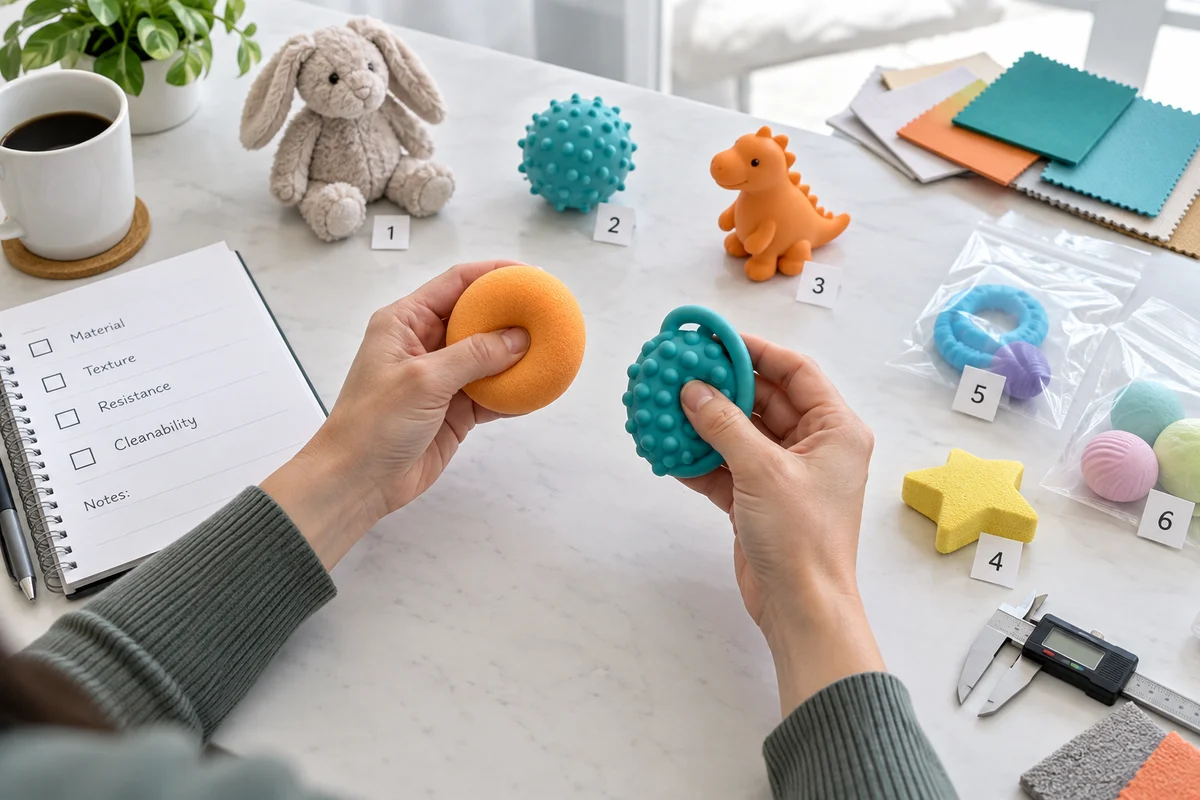
Compare samples with a written matrix. Appearance, hand feel, cleaning behavior, and failure risk should be reviewed separately.
Compare material routes by the finished product
Material names are useful starting points, but they do not define a finished sensory toy. Formulation, hardness, density, pigments, coatings, seams, adhesives, molding details, surface treatment, and packaging contact all influence performance. Ask for the material identity and construction of the actual sample. Do not assume that an old report for a different item covers a new color, decoration, factory, or formulation.
| Material route | Useful design questions | Typical review points |
|---|---|---|
| PU foam | Target squeeze force, recovery, molded detail, coating, print area | Tears, coating cracks, odor, color transfer, rebound variation |
| TPR | Hardness, stretch, wall thickness, fill, surface, closure | Tackiness, rupture, leakage, lint pickup, deformation |
| Silicone | Hardness, tear points, geometry, pigments, decoration, intended mouth contact | Tearing, dust attraction, part separation, print durability |
| EVA foam | Cut or molded form, density, layer bonding, edges,flexibility | Delamination, bite marks, edge damage, adhesive failure |
| Plush and textile | Pile, backing, seams, thread, filling, embroidery, trims | Open seams, loose filling, detached parts, cleaning changes |
PU foam squeeze items
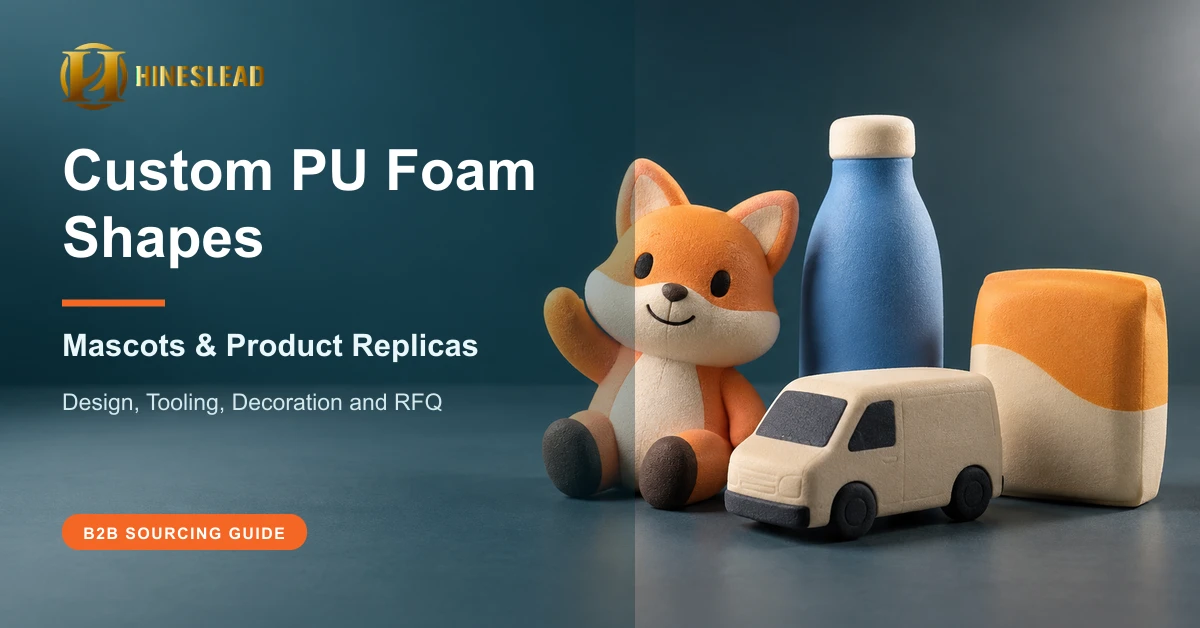
A PU foam toys manufacturer can propose different molded shapes, densities, coatings, and recovery behaviors. Buyers developing custom PU foam toys should provide a reference for the desired feel and approve the finished coating after compression. The foam core, skin, paint, ink, and cure sequence work as one system. A change to any part may alter touch, odor, durability, or compliance evidence.
Slow recovery is sometimes used as a merchandising feature, but it should be measured with an agreed method if it matters. State the amount of compression, hold time, temperature, release method, and acceptable recovery range. The useful specification is not “slow.” It is the observed performance of a named sample under stated conditions.
TPR and mochi-style items
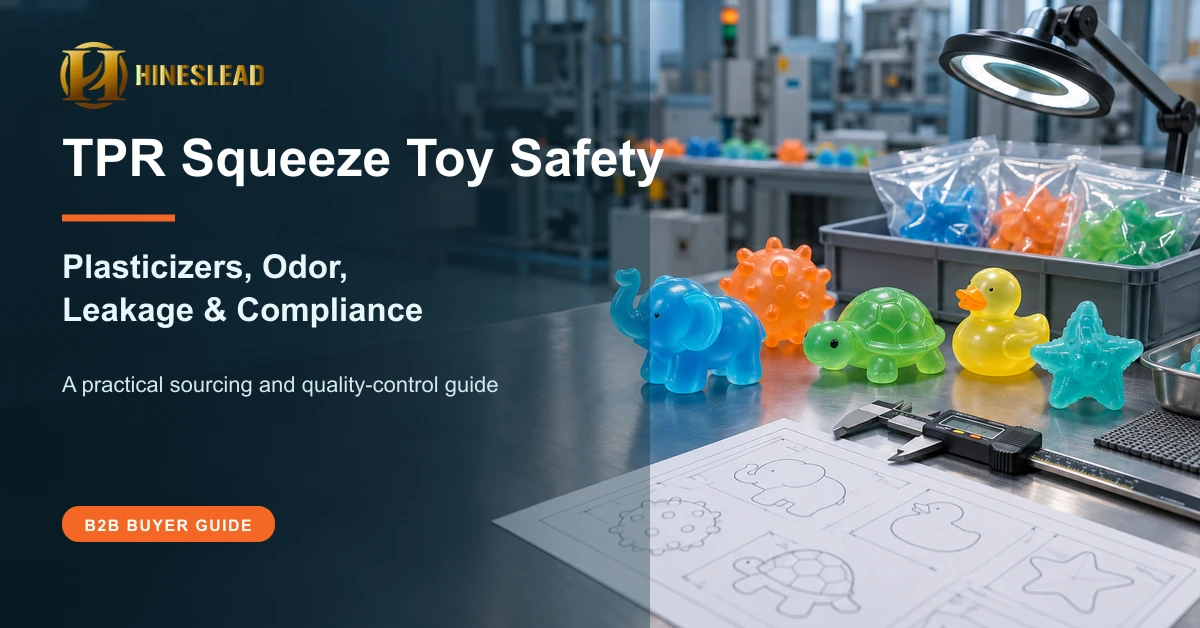
When working with a TPR squeeze toy manufacturer, identify whether the product is solid, hollow, or filled.Review wall thickness, closure design, pigments, surface behavior, and foreseeable stretching. Small mochi-style pieces deserve close attention to intended age, mouthing, size, tackiness, contamination control, and individual packaging. A buyer purchasing mochi squishy toys wholesale should not choose only from photographs. Handling and package conditioning are part of sample approval.
Silicone manipulatives
A silicone squishy toy manufacturer needs the target hardness, geometry, pigments, surface finish, and decoration. For custom silicone sensory toys, review thin webs, hinges, buttons, pull points, and molded joints because local stress can differ from the main body. “Silicone” alone does not establish suitability, food-contact status, or compliance. Claims must follow the actual formulation, intended use, and evidence.
EVA foam pieces
EVA foam toys wholesale programs may include layered puzzles, soft construction pieces, flying toys, balls, or cut shapes. Each construction has different risks. Buyers ordering custom EVA foam toys should inspect edge finish, density, bonding, printed layers, compression marks, and any detachable insert. If the product will be bitten or heavily flexed, include that foreseeable use in the risk discussion.
Plush comfort objects
A custom plush toy manufacturer should map the outer fabric, backing, thread, embroidery, filling, labels, eyes, accessories, and seams. Plush toys OEM projects also need a cleaning decision. A wipeable item, a machine-washable item, and a surface-clean-only item are different specifications. Confirm whether laundering changes pile, filling distribution, seam strength, color, or dimensions.
Screen product ideas before spending on samples
A short design review can remove concepts that conflict with the program before artwork, molds, or packaging are purchased. Bring together the buyer, program lead, safety or compliance owner, and whoever manages cleaning and storage. Give the supplier one consolidated response. Separate comments about personal preference from mandatory requirements.
Begin with foreseeable use. Could the item be mouthed, bitten, thrown, stretched, twisted, picked apart, or used against another surface? Could a seam open and release filling? Could a thin protrusion tear off? Could liquid or gel leak? Could a hard internal part become exposed? Could a cord wrap around a neck or finger? Could two magnets separate? The answer does not automatically disqualify a product, but it determines which hazards and test clauses need attention.
Review the age grade honestly.A toy that looks appealing to young children cannot be moved into an older category by adding a label that conflicts with its design, advertising, and normal recognition. Give the laboratory the final decorated product, intended age, marketing presentation, instructions, and packaging. Ask the laboratory to identify the applicable requirements rather than ordering a generic “full test” with no product review.
Small parts and detachable elements
Be cautious with beads, removable caps, charms, clips, zipper pulls, hard eyes, valves, plugs, and decorative inserts. The risk may appear only after use or abuse testing. If the program includes participants who mouth or pick at products, tell the safety assessor and consider whether a one-piece construction is more appropriate.
Liquids, gels, powders, and fillings
Filled squeeze items add questions about the fill material, closure, leakage, microbial cleanliness where applicable, staining, and disposal. Ask what happens if the outer wall is punctured. Request the full material and component list needed for the destination-market assessment. Do not rely on a description such as “safe gel” without identification and evidence.
Coatings, inks, and fragrances
Coatings and prints are accessible parts of the finished product. Freeze color and decoration before final testing when those changes affect the evidence. Fragrance should be treated as an intentional component, not a last-minute sales feature.Many programs prefer unscented items because participant reactions vary and shared environments may have fragrance policies.
Noise, light, and surprise functions
A pop, whistle, flashing light, or unexpected movement may undermine a quiet-use brief. Test the item in the real room, not only in a busy trade-show booth or factory office. If batteries or electronics are involved, the compliance plan expands and should be settled before design approval.
Plan cleaning before approving the surface
Shared-use products need a cleaning process that the operator can follow consistently. The product designer cannot select a cleaner for a school, clinic, or care setting without knowing the organization’s policy. The buyer should provide the approved method or ask for material compatibility information, then validate the finished product under that routine.
A cleaning trial should use the final colors, coating, ink, seams, and packaging identification. Record the product condition at the start. Apply the specified cleaner, contact time, wiping force, rinse, and drying method for a realistic number of cycles. Inspect color transfer, tackiness, swelling, cracking, delamination, print loss, odor, seam changes, and trapped moisture. If the item fails, change the material, decoration, cleaning method, or use model before bulk ordering.
Porous foam and plush materials behave differently from solid silicone or TPR. A surface that can be wiped is not automatically disinfectable, washable, or suitable for multiple users. Use precise language in instructions.If a product is intended for individual issue, color-coded labels or name fields may help prevent sharing. If it is intended for a shared station, storage and drying space become part of the program design.
| Use model | Packaging and identification | Operational questions |
|---|---|---|
| Individual issue | Named pouch, color code, or personal kit | Replacement route, home transport, storage, instructions |
| Supervised checkout | Numbered items and return inventory | Inspection after use, missing items, cleaning responsibility |
| Shared station | Open bin, clean/used separation, product labels | Cross-use hygiene, drying, rotation, damage removal |
| Retail or take-home kit | Sealed unit package with warnings and care information | Consumer instructions,traceability, returns, replacement parts |
Turn the program brief into a sample plan
Send the product matrix, intended ages, markets, cleaning routine, exclusions, quantity tiers, artwork, package type, and decision date. We can organize the manufacturing questions and identify which options need physical review.
Request Sensory Toy Samples and a Project QuoteUse sample rounds as decision gates
Sending a random box of catalog items is not the same as running a sample program. Each round should answer named questions. Start with available references to compare materials and mechanics. Narrow the range. Then make custom appearance samples with the intended colors and artwork. Test cleaning and handling. Approve packaging. Finally, select compliance and pre-production samples from the controlled configuration.
- Exploration set: compares material families, shapes, resistance, surface, movement, and sound. These items may not match final colors or packaging.
- Program trial set: contains the short-listed products with provisional instructions and identification.Program staff record structured observations, damage, cleaning results, and storage issues.
- Custom appearance set: confirms geometry, colors, decoration, tactile finish, and package concept. Any difference from the intended bulk process is documented.
- Compliance samples: match the frozen bill of materials, construction, colors, artwork, and other relevant features. The laboratory confirms quantity and selection rules.
- Pre-production approval: represents the agreed bulk route and becomes the comparison standard for production inspection.
- Retention set: preserves traceable production units for future comparison, complaints, or change review.
Record the sample code, date, material or formulation reference, color, artwork revision, package revision, and decision for every gate. “Approved by photo” may be adequate for a label position but not for resistance, surface feel, odor, sound, or cleaning behavior. Keep physical reference samples when the attribute cannot be judged reliably on screen.
Review U.S. and EU toy compliance by SKU
Compliance belongs to the finished SKU and destination market. An assortment can contain several constructions, and each one needs a defensible classification and evidence path. Testing one representative item may be possible when products genuinely share controlled materials and construction, but visual similarity alone does not establish a product family.
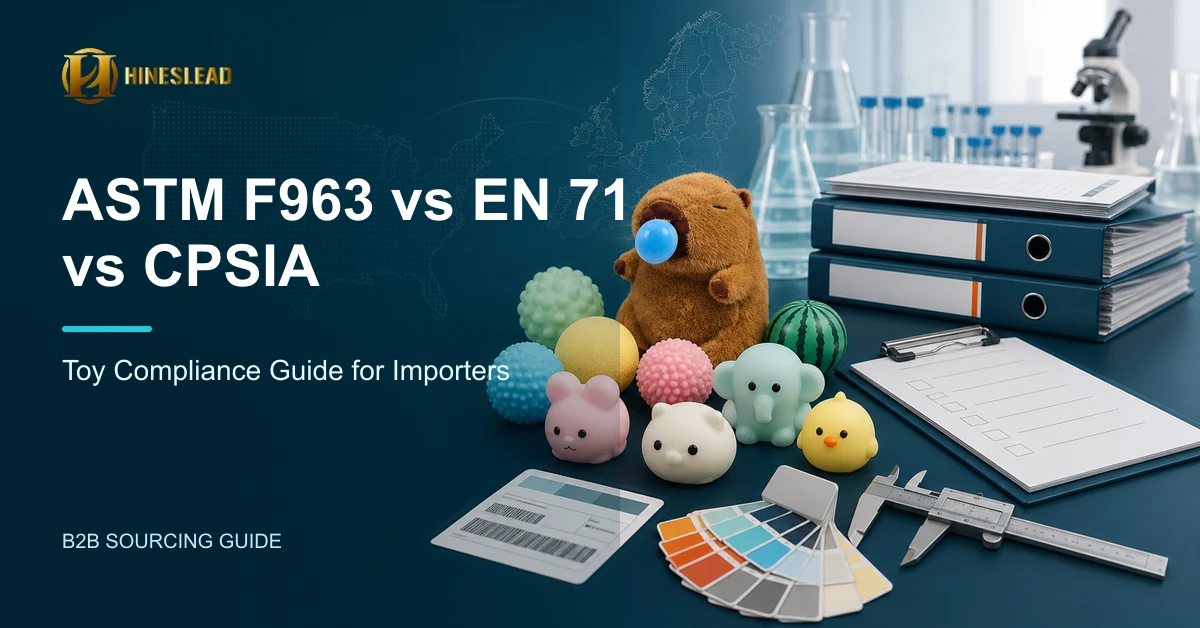
For children’s toys sold in the United States, 16 CFR part 1250 incorporates applicable provisions of ASTM F963 into the federal toy safety rule. The U.S. Consumer Product Safety Commission’s current chart shows requirements that apply to many toys and others that depend on product type. The chart includes subjects such as accessible coatings and substrates, small objects, accessible edges and points, cleanliness for certain liquids, gels, pastes and powders, and producer markings. It also explains which listed provisions require testing by a CPSC-accepted third-party laboratory.
The scope still depends on the toy. Compare four quite different examples: a one-piece foam squeeze shape, a gel-filled TPR item, a plush figure with hard eyes, and an electronic manipulative. Their questions—and potentially their applicable provisions—are not interchangeable. The U.S. importer or domestic manufacturer needs a file grounded in the finished design, applicable rules, laboratory scope, tracking information, and certification obligations. Ask whether the evidence identifies the item tested, its colors and materials, its manufacturing location, and the test date. “Our products passed” is not a substitute for that product-level review.
In the European Union, the European Commission’s toy-safety page describes essential safety requirements and lists the general and particular risk areas that may apply, including physical, mechanical, flammability, chemical, electrical, hygiene, and radioactivity matters. Calendar dates belong in the project file as well. Directive 2009/48/EC is relevant during the transition.Regulation (EU) 2025/2509 entered into force on January 1, 2026; its application date is August 1, 2030. A product with a long development or sales life therefore needs a current transition review. Yesterday’s checklist is a poor planning document.
EU market placement involves more than obtaining an EN 71 report. The responsible manufacturer must perform the applicable conformity work, prepare technical documentation and the declaration of conformity, support CE marking, control production, and provide traceability, warnings, and instructions where required. A harmonised standard can support a presumption of conformity when the relevant version and clauses are properly applied. The final obligation depends on the product and market date.
In every market, review claims and instructions along with the physical toy. “Therapeutic,” “clinically proven,” “improves autism symptoms,” and similar statements can raise evidence and regulatory concerns beyond ordinary toy marketing. The FTC’s health-claims guidance says companies need appropriate substantiation for health-related product claims. Use qualified legal and regulatory advice before making such statements.
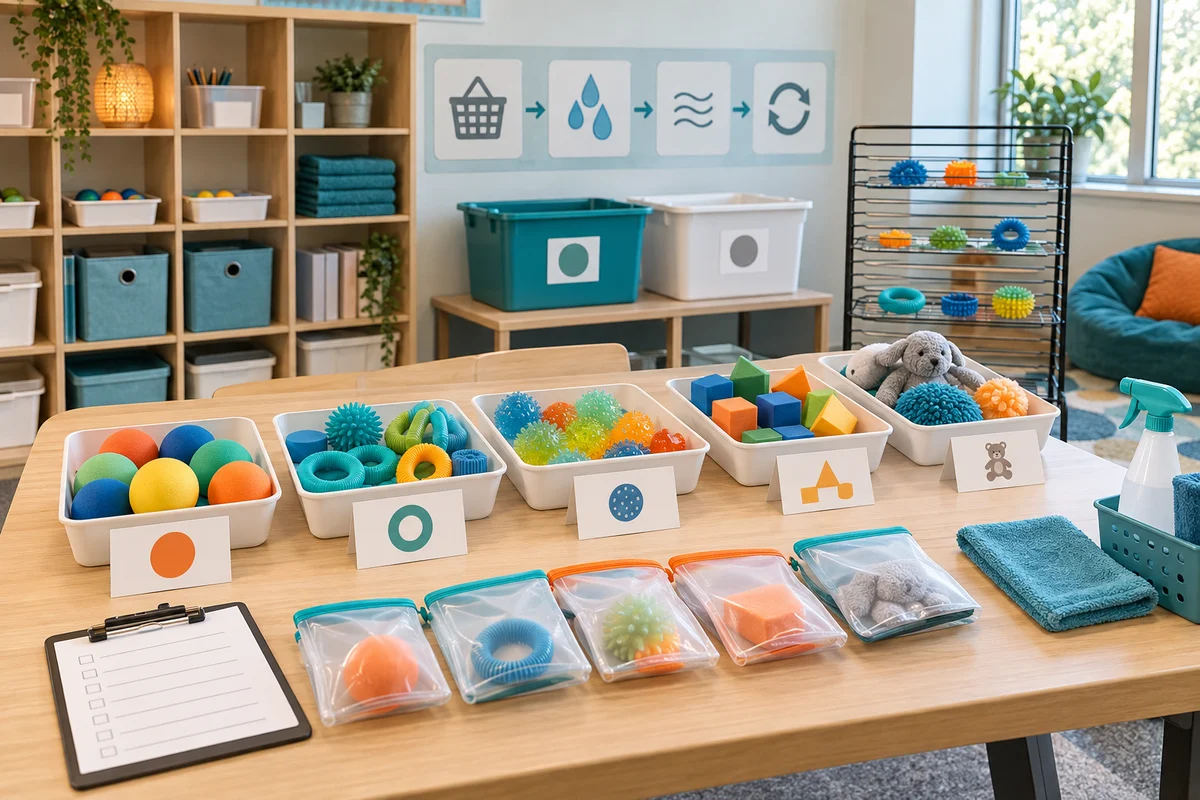
A workable program connects product choice with identification, cleaning, storage, supervision, and replacement.
Approve quality controls that reflect real handling
A quality plan should focus on the ways the product can fail in the program. The list may include dimensions, mass, hardness or resistance, return behavior, seams, closures, fill containment, surface finish, color, print, odor, sound, edge condition, attachments, package count, labels, and carton condition. Use measurable criteria where practical and approved physical samples for tactile or visual features that cannot be reduced to one number.
Repeated-use checks should reflect the proposed use. A squeeze item may need compression cycles followed by inspection for tears, coating cracks, leakage, and permanent deformation. A stretch item may need a defined extension and release method. A plush item may need seam and attachment checks before and after cleaning. A layered EVA item may need flexing and bond inspection. The buyer and supplier should agree on the method rather than relying on casual hand tests performed differently by each inspector.
Set removal criteria for the program. Staff need to know when to take a product out of use: an open seam, exposed fill, persistent tackiness, cracked coating, missing component, leakage, sharp edge, damaged battery compartment, or unidentified ownership may all justify removal depending on the product. These operating rules complement manufacturing controls. They do not replace required compliance work.
| Quality check | Method to define | Decision supported |
|---|---|---|
| Squeeze or stretch behavior | Conditioning, force or deformation, hold time, cycles, recovery | Confirms the approved feel and durability range |
| Surface and decoration | Normal viewing distance, rub or flex exposure, cure age | Identifies unacceptable cracking, transfer, or print loss |
| Cleaning compatibility | Cleaner, contact time, wipe or wash cycle, drying, number of cycles | Supports care instructions and shared-use decisions |
| Construction integrity | Seam, closure, attachment, tear, leakage,and abuse checks | Finds failure modes before distribution |
| Pack-out | Item count, identification, instructions, barcode, carton pattern | Prevents missing parts and program sorting errors |
Design packaging for the operator and the participant
Packaging should make the program easier to run. A retail assortment may need a branded box and consumer-facing information. A school or nonprofit may care more about counted sets, quick identification, clean/used separation, replacement labels, and compact storage. Ask the people who will unpack, distribute, clean, and reorder the products to review the pack-out before printing begins.
Color coding can help organize choices, but do not assign universal meanings such as “blue calms” unless the program has chosen that internal convention. Use labels that describe the product: soft squeeze, firm squeeze, smooth stretch, fabric texture, quiet manipulative. Pictures or simple symbols can support recognition, provided the artwork is clear and the program has reviewed it.
Individual pouches can reduce mixing and protect a surface, but they add cost, material, labeling, and carton volume. Open bins make selection easier but may increase dust and cleaning work. A custom molded tray looks orderly but can waste space and make replacements difficult.Price at least two realistic packaging routes before fixing the design.
Include a product list, basic care directions, inspection or removal guidance, intended age information, warnings, and responsible-party details as required by the market. Keep promotional language separate from safety and care instructions. A crowded package makes important information harder to find.
Ask for a transparent cost and MOQ explanation
The minimum order quantity may be driven by several different items: material preparation, mold use, color batching, print setup, custom labels, pouches, inserts, cartons, or the supplier’s efficient production run. An assortment adds another layer because each SKU can have its own minimum. Ask which component sets the threshold and whether the same materials, colors, artwork, or packaging can be shared across the range.
Do not expect the lowest unit price to produce the best pilot. A smaller program may benefit from stock shapes, standard colors, one-color labels, and a common pouch while the team learns which products are actually used. A later order can add custom molds or more complex decoration after the assortment has been validated. Request price tiers, but include sample, tooling, setup, testing, inspection, packaging, freight, duty, storage, replacements, and unusable inventory in the decision.
Lead time also depends on the route. Catalog samples, custom-colored samples, new molds, printed packaging, laboratory work, revisions, and bulk production are separate activities.Ask for a milestone schedule showing what starts after artwork approval, sample approval, deposit, or another agreed condition. Hines should confirm MOQ, sampling time, tooling, testing support, and production timing for the specific design and order rather than presenting a blanket website promise.
Use related manufacturing routes without turning the article into a keyword list
A complete program may include products from several Hines catalog families. Buyers comparing sensory toy manufacturer capabilities should map each proposed SKU to its actual material and process. That makes the quotation, test plan, quality checks, and replacement strategy easier to understand.
Foam-based programs may use slow rising squishy toys wholesale for a controlled recovery experience or work with a squishy toy manufacturer on a new molded shape. Promotional versions may include custom stress balls with logo or promotional stress balls wholesale. Artwork, coatings, age presentation, intended audience, and packaging all need review on the finished product.
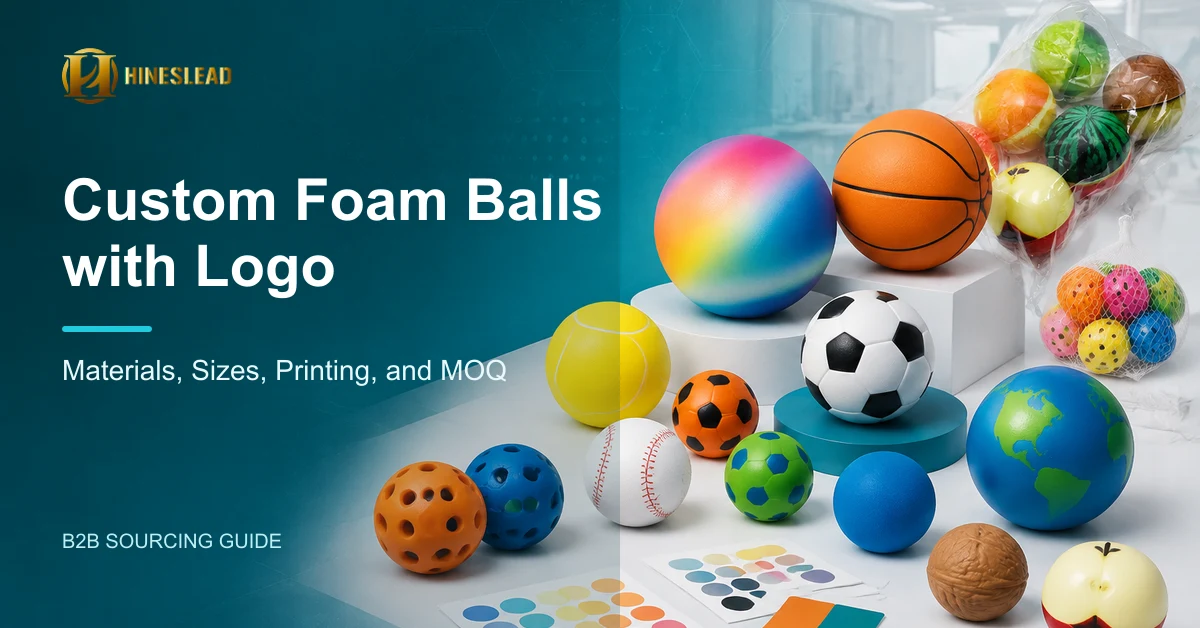
Movement-focused assortments might include custom foam sports toys or foam balls wholesale.State whether the item is squeezed, rolled, caught, thrown, bounced, or used as a soft target. Those uses change mass, rebound, impact, size, durability, and supervision questions.
A buyer engaging an OEM toy manufacturer China should request one project file covering the approved drawings, bill of materials, sample codes, artwork, packaging, markets, quality criteria, and change controls. The same discipline applies to broader custom toy manufacturing. A mixed kit is not one homogeneous product merely because it is sold in one box.
Supplier questions that reveal whether the project is ready
- Which product families can be sampled from existing items, and which features require custom development?
- What material, formulation, hardness or density, surface, fill, closure, seam, and decoration are proposed for each SKU?
- Which features of the sample will differ from the bulk process?
- How will the supplier identify the approved material, color, artwork, mold, package, and sample revisions?
- What foreseeable-use concerns should the buyer review before freezing the design?
- Which destination-market requirements may apply, and which questions need a qualified laboratory or compliance adviser?
- Can the supplier provide product-specific records rather than a generic report for a different item?
- How will changes to pigments, coatings, inks, fills, adhesives, components, factory, or packaging be approved?
- What cleaning compatibility information is available, and what must be validated on the final decorated product?
- Which process or packaging component sets the MOQ for each SKU?
- What is included in tooling, sample, printing, packaging, testing, and inspection quotations?
- What pre-production and production samples will be retained, and how are batches identified?
The questions a supplier asks are also evidence. A useful supplier will want to know the intended age, market, use, construction, artwork, cleaning method, quantity, packaging, and decision date.Immediate agreement to an undefined request may feel efficient, but it postpones the difficult work until after cost and schedule expectations are set.
A practical RFQ template for sensory-toy programs
Copy the following fields into the inquiry. If a field is undecided, write “recommendation requested” and explain the decision the supplier should support.
| RFQ section | Information to provide | Expected supplier response |
|---|---|---|
| Program | Setting, age range, supervision, individual or shared use | Suitability questions and construction options |
| Assortment | Desired product types, sensory attributes, exclusions, units per set | SKU matrix with proposed materials and alternatives |
| Performance | Reference samples, resistance, recovery, sound, surface, cleaning | Sample route and measurable approval methods |
| Branding | Vector artwork, colors, print size, locations,package design | Artwork limits, proof stages, decoration method, setup |
| Compliance | Destination, age grade, sales channel, required documents, retailer protocol | Open questions, proposed test scope, record responsibilities |
| Quality | Critical functions, visual standards, cycle checks, cleaning trial | Inspection plan and approved-sample controls |
| Commercial | Quantity tiers, Incoterm, destination, packaging, target dates | Itemized quote, MOQ drivers, milestones, exclusions |
A hypothetical program example
Consider a nonprofit preparing 300 take-home kits and ten shared activity stations for participants aged eight and older. The first request asks for “quiet sensory toys for autism.” The sourcing team receives three inexpensive catalogs, but the offers cannot be compared. One set contains liquid-filled balls. Another includes tiny mochi figures. A third includes flashing toys and a scented slow-rising shape.None of the suppliers has been told how the kits will be used or cleaned.
The team rewrites the brief. Take-home kits will be issued to individuals and stored in a zip pouch. Shared stations require products that can tolerate the organization’s approved wipe routine and dry on an open rack. The program wants quiet handling, no fragrance, no batteries, no loose beads, and no liquid fill. It asks for three distinct tactile options rather than five versions of the same squeeze toy. The destination is the United States, and the finished products will be marketed for children.
Suppliers now propose a molded PU foam shape, a one-piece silicone manipulative, a textile item with embroidered features, and a larger TPR squeeze option for review. The small TPR pieces are removed because they do not fit the program’s age and mouthing-risk discussion. The program tests surface preference without declaring one option universally suitable. Cleaning trials show that one printed coating loses color, so the artwork method is changed before final compliance samples are selected.
The final quotation separates product, printing, pouch, labels, testing, inspection, and freight. Each SKU has a sample code and approved specification. Take-home pouches carry care and replacement information. Shared items are numbered and paired with a damage-removal checklist. The program has not proved a therapeutic outcome. It has built a better-controlled product and purchasing process.
Frequently asked questions
Are sensory toys a treatment for autism?
A toy should not be presented as a treatment unless the claim has an appropriate legal and scientific basis. Sensory products can be offered as optional tools within a program designed by qualified people. Describe the product’s observable features and intended use. Avoid promising changes in symptoms, behavior, attention, sleep, learning, or distress.
Is there one best sensory toy for all autistic children?
No. “Best for everyone” is the wrong purchasing test. Preference, ability, risk, setting, and available supervision change from person to person. Offer choices, involve the adults and professionals responsible for the program, and record feedback from a structured trial. Any item that causes discomfort or shows damage should be withdrawn.
What lets a supplier prepare a useful quotation?
Give the supplier the intended age, setting, supervision, tactile preferences, exclusions, product types, quantity tiers, colors, artwork, packaging, sales market, cleaning method, compliance expectations, destination, and timing. If hand feel drives the choice, include a physical reference or clear sample photo. A useful quotation also says what the supplier assumed and what the price excludes.
Can one test report cover a mixed sensory kit?
Do not assume so. A kit may contain different materials, constructions, components, colors, and hazards.A qualified laboratory can advise whether evidence can be grouped and which items need separate testing. Document the rationale and map every SKU to the reports and records that support it.
How should buyers compare squeeze resistance?
Use the same conditioning, compression or force method, hold time, release, and recovery observation for all samples. Keep the approved reference. If the team uses a simple hand rating, define who rates it and under what conditions. A measurable method is better when resistance is central to the product.
Can shared sensory toys be disinfected?
That depends on the material, construction, decoration, cleaner, contact time, and required hygiene standard. “Wipeable” is not the same as disinfectable. The program should define its approved process and validate compatibility on the final product. Porous items may require individual issue or a different cleaning route.
What is a reasonable MOQ?
There is no responsible universal number. MOQ can depend on stock versus custom shape, material batching, color, printing, packaging, labels, testing, and production efficiency. Ask which component sets the minimum and request price tiers. A stock item with standard packaging may follow a different threshold from a custom mold and printed box.
How long does custom development take?
The schedule depends on product selection, drawings, mold development, material and color samples, artwork proofs, cleaning trials, packaging, testing, revisions, and production.Request a milestone plan with starting conditions and decision deadlines. Confirm the project-specific schedule in the quotation.
How can intellectual property be protected?
Identify who owns artwork, molds, CAD files, patterns, packaging, and approved modifications. Use written confidentiality and ownership terms reviewed by appropriate counsel. Limit file access, apply revision control, and state whether the supplier may display or reuse the design. Do not rely on an informal message after tooling begins.
What should happen when the material or color changes?
Pause release and document the change. Compare the new and approved configurations, consult the laboratory or compliance owner where the evidence may be affected, repeat relevant performance or cleaning checks, and update sample codes and records. No substitution should enter production without written approval.
Agency sources behind this guide
For the autism, advertising-claim, and toy-safety points above, we checked the agency pages below. Treat these links as the beginning of the product review, not a frozen compliance file. Once the finished item, destination, and production date are settled, check the live pages again.
- CDC — autism signs and symptoms
- CPSC — its current ASTM F963 requirements chart
- European Commission — the EU toy-safety overview
- FTC — guidance on substantiating health claims
Send an inquiry a supplier can answer
An answerable sensory toys wholesale inquiry starts with intended ages, setting, supervision, product types, wanted and excluded sensory features, cleaning routine, markets, artwork, package format, quantity tiers, and target dates. Send that working brief to Hines. We can sort it into the product questions, sample decisions, and quotation details that remain open. Compliance, MOQ, tooling, price, and lead time are specific to the chosen designs and destination; the project quotation should confirm each one.
Request a custom sensory-toy project review
Send your assortment brief, reference products, quantities, artwork, packaging, market, cleaning requirements, and launch window. We will identify the information needed for samples and a project-specific quotation.
Get a Sensory Toy Catalog and Compliance Checklist