Updated: September 1, 2026 · 18-minute buyer’s guide
Custom Silicone Fidget Toys Cost: Tooling, Durometer, Color, and MOQ
What should a buyer expect to pay for a custom silicone fidget toy? There is no responsible one-line answer. Two products with the same outside dimensions can have very different costs when one uses a stock mold and a single color while the other requires a new multi-part tool, several colors, fine surface textures, individual retail packaging, and market-specific testing. A useful quotation must therefore connect price to a frozen product specification.
This guide explains the commercial logic behind that quotation. It is written for importers, distributors, promotional product companies, sensory-product brands, educational suppliers, and retailers comparing a silicone squishy toy manufacturer or a fidget toys manufacturer. You will not find a made-up universal MOQ or a teaser price here. Until size, material, tool, decoration, pack, volume, market and timing are known, either figure would be guesswork.
Short answer for purchasing teams
Seven choices do most of the work in a cost model. They concern the mold, the part’s size and weight, the silicone and hardness, color count, molding and assembly difficulty, decoration and pack, and the volume available to absorb development expense. Compliance work, inspection level, freight, duty, and rejected-product risk belong in the landed-cost model even when they do not appear in the factory unit price.
Start with a specification, not a target price
A buyer may begin with a target such as “a soft sensory piece for a value retail program.” That is a sensible commercial direction, but it is not enough to cost a product. The supplier still needs to know what the item is expected to do. Picture the use: a repeated fingertip press, a two-way stretch, a fold, a key-ring attachment, pet play, or simply a desk object. The audience matters just as much. A child’s toy, an adult promotional item and a component inside another product do not lead to the same risk review. Material, geometry, tests and even the manufacturing route can change with that definition.
For a usable cost brief, put the finished size and rough shape beside the target weight or feel. Add age group, destination market, sales channel, colors, logo method, pack, forecast, delivery need and tests required by the importer or retailer. A sketch is enough for an early budget conversation—not for a final offer. The price can firm up after the 3D drawing, material, finish, pack and test scope stop moving.
Otherwise, the cheapest first offer tends to grow legs. Tool changes arrive, then extra colors, inserts, test fees, retail packaging and inspection. Compare numbers only after every supplier has priced the same brief revision.
A practical silicone fidget toy cost model
For internal planning, separate fixed development cost from variable unit cost and post-production cost. The formula below is more useful than a marketplace price seen for a different product:
Estimated landed cost per sellable unit = variable product cost + allocated tooling and development + packaging + testing and inspection allocation + freight and import charges + expected quality-risk allowance.
| Cost block | What changes it | What the buyer should request |
|---|---|---|
| Development | 3D work, engineering review, prototypes, revisions | Scope, revision allowance, file ownership, approval gate |
| Tooling | Parting line, cavities, texture, inserts, undercuts, number of components | Tool description, ownership, storage, expected maintenance |
| Material | Silicone specification, hardness, pigments, part weight, process scrap | Material declaration, approved sample, color reference |
| Conversion | Cycle time, cavities, demolding, trimming, assembly, inspection | Process assumptions and quality checkpoints |
| Decoration | Color count, printing, embossing, inserts, surface treatment | Artwork limits, proof method, adhesion requirement |
| Packaging | Bulk pack, bag, box, insert, label, display, carton efficiency | Pack-out drawing, materials, carton size and weight |
| Compliance and logistics | Age grade, market, test scope, inspection, shipping mode, destination | Test plan, inspection standard, Incoterm and port |
This model also explains why unit price usually falls as volume rises, but not in a perfectly smooth line. A quantity that fills the available tool capacity efficiently, uses a complete batch of material, or packs neatly into export cartons can be more economical than a nearby quantity that creates leftovers. The correct question is not simply “What is your best price?” It is “Which quantity breaks produce a real process or packaging efficiency, and what assumptions are attached to each break?”
Tooling: the largest visible fixed cost
When an existing mold is suitable, the project can avoid most new-tool expense and move more quickly to color and packaging samples. The trade-off is limited differentiation. The buyer must accept the existing dimensions, tactile features, parting lines, and other geometric decisions. A custom mold creates a product that can be aligned with a brand, a sensory objective, or a retail story, but the tool has to be engineered before it can repeatedly release acceptable parts.
Tool cost depends on more than length and width. A deep shape may need a different opening direction. Fine lattice textures can make air release, fill behavior, and demolding harder. Thin hinges may tear during removal if the geometry and material are not balanced. An undercut can require a flexible demolding strategy or a more complex tool. Separate color zones may require multiple operations or components. A metal insert, key-ring connection, magnet, or rigid frame changes the tool and assembly plan. Sometimes the cheapest engineering change is almost invisible: a better corner radius can help the part release and keep a tear from starting.
Make the tool quotation concrete. Is this a prototype tool or a production tool? How many cavities are planned? Where will the parting line sit, and what finish will it leave? The commercial side also needs an answer: ownership after payment, storage, maintenance and the price of a later design change. Be wary of a tool-life number with no definition behind it. Construction, part design, process control, care and the agreed meaning of an acceptable part all affect that figure.
How to reduce tooling risk without making the product generic
Freeze the design in stages. First approve a dimensioned concept that answers basic use and safety questions. On the digital model, look closely at walls, radii, draft, parting line, decoration space and assembly. Still unsure about grip or hand feel? A suitable physical prototype is cheaper than discovering the problem after the production mold is cut. Finish with a pre-production sample made by the intended process and judge it against the signed specification. Every late change is more expensive than the same change made on paper.
Do not remove thickness, radii, or reinforcing features simply to reduce material weight. A cheaper part that splits during normal squeezing, curls on a retail peg, or arrives distorted is not a lower-cost product. The target should be the lightest reliable design that meets the agreed function, appearance, and compliance plan.
Durometer and hand feel: specify the outcome
“Soft silicone” is not a complete specification. Words such as squishy, elastic, stretchy and firm sound clear until two people squeeze the same sample. A durometer reading gives the discussion a measurable anchor, but it cannot tell the whole story. Walls, ribs, internal voids, shape, texture, temperature and the direction of force can make parts with similar readings behave quite differently in the hand.
A better brief combines a measurable target with a reference sample and a functional test. For example: approve hardness on the agreed scale and test method; compare the squeeze force at an agreed compression; check recovery after repeated cycles; inspect whether the lattice returns flat; and verify that the material does not tear at corners or attachments during the agreed use-and-abuse procedure. The final golden sample should be retained by both buyer and supplier.
Very low hardness can increase tackiness, attract dust, complicate demolding, or reduce tear resistance in thin sections. A firmer compound can make the item easier to process and more dimensionally stable, but it may miss the intended sensory experience. The economical choice is not automatically the lowest or highest durometer. It is the material-and-geometry combination that reaches the approved feel at a stable production yield.
Color decisions can add operations, scrap, and approval time
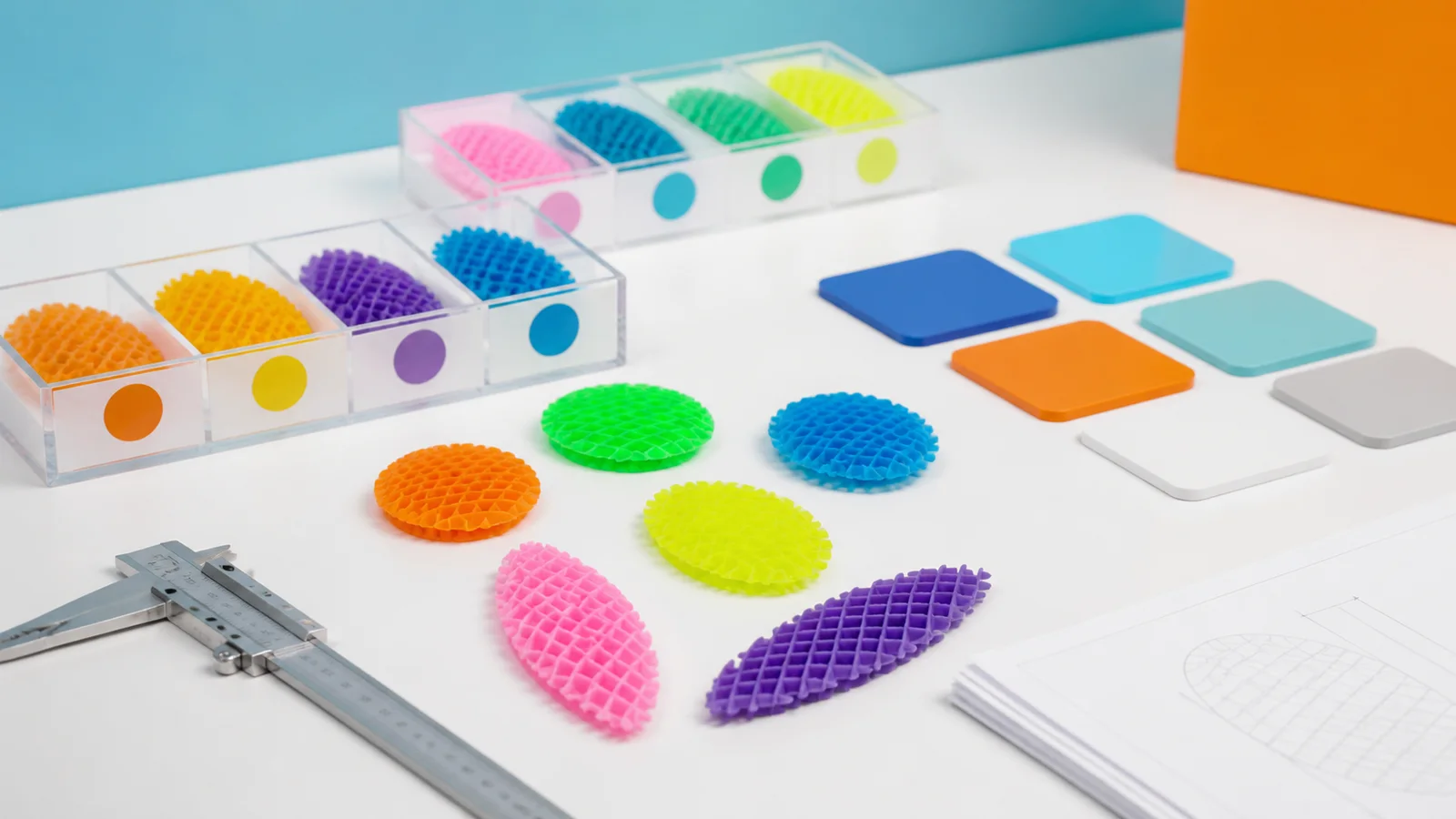
A single-color part made to a standard palette is usually the simplest path. Custom color matching adds pigment development and approval. With several colors, the route might involve separate batches, successive molding steps, overmolding, bonded pieces or hand assembly; the geometry decides. Marble, gradient, glow, translucent, glitter and color-change effects deserve their own control rules. A striking sample is not yet a production tolerance.
Specify color using an agreed physical or numeric reference, then approve it on the intended silicone and surface finish. A color viewed on a monitor is affected by display settings. A pigment chip can also look different once molded into a thick, translucent, textured, or matte part. Ask to see how the approved recipe is filed and what the factory will put beside a later reorder to judge the match.
For an assortment, write down the split and ask whether every shade carries its own batch minimum. Also settle how overrun and shortage will be balanced. Six colors totaling 6,000 pieces can mean six small production lots, not one large one. Color changes bring setup and scrap, while the packing line still has to preserve the promised mix in every carton.
MOQ is a consequence of the production plan
MOQ is not a moral judgment about whether an order is attractive. It is the quantity at which material preparation, color batching, tool setup, molding, trimming, assembly, inspection, and packing can be performed without an unreasonable cost per sellable piece. The economic minimum may also be driven by a printer, packaging converter, accessory supplier, test laboratory, or carton requirement rather than the molding operation itself.
If the proposed MOQ is above the launch quantity, ask which element creates the constraint. Several practical alternatives may exist: use a stock shape with a custom color; reduce the color count; use a standard package with a custom label; combine colorways that share the same material; pay a clearly stated small-batch surcharge; or run a paid pilot with limited decoration. A supplier should explain the cost effect, not merely repeat the minimum.
A pilot order still needs a production-representative sample, inspection criteria, traceability, and a written change process. Small quantity does not make quality problems cheaper when a retailer launch date, influencer campaign, or school program depends on the goods arriving correctly.
Decoration, assembly, and packaging
Silicone can carry a brand through molded relief, recessed marks, contrasting inserts, attached tags, or selected print methods. The correct method depends on surface energy, texture, flexing, color contrast, artwork line width, abrasion, and regulatory considerations. A logo that looks sharp on a flat proof may distort across a curved, stretching surface. Request an actual decorated sample and define an adhesion or rub check that reflects the product’s use.
Every separate component deserves its own tolerance and attachment review. Key rings, cords, plastic frames, magnets, rigid eyes, clips, or adhesive labels can create assembly labor and new failure modes. If the product is intended for children, small parts, accessible edges and points, cords, magnets, and other features may change the applicable safety assessment. Passing information for the base compound does not, by itself, clear the assembled toy.
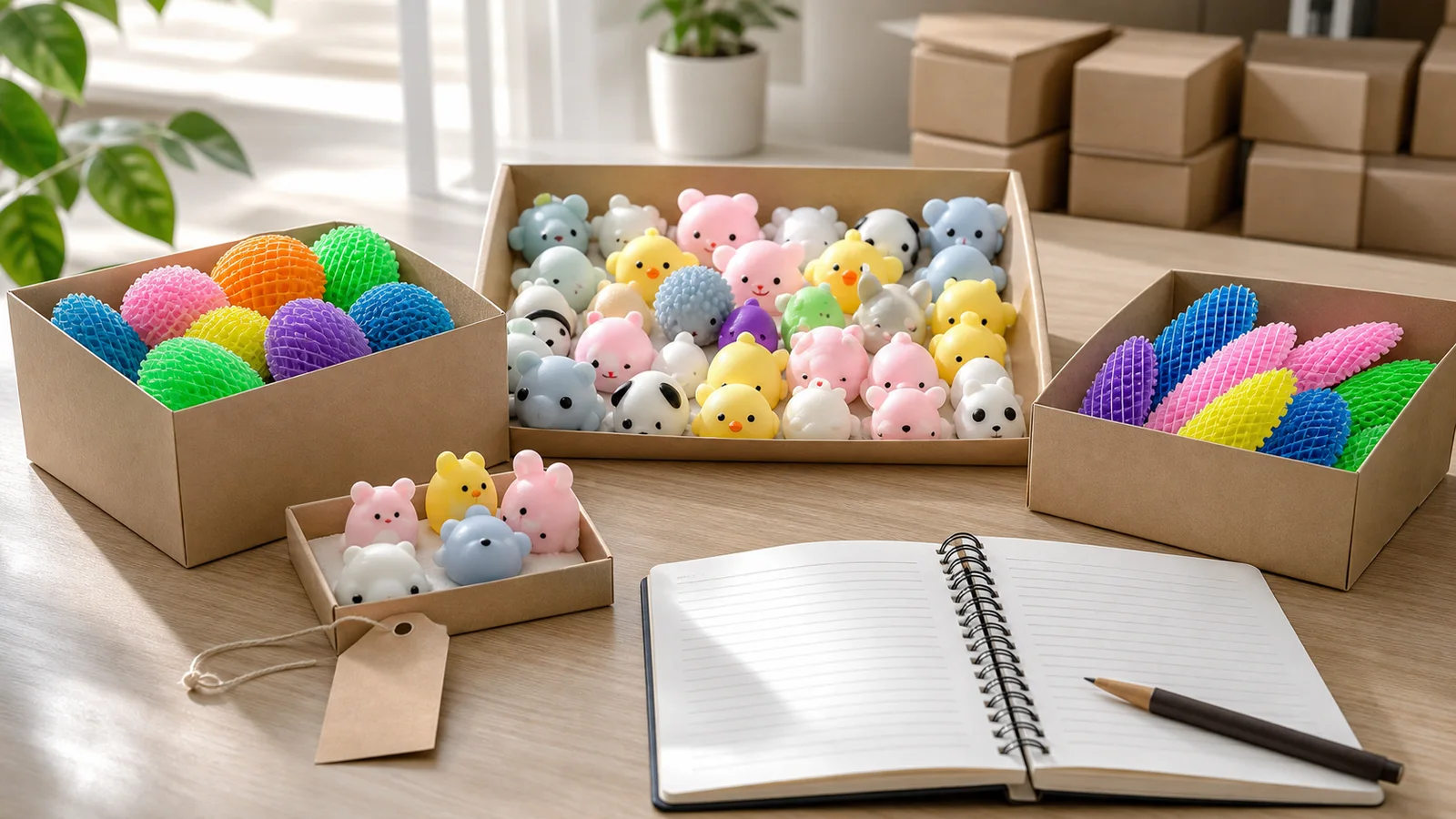
Packaging sends its bill twice. The first part comes from the converter and packing line; the second appears in freight volume, damage, shelf presentation and disposal duties. A compact bulk bag may suit a distributor that repacks locally. A retailer may need a hangable box, insert, barcode, warnings, multilingual copy, lot code, and shipping mark. Ask for a dieline and a pack-out drawing before approving artwork. Then confirm finished carton dimensions and weights using a packed sample rather than a spreadsheet estimate.
Need a comparable quotation?
Send one brief to every shortlisted supplier: drawing or reference image, finished size, intended user and market, quantity by color, logo method, packaging, required tests, destination and delivery window. Hines can review the scope and identify which assumptions still need to be frozen.
Sampling: pay for answers, not just a good-looking piece
A sample program should reduce specific risks. A color sample answers whether the pigment and finish are right. A feel sample compares durometer and geometry. A decorated sample tests artwork scale and adhesion. A packaging sample checks fit, protection, copy, scan position, and shelf presentation. A pre-production sample demonstrates the final combination. Treating all of these as one undefined “sample” creates confusion about what has actually been approved.
Give every sample a version and date, then tie it to the drawing, compound, color, hardness reference, weight, process, decoration and pack. Note any departure in plain language. Approval should not be ambiguous: pass it, pass it with a named correction, or reject it. When a correction goes straight into production without another physical sample, record who accepted that risk and what evidence will prove the change on the line.
Sample fees vary because a supplier may be modifying a stock item, producing a hand prototype, making a temporary tool, setting up a print process, or running a production tool outside the normal schedule. Ask what the fee includes, whether freight and test work are separate, whether revisions are included, and whether any amount may be credited against a later order. The answer matters more than a low headline fee.
Quality control that belongs in the quotation
Quality is not an inspection added after production. It starts with measurable requirements that the process can meet. For silicone sensory products, a useful control plan may include incoming material identification, pigment batch control, first-piece dimensions, part weight, visual surface criteria, flash and trimming limits, color comparison, hardness or feel reference, tear-prone feature checks, print or insert attachment, quantity, packaging, and lot traceability. The exact plan should match the design and intended use.
AQL-based final inspection can be useful for visual and dimensional sampling, but the buyer must define the inspection level, defect categories, critical defects, major defects, minor defects, and special tests. A generic “AQL inspection” line in a purchase order is not enough. Destructive tests may require separate samples. If a performance measure can wander during molding, watch it on the line; the final inspection is a poor place to discover a whole batch has drifted.
Set the rules for a failed lot before one exists. Who quarantines it, investigates the cause, corrects the work, orders re-inspection and closes the record? A realistic quality plan allows for human and process variation while protecting the buyer from unsafe or commercially unacceptable output. It should also prevent cosmetic perfection requirements from being invented after the price is fixed.
US and EU compliance: define the product before selecting tests
Compliance cannot be copied from a similar-looking listing. The product classification, intended age, foreseeable use, components, materials, packaging, claims, and destination determine what applies. For US children’s toys, CPSC’s business guidance points manufacturers and importers to mandatory ASTM F963 requirements under 16 CFR part 1250. The agency’s page is equally clear that a firm has to identify the clauses relevant to its own toy, since the entire standard does not apply to every design. See the CPSC Toy Safety Business Guidance.
In the EU, the Commission’s toy-safety page describes the safety duties and CE marking attached to market access. It also sets out the new timetable: Regulation (EU) 2025/2509 took effect on January 1, 2026, with application scheduled for August 1, 2030 after the transition. A program expected to run for years needs qualified advice on today’s duties and that coming change. See the European Commission’s Toy Safety in the EU page.
Use those pages as a map, not as the whole journey. The legal text, a product risk assessment and advice from the responsible compliance professional and qualified laboratory still matter. Before production, the importer should sign off the test plan and ownership of samples and documents. Reports then need to match the shipped SKU—its material, colors, parts and age grade—not a vaguely similar product.
How to compare suppliers beyond the quoted unit price
A capable supplier asks questions that protect the order. If the request omits age grade, target market, part size, color count, packaging, or test scope, an instant final price is built on hidden assumptions. Compare the quality of clarification, not just response speed.
- Material control: Can the supplier identify the proposed silicone and preserve the approved material and pigment record for reorders?
- Design review: Does the quotation flag thin sections, undercuts, difficult demolding, weak attachments, or decoration limitations?
- Tooling transparency: Are tool scope, ownership, change cost, storage, cavities, and approval samples stated?
- Sample discipline: Are revisions numbered and tied to drawings, materials, colors, and packaging?
- Quality planning: Are critical requirements measured during production, with final inspection clearly defined?
- Compliance boundaries: Does the supplier avoid promising that one old report automatically covers a new SKU?
- Commercial completeness: Does the offer separate product, tooling, setup, packaging, testing, inspection, freight, tax, and optional work?
On its website, Ningbo Yinzhou Hines Rubber & Plastic Co., Ltd. gives 2011 as its establishment year and describes work spanning PU foam, EVA, TPR, silicone, plastics, stress-relief toys, outdoor items, gifts, pet products and sports goods. That range is handy when several tactile materials are still on the table. It does not remove the need to verify the specification, sample, compliance scope and commercial offer for this particular project.
Silicone, TPR, or PU foam?
Begin the material decision with the experience in the user’s hand and the way the product is built. Silicone can suit flexible, washable-looking, elastic molded forms, although the chosen formulation and every product claim still need verification. TPR is common in soft squeeze and mochi-style categories and brings a different stretch, tack and cost structure. PU foam fits compressible stress shapes and slow-recovery squishies, where density, cells, paint, skin, odor and rebound take center stage. EVA is more often seen in lightweight closed-cell shapes, sports pieces, mats and cut or molded items; it does not mimic an elastic silicone feel.
A good OEM toy manufacturer China sourcing conversation does not force every concept into one material. It compares materials against the buyer’s size, geometry, feel, durability, decoration, packaging, test, price, and volume targets. If the design is still open, request a small material sample set before investing in tooling.
Related Hines sourcing paths
The following links connect the broader product families requested by B2B buyers. They are included as navigation, not as a claim that one process, MOQ, report, or lead time applies to every category.
Copy-and-send RFQ checklist
- Buyer company, country, channel, and project contact
- Product use, intended age, target market, and launch date
- 2D sketch, 3D file, reference sample, or clear photographs
- Finished dimensions, target weight, geometry, texture, and attachments
- Preferred material, hardness or reference feel, and functional tests
- Color reference, number of colors, assortment ratio, and reorder color control
- Logo artwork, decoration method, size, location, and durability expectation
- Packaging type, artwork responsibility, labels, warnings, barcodes, and carton marks
- Quantity per design and color, annual forecast, and pilot-order requirement
- Required reports, retailer protocol, inspection level, and document format
- Incoterm, destination port or address, preferred transport, and requested delivery window
- Quote validity, payment milestones, tooling ownership, file confidentiality, and IP confirmation
Invite suppliers to list every assumption and exclusion. If one quotation includes a new production mold, custom pigment, retail box, third-party test, and pre-shipment inspection while another includes only an undecorated product in bulk packaging, the numbers should not be placed in the same price column.
Three realistic sourcing routes
Route one: stock shape, custom presentation. A buyer selects an available tactile shape, chooses from feasible colors, adds approved branding or a branded package, and orders a controlled pilot. This route can shorten development and avoid a new production tool. It is useful when the main question is market demand. Its limitation is obvious: the geometry may also be available to other buyers, and the existing decoration area or tactile behavior cannot be freely changed.
Route two: semi-custom range. The team keeps a proven base geometry but changes selected features such as texture, color assortment, attachment, insert, or packaging. This may create more distinction without redesigning every element. The supplier must still explain which changes require tool work and whether the revised part alters strength, demolding, assembly, or compliance. “Semi-custom” is a commercial label, not a technical shortcut.
Route three: original molded product. The buyer owns or licenses the concept, commissions engineering and tooling, and approves a production-representative sample before the launch order. This route gives the most control over proportions, tactile function, brand language, and family extensions. It also creates the most decisions. Product development, IP ownership, mold terms, confidentiality, change control, test responsibility, and reorder records should be settled in writing.
None of these routes is automatically superior. A seasonal promotional program may favor a stock platform and strong artwork. A sensory brand building a signature mechanism may need a new tool. A retailer testing three price points may use both. Ask the supplier to quote the routes side by side, state what the buyer gains and gives up, and show the quantity at which the extra development cost becomes commercially reasonable.
Frequently asked questions
Can Hines quote from a picture?
A picture can support an initial feasibility discussion and budget range, but a final quotation needs dimensions, material and feel targets, construction, color, decoration, packaging, quantity, market, test scope, and delivery terms. If the picture shows another company’s protected design, the buyer should confirm that it has the right to reproduce or adapt it.
Is a stock mold always cheaper?
It usually avoids new-tool expense, but it may not meet the brand, function, or retail objective. Compare the total project value. A stock shape with custom color and packaging can be an efficient market test; a custom tool can be justified when differentiation, ergonomics, or an exclusive geometry supports the program.
What is the best durometer for a sensory fidget toy?
There is no universal best value. The correct choice depends on wall thickness, texture, size, deformation, recovery, tear resistance, temperature, intended user, and the desired hand feel. Approve a measurable target together with a physical golden sample and functional tests.
Why does adding one color affect MOQ?
Each color can require separate pigment preparation, setup, process control, cleaning, sampling, and assortment packing. The added color may also have a minimum batch. Ask for the quantity and surcharge effects of one, two, and several colors before finalizing the artwork.
Can an existing material report cover a custom toy?
Not automatically. Reports must be reviewed for the exact material, colors, components, supplier, age grade, SKU, applicable clauses, destination, and current validity. Product-level mechanical and physical requirements may depend on the finished design. Confirm the plan with the responsible importer and qualified laboratory.
What should be approved before mass production?
At minimum: signed drawing and specification, material and color, golden sample, decoration, packaging artwork and pack-out, quantity and assortment, quality criteria, inspection plan, compliance plan, approved reports or test samples, delivery terms, and a written list of acceptable deviations. The purchase order, quotation, specification, sample, and artwork should agree.
How can a buyer lower cost without increasing failure risk?
Reduce unnecessary colors and components, use a stock or semi-custom platform for a pilot, simplify packaging, design for reliable demolding, standardize shared parts across SKUs, and choose efficient quantity breaks. Do not cut the features that provide tear strength, secure attachments, essential labeling, or required testing.
What information speeds up the quotation?
A dimensioned drawing or physical reference, product use, target market and age, material or feel sample, quantity by color, logo file, package format, test requirements, destination, and delivery window. If an item is still at concept stage, say which decisions are open so the supplier can propose alternatives instead of guessing.
Build the quotation around the decisions that matter
A custom silicone fidget toy is not expensive or inexpensive in isolation. It is a combination of geometry, material, color, process, packaging, quality, compliance, quantity, and timing. The best sourcing outcome comes from making those choices visible before suppliers compete on price. That approach produces quotations that can be compared, samples that answer real questions, and purchase orders with fewer surprises.
Ready to discuss a custom silicone sensory toy?
Send your drawing or reference, size, desired feel, colors, logo, packaging, quantity, market and delivery window. The Hines team can review manufacturability and prepare a project-specific response.