Why squishy toys still sell, and why buyers should look past the cute face
Squishy toys have stayed in the market for a reason: they are cheap to display, easy to pick up, and they invite a hands-on decision. That matters to retailers, sourcing managers, and product teams because the item has to do more than look playful. It has to survive repeated squeezing, keep its shape well enough to remain appealing, and arrive in packaging that sells the idea in three seconds or less. In this category, the visual impression is half the product.
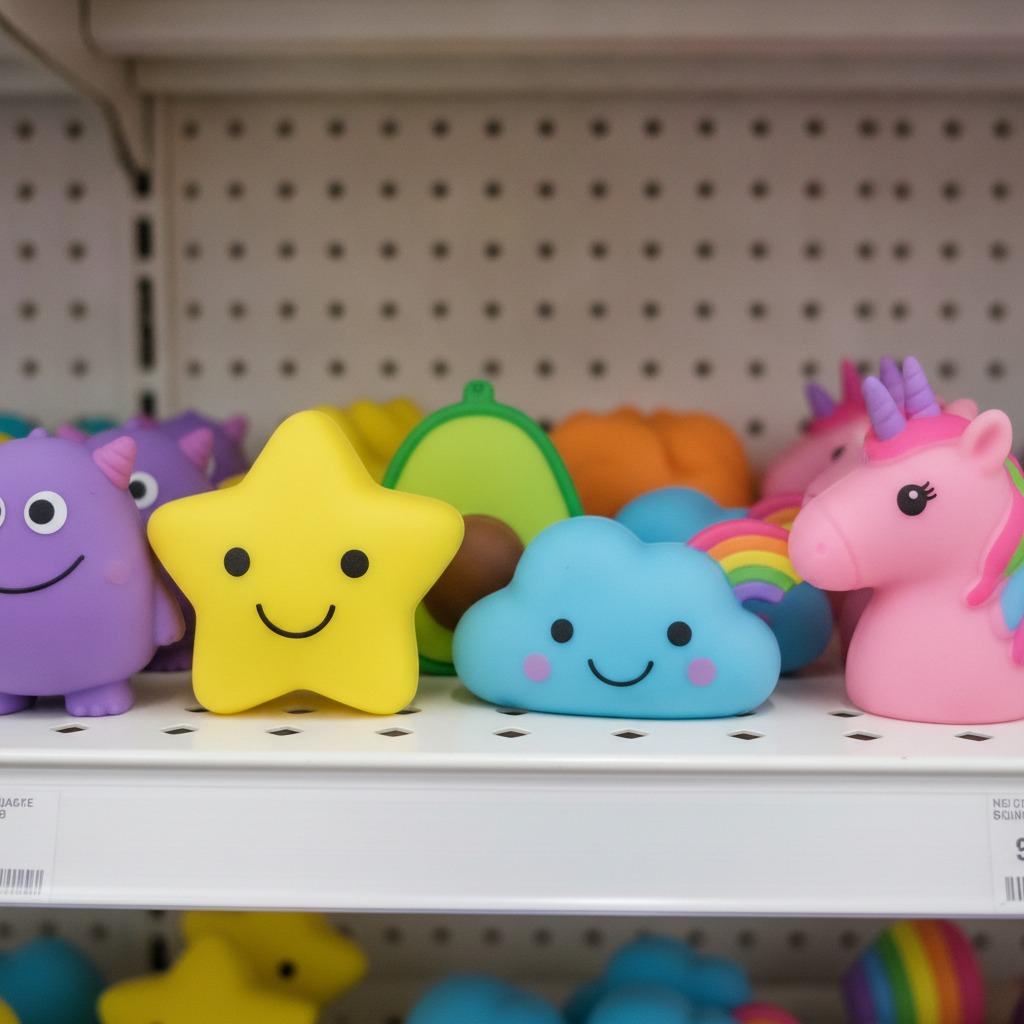
The examples often seen in the market range from dumpling-like squeeze toys and glitter dumpling squishy styles to blind-box novelties and soft plush cushion designs. They may sit in different aisles, but the buyer’s problem is similar: how do you choose a product that feels fun in hand, looks strong on shelf, and fits the intended age and use case without creating avoidable complaints later?
What these products are actually used for
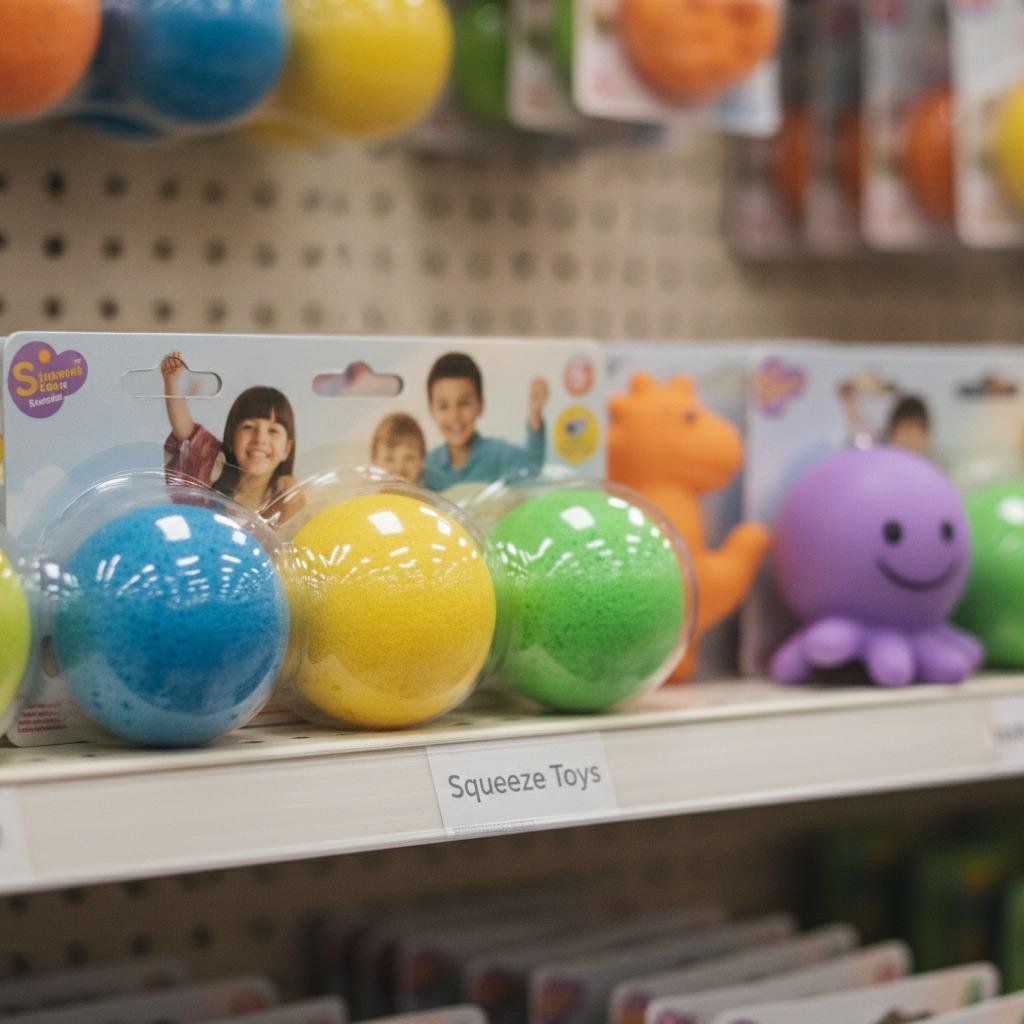
From the available product information, there are three distinct directions. First, there are hand-squeezable novelty toys shaped like dumplings or rounded buns, often sold as a 12-piece display box with “ages 3+” messaging. These are classic impulse purchases: party favors, classroom rewards, sensory bin fillers, and counter display items.
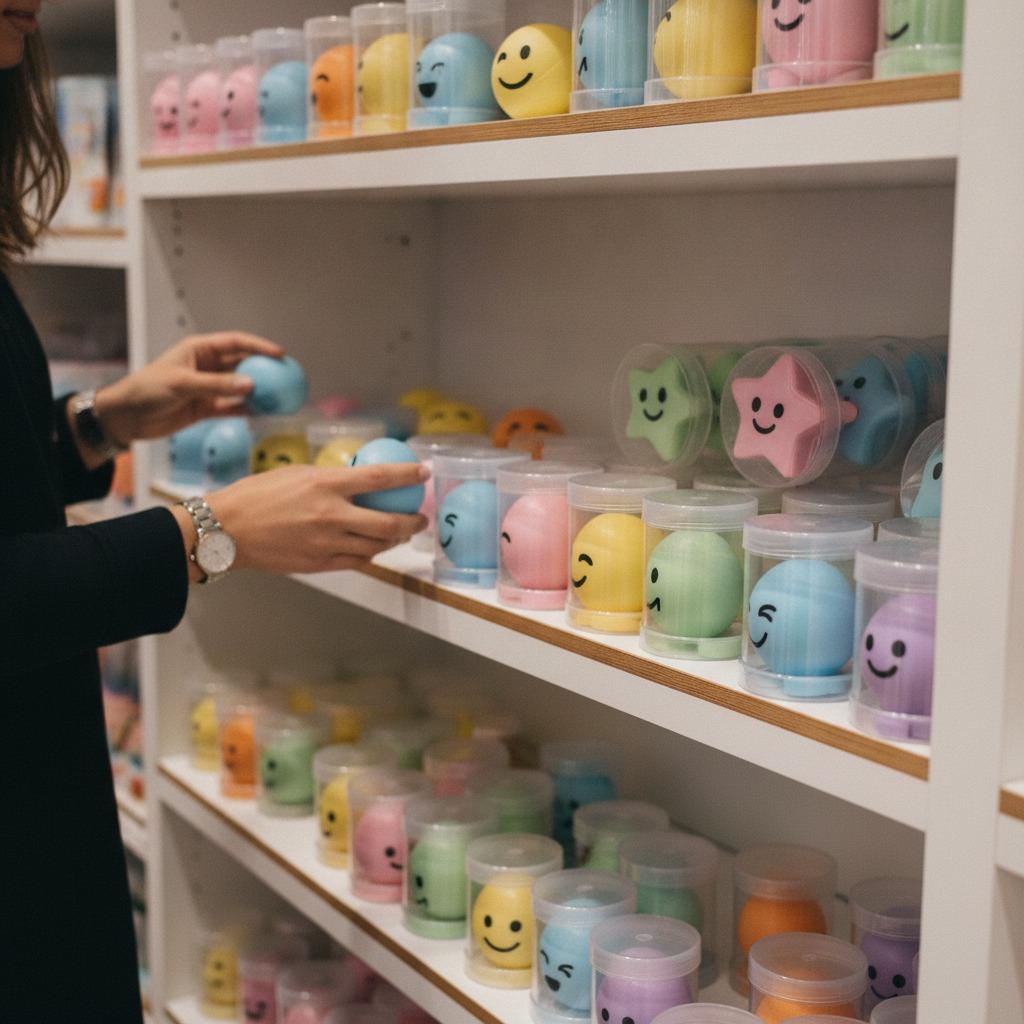
Second, there are blind-box or collectible styles such as “stretch and squeeze” novelty balls. These lean into surprise and repeat purchase. The packaging does part of the selling, because the customer is buying the reveal as much as the object itself. That can work well in gift shops and toy stores, but only if the assortment is visually clear and the outer pack looks tidy on shelf.
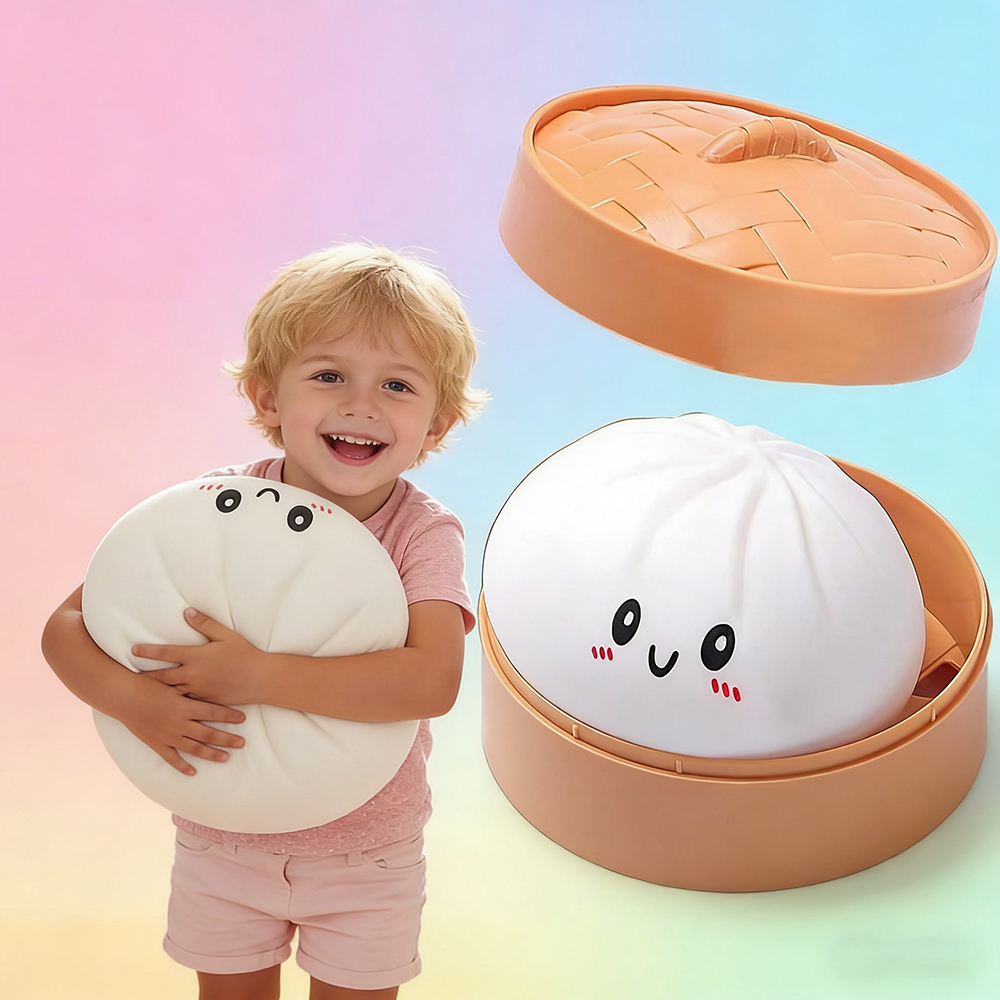
Third, there is the round plush cushion or stuffed pillow with a cartoon face. This is closer to room decor and comfort merchandise than a pure toy, though it still sits in the same broad squishy family because of its soft, compressible feel. A product like this can function as a child-friendly cuddle pillow, floor cushion, or decorative throw pillow. The matching round storage or display box adds a retail-friendly presentation angle, even if its exact role is not fully clear from the image.
Material and construction clues buyers should read carefully
The dumpling-shaped squeeze toys appear to have a soft, flexible shell with a smooth finish, possibly soft PVC, TPR, or another flexible formulation. That is a cautious read, not a certainty. What is visible is the form: rounded bodies, molded folds, glossy or satin surfaces, and cartoon faces printed on the outside. For buyers, the critical point is not the guess itself but the need to confirm the material before placing a large order. The wrong formulation can change odor, feel, durability, and compliance expectations.
Display packaging also gives useful clues. A cardboard header card, individual retail packets, and a countertop box all suggest a product designed for retail theater. The buyer should ask whether the packaging is meant for shelf display only or whether it helps protect the toy during transit. That distinction matters when returns or crushed packaging become a recurring issue.
For the plush cushion item, the white textile exterior and padded dome shape suggest a sewn stuffed product, likely fiber-filled. The tan or orange ring and lid look more rigid, possibly injection-molded plastic or a coated formed part. That two-material presentation can help merchandising, but it also raises a practical question: is the container part of the product, or just a display aid? The answer affects pricing, packing, and shipping volume.
Quick comparison: display toy, collectible, or cushion
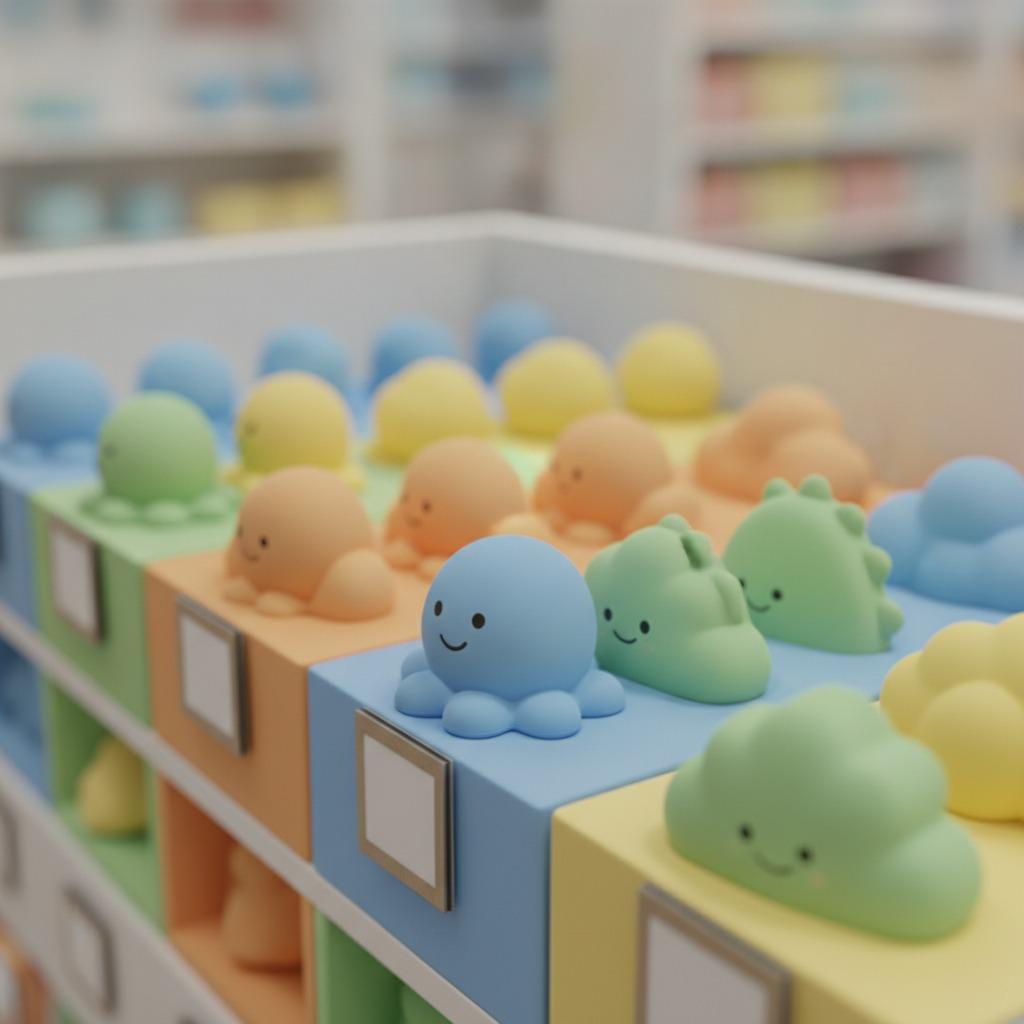
If you are buying for a toy store or gift chain, the dumpling squishy and “Oh my kawaii” style blind-box product are usually the better counter items. They are small, visual, and easy to assort by color or character. If you are buying for a nursery, bedroom, or home goods assortment, the round plush cushion has broader decor value and a longer usable life on the shelf.
The choice is less about trend and more about function. A squeeze toy is judged by tactile response and packaging appeal. A cushion is judged by softness, seam quality, and how well it holds a friendly shape. One is an impulse novelty; the other can be treated as a soft furnishing accessory.
Selection criteria that matter in the real world
Start with safety and age suitability. The visible packaging for the squeeze toy shows ages 3+, which is helpful, but buyers should still confirm the final compliance documentation, especially if the item is going into multiple markets. Do not assume a cute face equals a low-risk product. Small parts, finish wear, and unexpected surface tackiness can all create issues.
Next, check recovery and surface feel. A squishy toy should spring back cleanly after use. If it stays flattened, wrinkles too quickly, or develops a sticky skin, it will not hold up in retail reviews. For collectible items, color consistency matters more than many teams expect. A small change in gold tone or translucent swirl effect can make a series look off.
For plush or stuffed items, inspect stitching at the top panel lines and around any face decoration. Converging seams can look neat on first sample, but they are also stress points. That is a detail buyers sometimes overlook until the first bulk lot arrives.
Common mistakes buyers make with squishy toys
One common mistake is treating all squishy toys as interchangeable. They are not. A gel-like desk fidget, a dumpling squishy, and a plush cushion may all be “soft,” but they live in different price bands and carry different expectations from end users.
Another mistake is relying on packaging alone. A shiny counter box can sell a weak product, at least once. Repeat sales depend on how the toy feels after several uses, whether the print stays legible, and whether the pack survives distribution without looking tired.
A third mistake is assuming decorative appeal will cover functional weaknesses. It rarely does. A glitter dumpling squishy can draw attention, but if the surface leaks, sticks, or feels inconsistent from unit to unit, customers notice fast.
What Ningbo Yinzhou Hines Rubber & Plastic Co., Ltd. brings to the category
Based on the company information provided, Ningbo Yinzhou Hines Rubber & Plastic Co., Ltd. emphasizes international cooperation, stable raw material sourcing, and ongoing product innovation across rubber, plastic, and toy categories. That profile fits a market where buyers want more than a one-off novelty sample. They want a supplier that understands mixed-material products, retail packaging, and the practical realities of exporting to different markets.
For purchasing teams, that kind of supplier background can be useful when a project sits between categories: part toy, part decorative item, part gift product. It is often easier to develop those items with a manufacturer that already works across rubber and plastic applications than with a vendor focused on one narrow line.
Buyer-facing questions worth asking before you place an order
Ask what material is used for the shell or skin, what type of fill is inside, and whether the product is intended for squeezing, stretching, or display only. Ask whether the packaging is retail-ready or needs secondary packing. If the item is blind-box style, confirm the assortment ratio and whether variants are evenly packed or intentionally randomized.
Also ask for clear photos of the face decoration and seams. On products like these, small differences in print placement can change the whole appearance. It is a minor thing until the customer posts a photo online.
A practical next step for sourcing teams
If you are building an assortment of squishy toys, compare the category by use case first, not by trend label. Choose the squeeze toy for impulse sales, the collectible for repeat purchase and surprise value, and the plush cushion for room decor or gift retail. Then request samples, confirm packaging details, and verify compliance documents for the target market before you commit to a volume order.
That is usually the difference between a product that simply looks cute in a catalog and one that actually sells through on a shelf.