A low unit price can look convincing on a quotation. It tells you surprisingly little about whether a sensory-toy order will work. The costly problems usually sit elsewhere: the hand feel is wrong, the recovery time drifts, printed film marks a tacky surface, or the test sample no longer matches the production material. That is why experienced buyers treat wholesale sourcing as a sequence of small risk decisions. First define the user and the sensory action. Then settle the material, age grade, test plan, pack and inspection method. Price has meaning only after those points are clear.
This guide is written for importers, distributors, promotional-gift teams, education suppliers, retailers, subscription boxes and private-label brands comparing sensory toys wholesale or planning an OEM project in China. It is deliberately practical. You will find material trade-offs, questions to put in an RFQ, points to discuss with a test laboratory, and checks that belong in the approved sample. The aim is not to make every product sound easy. It is to help a buyer discover the awkward parts before tooling and mass production.
Fast answer for procurement teams
Write down five things before asking for prices: destination, intended age, sensory action, material direction and sales channel. Give every shortlisted supplier the same sheet. Do not release production until the sealed sample, test scope and inspection points agree with one another. One untidy folder of color comments, old artwork and chat approvals is how avoidable mistakes begin.
Planning a sensory-toy collection?
Send your target market, product idea, quantity and launch date. Hines can review the brief and discuss a practical sampling route.
Request a Sensory Toy Quote1. What wholesale buyers mean by “sensory toys”
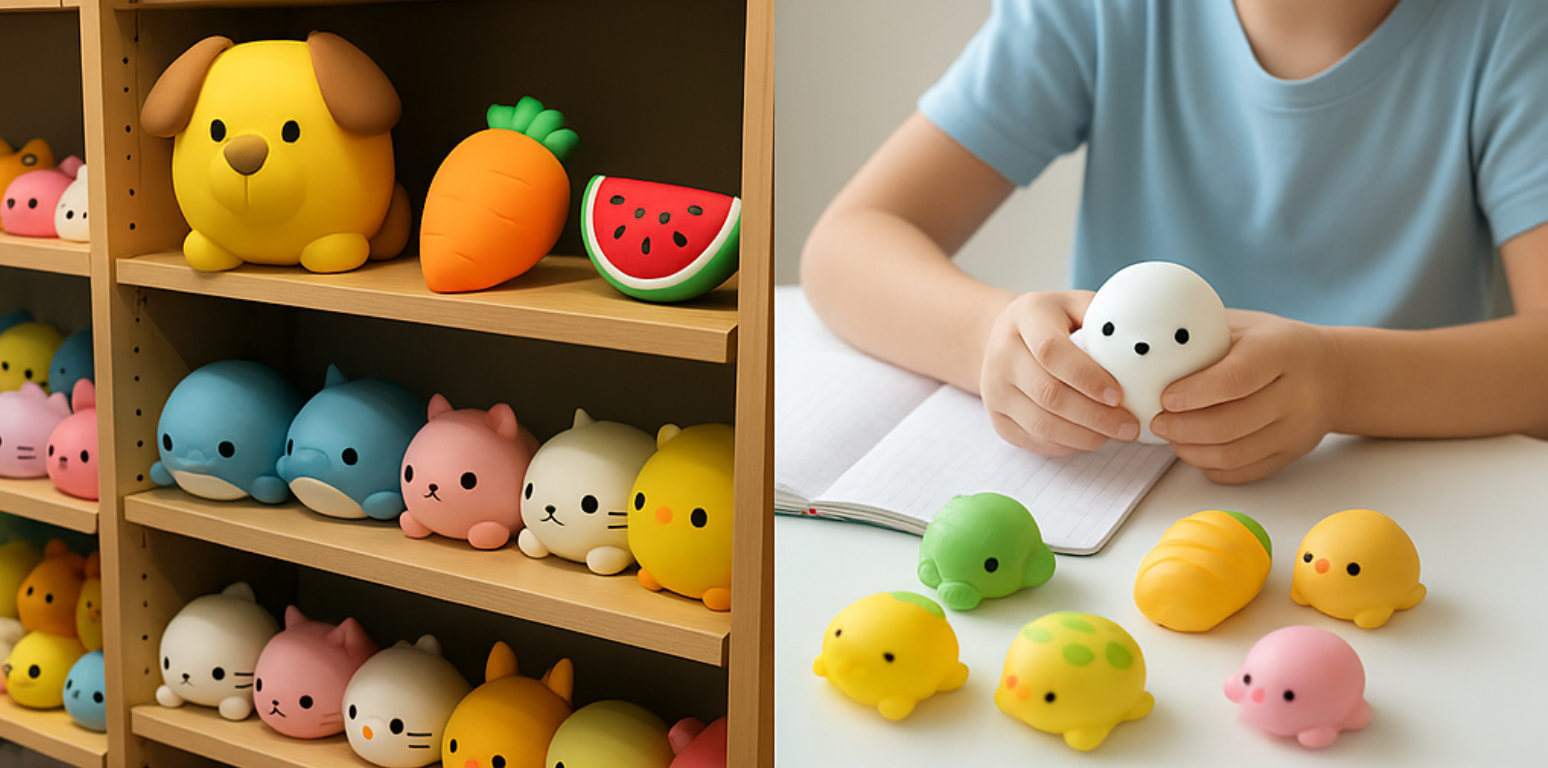
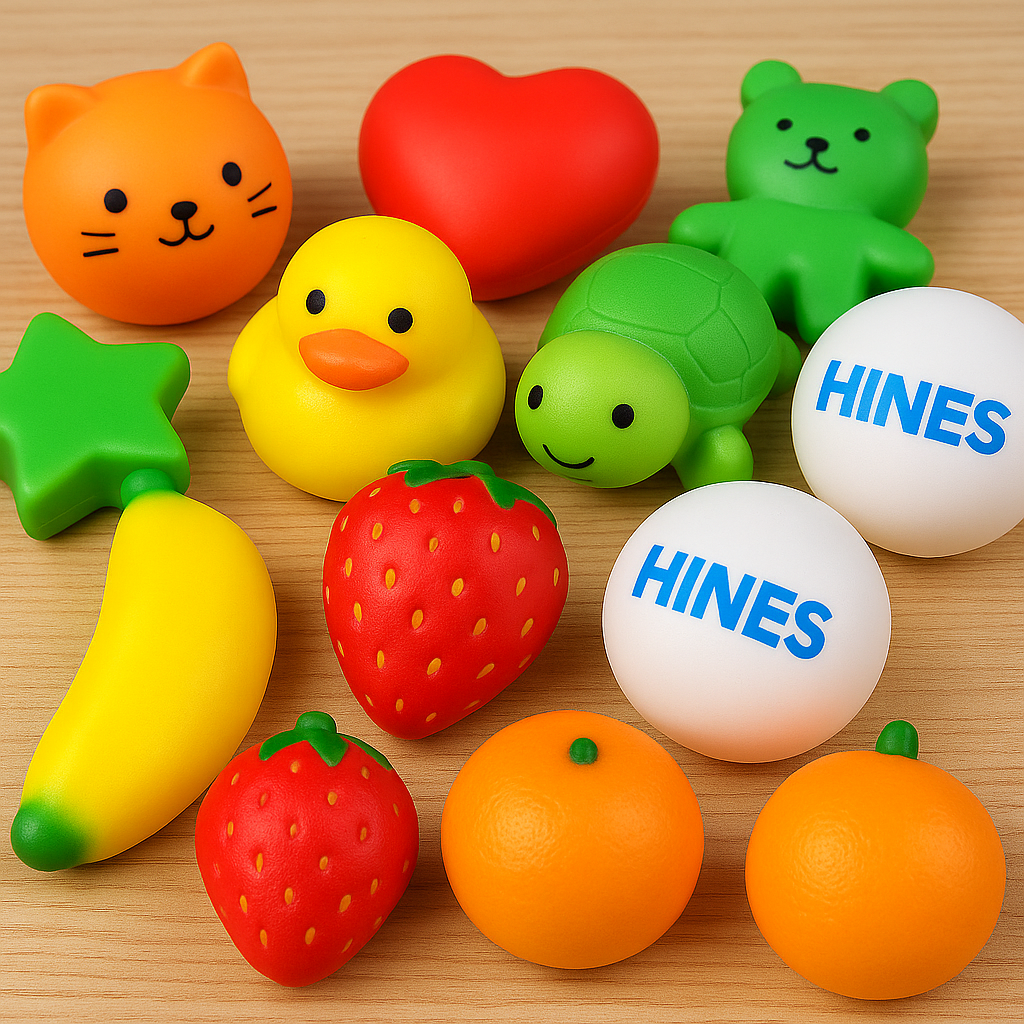
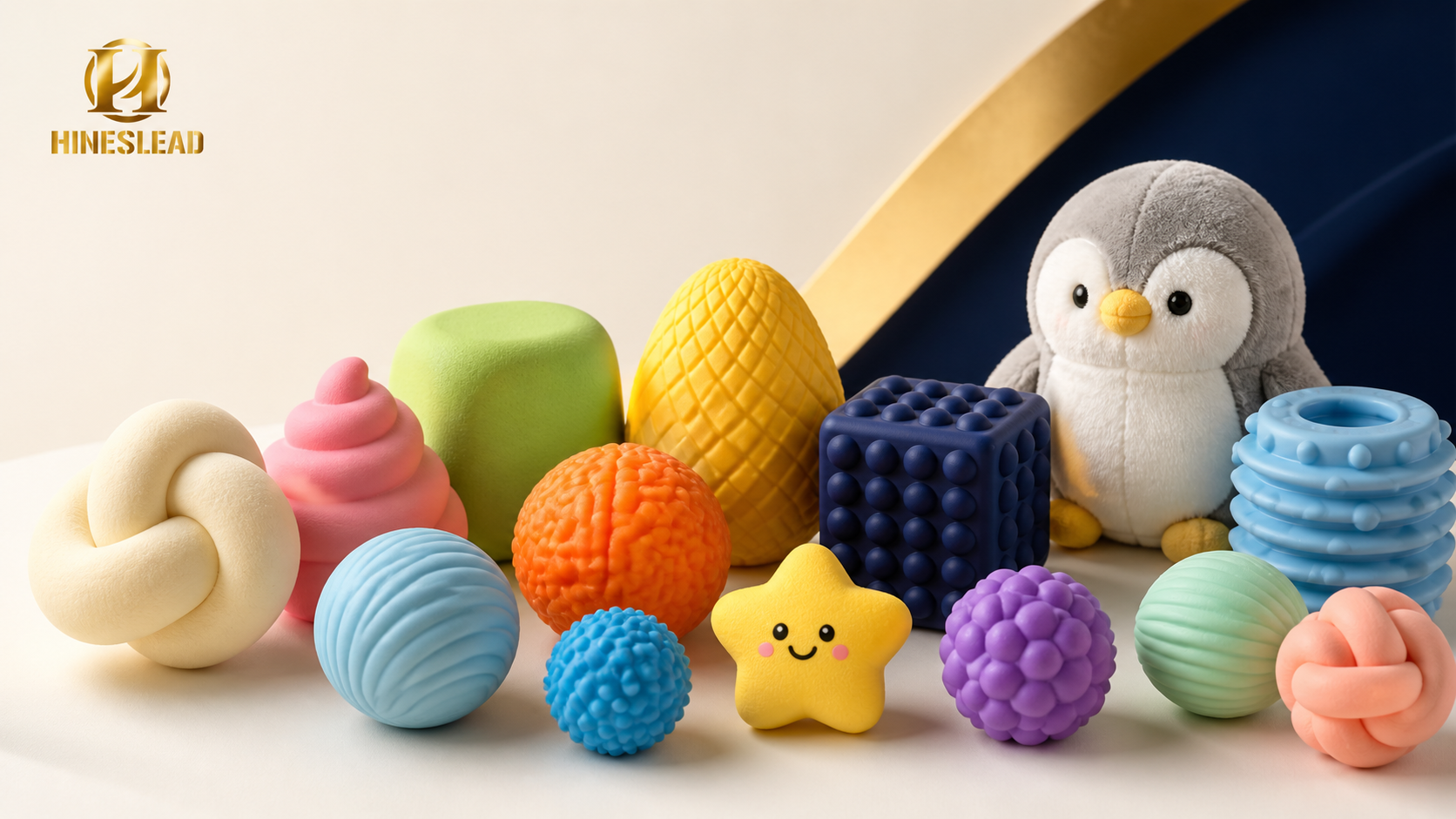
“Sensory toy” is an umbrella term, not a finished specification. It may refer to a slow-rising PU character, an elastic TPR figure, a silicone press toy, a light EVA ball, a textured plush item or a quiet desk fidget. Put those products side by side and the differences are obvious. Their materials, failure modes and packaging needs are not interchangeable.
So what does a factory need to hear? Something like this: “Ages six and above; repeated hand compression; a slow but complete return; no tacky feel after storage in the retail bag.” That sentence gives the development team something to sample and measure. “We need a fun squishy” leaves almost every important decision open.
Be equally careful with benefit claims. It is reasonable to describe tactile play, a focus break, a calming routine, gifting or promotional use. Medical language is another matter. Unless the product and the proposed claim have been evaluated for that regulated purpose, do not promise that a toy treats anxiety, autism, ADHD or another condition. Copy written late in the launch can create a compliance problem that the original product brief never considered.
Define the sensory action before choosing a material
- Compress and recover: common for PU foam stress shapes and slow-rising squishies.
- Squeeze with elastic rebound: common for TPR and some silicone constructions.
- Press, pop or flex: often associated with molded silicone designs.
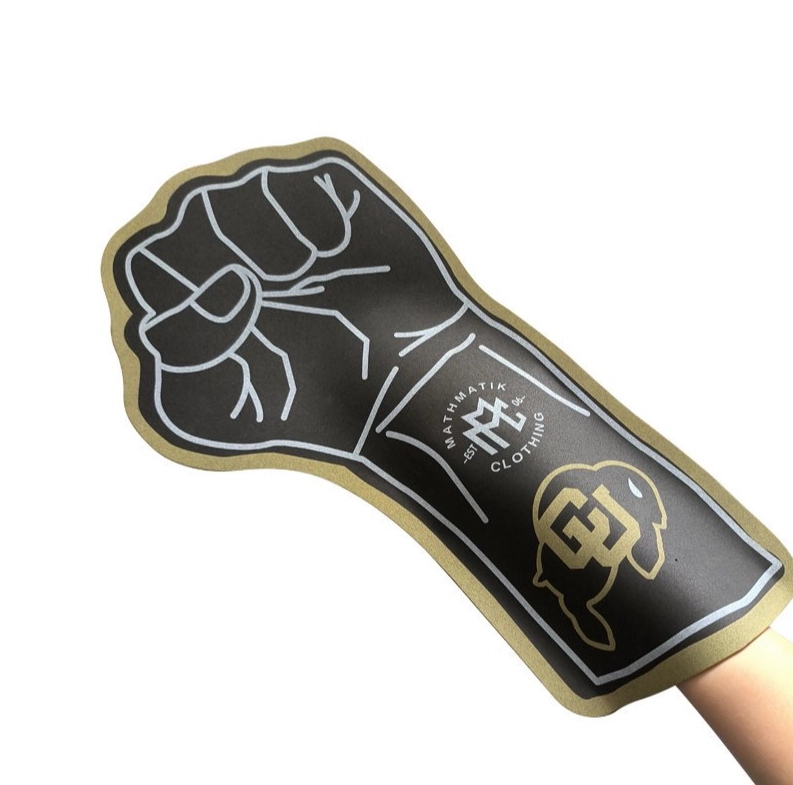
- Grip, toss or manipulate: suitable for selected EVA and foam sports formats.
- Stroke, hold or cuddle: central to plush and fabric-based comfort items.
- Stretch or twist: possible in resilient elastomer constructions, subject to design and abuse testing.
Notice the order: action first, material second. Buyers sometimes reverse it after seeing a popular product online. That is risky. A material that is excellent for a quick elastic squeeze may be a poor choice for a slow, pillowy return. Decide what the hand should feel, see and hear. Only then ask which construction can repeat that experience at production scale.
2. Build a buyer brief around channel, user and commercial outcome
A product photograph hides its commercial context. The same-looking squeeze shape might be a one-day trade-show giveaway, a classroom multi-pack or a boxed gift sold through a specialist retailer. Those three orders should not share the same assumptions about packaging, documentation, finish or service life. Before the first quotation, make a one-page brief and force it to answer five plain questions.
- Who will use it? State the intended age group and whether adults, schools, clinics, promotional buyers or general retail consumers are the main users.
- Where will it be sold? List countries, online marketplaces, retailers or institutional channels. The answer drives testing, labeling, language and documentation.
- What must the toy do? Describe the tactile action, recovery speed, target firmness, size and expected use frequency.
- What makes the product commercially distinctive? Identify the shape, color system, artwork, logo treatment, packaging, bundle or story that supports the target price.
- What are the non-negotiables? Record the launch window, total budget, carton restrictions, barcode format, inspection level, testing scope and any retailer manual.
Mark each line as either a requirement or a preference. “Intended primarily for children aged six and above in the United States; meet the applicable requirements” belongs in the requirement column. “We would like a pale blue close to Pantone 2905 C” is still a preference until a physical or approved digital standard is signed off. This simple distinction becomes valuable when color, cost and launch timing pull in different directions. Everyone can see what may move and what may not.
3. PU, EVA, TPR, silicone and plush: a sourcing comparison

| Material | Typical sensory character | Useful formats | Customization focus | Buyer questions |
|---|---|---|---|---|
| PU foam | Soft compression; recovery can be tuned from faster to slow-rising | Stress shapes, balls, characters, promotional items | Molded shape, surface coating, printed logo, recovery feel | How are density, recovery time, coating adhesion and odor controlled? |
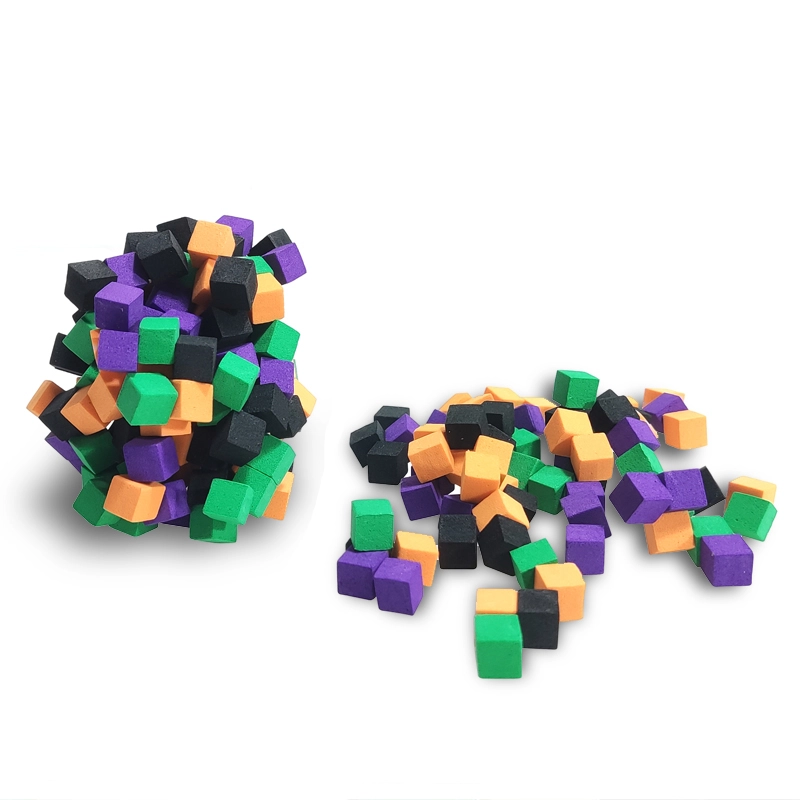
| EVA foam | Lightweight, resilient and more structurally stable | Flying discs, foam balls, puzzles, bath or activity pieces where suitable | Density, cut or mold geometry, printing, layered colors | What hardness, thickness tolerance, print durability and compression set are expected? |
| TPR | Elastic squeeze, stretch and quick rebound | Mochi-style figures, squeeze characters, stretch fidgets | Mold detail, color, filling system where used, surface feel | How are seam strength, leakage, tackiness, dust pickup and tear resistance controlled? |
| Silicone | Clean elastic response with detailed molded textures | Press, pop, flex and premium tactile designs | Hardness, mold texture, multi-color molding, printed details | Which silicone grade, cure system, hardness tolerance and post-cure controls are specified? |
| Plush | Soft touch, comfort and visual character | Comfort toys, character plush, mixed sensory panels | Pattern, fabric pile, embroidery, filling, accessories and label set | How are seam strength, small components, fiber shedding, filling consistency and needle control managed? |
PU foam: shape freedom and controllable recovery
PU foam earns its place in stress shapes and slow-rising figures because it can carry a three-dimensional form and still give a soft compression cycle. Yet “soft” and “slow” are poor approval terms. How long was the sample stored before the check? How far was it compressed? Does recovery end at 80 percent of the original height or close to full height? If the method is missing, two people can time the same toy and report different answers.
Then look at the skin of the product. Coating and print influence color, grip, smell and wear. Deep recesses are harder to cover evenly; thin ears or points can behave differently from a thick body. A hand-finished sample may look beautiful because somebody spent unusual time on it. Ask what the normal line process will be, and inspect pilot pieces made under that process.
For a PU RFQ, record dimensions, weight, a firmness reference, the recovery range and the way it will be measured. Add color, coating, odor, logo position, packaging pressure and a repeat-squeeze check. Keep a labeled sample from the approved run. Six months later, that retained piece is much more useful than somebody remembering that the first order felt “about right.”
EVA foam: low weight with useful structure
EVA feels like a different design language. It is light, resilient and generally more structural than slow-rising PU, which is why buyers consider it for discs, balls, puzzles and layered activity pieces. Density and hardness change both hand feel and rebound. Thickness matters too. A small variation that seems harmless on a single sheet can become obvious when pieces must stack or fit together.
Test decoration on the actual EVA grade, not on a convenient showroom sample. Rub the print. Bend the part. Look at a cut edge and, where layers are bonded, pull at the seam in a defined way. Products expected to meet water, heat or sunlight need suitable conditioning checks. The word “EVA” by itself does not promise colorfastness, print adhesion or outdoor life.
TPR: elastic squeeze and stretch, with surface-control challenges
TPR is useful when the brief calls for an elastic squeeze, stretch or quick rebound. Start by asking whether the body is solid, hollow or filled. That answer changes the quality conversation. A filled toy puts the closure, leakage risk and compatibility of the filling under scrutiny. A hollow molded figure raises questions about wall thickness, tearing and permanent deformation. They may share a product name online, but they are not the same engineering problem.
Do not judge surface tack straight off the molding line. Seal the finished piece in its intended bag, leave it under a realistic storage condition, then open it as a customer would. TPR may pick up dust or react badly to an adjacent print or coating. This is the kind of defect that escapes a dimension report and still produces poor reviews.
Silicone: premium tactile response and molded detail
Silicone often suits a cleaner, more premium tactile concept, especially when molded texture is part of the design. But there is no single “silicone feel.” Grade, hardness, pigment, cure and post-cure all matter. Begin with the motion—bend, pop, squeeze or stretch—and then review wall geometry and force on a production-representative sample.
Extra colors and tiny molded details look easy in a rendering. They may mean more tooling work, manual placement and inspection time. Agree where a parting line may sit, how much flash is acceptable and how a printed mark will be rubbed or stretched during approval. If “food grade” or “heat resistant” appears in the sales plan, ask for evidence matched to the actual use. A generic material statement is not enough.
Plush: emotional value built on construction discipline
Plush quality is built from details that are easy to miss in a front photograph: pile direction, seam allowance, embroidery density, filling distribution, label placement and the way accessories are attached. Turn the sample around. Sit it on a table. Press the head and body separately. A reference sample should travel with a written specification because hand-finished work can drift even when the character still looks familiar.
Sewn or embroidered features may avoid some separate hard parts, particularly on younger-age designs, but the whole toy still needs an appropriate hazard review. Ask how needles and sharp objects are controlled, how rework is recorded, and which seams or attachments receive a force check. A crinkle panel or textured loop may improve the play value. It also adds material, construction and traceability questions. Treat that as real design work, not decoration.
4. How to evaluate a sensory toy manufacturer
A capable sensory toy manufacturer is not simply the company that makes the prettiest first sample. The better test is what happens after you ask an awkward question. Can the team turn a visual idea into measurable requirements? Will it point out a thin section, a difficult print area or a packaging conflict before money is committed? Use the six checks below and ask for evidence, not adjectives.
1) Material and process fit
Map the process. Which steps happen in the main factory, which go to a specialist, and who releases the work when it returns? Strong PU experience does not automatically equal strong plush or silicone experience. For a mixed-material item, the hand-off between processes may be the biggest risk. Ask to see products with similar geometry, decoration and packing—not a random “similar toy.”
2) Engineering communication
Pay attention to the supplier's questions. Does it ask about age, recovery, hardness, print method, destination and compression in the pack? Those questions slow down the first price by a day and may save weeks later. A quote returned instantly against a vague photo often contains invisible assumptions. They surface as “extras” after sampling.
3) Compliance support
Ask the manufacturer to identify the material, coating, ink, filling, accessory and production location used for the actual SKU. It should be able to prepare consistent bill-of-material information and coordinate final samples with the chosen laboratory. Old test reports can help you understand past work. They do not automatically cover a new color, coating, mold or age grade.
4) Quality system in practice
Request the control plan that operators will use, not only a certificate on a presentation slide. Look at an incoming-material record, a first-piece check and a finished-goods form. How is the approved sample identified? What happens when a batch fails? Calibration, batch labels and corrective-action records are mundane. That is precisely why they are useful: they show how an ordinary Tuesday's production is controlled.
5) Capacity and schedule realism
Ask for a calendar rather than one headline lead time. Artwork, tooling, samples, laboratory work, material preparation, production, inspection and shipping each have a start and finish. Some overlap; others cannot. Daily molding output is only one part of capacity. Coating, sewing, packing labor, mold availability or an approved pigment can become the real bottleneck.
6) Commercial transparency
Finally, make the price legible. Separate tooling, samples, the unit, packaging, testing, inspection and optional upgrades. Record trade terms, validity and the assumptions behind freight. When one offer is dramatically lower, look for a changed size, weight, decoration, pack or test scope before celebrating the saving. Most price gaps have a reason; the buyer's job is to find it.
5. Compliance planning: design the evidence before the test
There is no useful box labeled “worldwide toy compliance.” The answer changes with the destination, intended age, construction and claims. Start a requirements matrix while the design can still move. The responsible manufacturer or importer should own it and review the scope with an accredited laboratory or qualified adviser. If that conversation waits until final tooling, even a small-parts issue or missing label area may force an expensive redesign.
United States. Begin with the CPSC's toy-safety guidance. Through 16 CFR part 1250, ASTM F963 is mandatory. For a toy intended primarily for children aged 12 or under, the applicable requirements generally have to be tested by a CPSC-accepted laboratory; the responsible party then prepares a Children's Product Certificate. The exact clauses follow the product, not its marketing name. Small objects, accessible points, mechanics, substrates, coatings and special features can change the scope. Children's-product tracking information should also identify the responsible company, place and date of production, and a batch or other source reference to the extent practicable.
European Union. In the EU, CE marking is not decoration on a box. It accompanies a toy that must meet the essential safety requirements described by the European Commission. Directive 2009/48/EC is part of today's framework. The newer Regulation (EU) 2025/2509 entered into force on January 1, 2026; following its transition, it is scheduled to apply from August 1, 2030. A long-lived range needs somebody watching that calendar and the future digital-product-passport obligations. Today's file cannot simply be copied forever.
Other markets. Canada, the United Kingdom, Australia/New Zealand and other destinations use their own laws, standards, labels and responsible-party rules. ISO 8124 is an internationally recognized family of toy-safety standards; it is not a substitute for identifying the binding requirements in the country of sale. Name the countries and channels before asking for a test proposal.
Important: This buyer’s guide is general sourcing information, not legal advice or a declaration that any specific product complies. Confirm the latest applicable requirements, age grading, warnings, certification, technical documentation and test scope with the responsible economic operator, an accredited laboratory and qualified compliance professionals before sale.
A practical product-compliance file
Open one compliance folder for every SKU and revision. Put the specification, bill of materials, factory identity, declarations, artwork, age rationale, risk assessment, test plan, reports, certificates where applicable, packaging approvals and inspections in that folder. Include corrections and shipping records too. Use the SKU, revision and date in every filename. It is boring housekeeping—and it prevents an old coating report from being attached to a new filling or accessory by mistake.
Write the change rule before a change is urgent. A different material source, pigment, coating, ink, mold, closure, accessory, pack or factory should trigger a documented review. The reviewer decides whether the risk assessment, sealed sample, label, test or certificate must move as well. Two toys can look the same and rely on different evidence.
6. Write an RFQ that produces comparable quotations
Quotations are comparisons of assumptions. If suppliers receive different information, the spreadsheet may look precise while comparing different products. Give every candidate the same RFQ version and include the following points.
- Product name, SKU and revision number.
- Target user, age grade, destination countries and sales channels.
- Reference drawings with dimensions, tolerances and critical-to-quality features.
- Material, firmness, density, recovery or tactile-performance requirements.
- Pantone or physical color standard and acceptable color tolerance.
- Logo artwork, decoration method, size, position and durability requirement.
- Packaging structure, artwork, barcode, labels, warnings, languages and retail tests.
- Applicable compliance scope and who pays for initial and follow-up testing.
- Sample stages, approval owners and required retained samples.
- Quantities by SKU, color and shipment; price-break quantities; forecast and reorder pattern.
- Inspection standard, defect definitions and desired AQL or other acceptance plan.
- Target delivery window, incoterm, destination and carton restrictions.
Return prices in a table, not a long email. Separate tooling, samples, unit price, MOQ, lead time after approval, packaging, carton quantity and size, weight, test estimate, inspection, validity and exclusions. Add one final column: “supplier assumptions.” Read that column first when offers differ. It often contains the missing density, print method or pack specification.
MOQ is an economic result, not a universal number
MOQ is usually the result of a process. It may come from a raw-material batch, pigment mix, mold cavity, print setup, sewing efficiency or printed packaging. Ask for the minimum at every level: total order, SKU, shape, color and artwork. The toy body may support a small run while the printed box does not.
When the number is too high, ask what creates it. A stock mold, fewer colors, shared packaging, a sleeve instead of a printed box, or a paid pilot may change the answer. Each option gives up something—often differentiation or unit cost—so put the trade-off beside the revised minimum.
Understand the full cost stack
Start with unit price, then keep going. Put design, tooling, samples, laboratory work and inspection into the model. Add the pack, labels, freight, insurance, duty, storage and working capital. Leave room for damage, rework and markdowns. Now test the promised launch date against that total. Paying a little more at the factory may be the cheaper route if it avoids airfreight or a missed selling window.
Need a quotation buyers can compare?
Attach a sketch, target market, age grade, dimensions, quantity and packaging idea. We will identify the missing inputs before discussing sampling.
Send Your RFQ to Hines7. A controlled OEM workflow from idea to shipment

Stage 1: feasibility and specification
The first output should be a feasibility response, not merely a number. The supplier reviews geometry, material, decoration, pack, tooling and likely compliance questions. The buyer sees what is uncertain. Resolve artwork use, confidentiality and mold ownership before detailed design work begins.
Stage 2: visual and engineering confirmation
Approve more than the front view. A character needs dimensions and views from the side, back and underside, with the logo position and part boundaries marked. Identify important surfaces and acceptable parting lines. The cheerful rendering may hide an undercut that will not mold cleanly or a base that will not stand.
Stage 3: prototype or pre-production sample
Handle the sample before discussing its face. Weigh it. Time recovery or measure stretch where relevant. Smell it after being sealed. Inspect seams, flash, print, coating and package fit. Photograph the approved details and return one consolidated list under the correct revision. Ten separate chat comments are not a controlled sample review.
Stage 4: compliance pre-check and final test plan
Show the testing partner the actual material list, accessories and pack. Confirm the applicable scope, sample quantity, conditioning, documents and schedule. If a pre-check leads to a change, make sure the final test uses the corrected configuration. A pass on the abandoned version solves nothing.
Stage 5: sealed sample and production release
Where practical, buyer and manufacturer each keep the same sealed reference. Mark the SKU, revision and date; record approval in a controlled way. Release production with the bill of materials, work instructions, color references, artwork, packaging files, inspection plan and test obligations. “Looks good, go ahead” is not a production file.
Stage 6: pilot and first-article control
A pilot asks whether ordinary production can repeat the carefully made sample. Inspect the first pieces against the critical points and use the real packing method. If the same fault appears again and again, pause the run and fix the cause.
Stage 7: mass production and in-process verification
Mass production does not need every check at the same interval. Incoming material and the first piece deserve attention; color, decoration, seams, sensory response and packing need frequencies matched to their risk and stability. Finding a drifting print while most of the order is still unpacked is far cheaper than opening finished cartons.
Stage 8: final inspection, release and shipment
At final inspection, draw cartons randomly under the approved sampling plan. Count the assortment. Compare workmanship, size, function and markings. Scan the barcode, open the inner pack and read the carton data rather than assuming it is correct. Complete the agreed on-site checks before release. If something fails, decide its disposition before the truck is called, and keep the report, photographs and required batch samples.
An illustrative sample review: the questions behind “looks good”
Imagine a buyer reviewing a small orange TPR squeeze character. This is an example, not a report about a specific Hines order. The face is clean, the color is close and the sample rebounds quickly. At first glance, everybody is ready to approve it. Then somebody puts it back in the printed bag for two days.
Open the bag and there is a faint dark mark on one side. It wipes away. The surface, though, feels a little tackier than it did on day one. Product fault? Packaging interaction? A storage condition that would never occur in practice? Nobody knows yet. Repeat the trial with one piece outside the bag, write down the time and temperature, and add unprinted film if it is available. Ten minutes spent designing that comparison beats a long argument over photographs.
Now squeeze it. One reviewer uses two fingers on the head; another folds the whole figure into a fist. Of course their comments conflict—they did different tests. Agree on the contact point, hold time and recovery endpoint. For a filled construction, look at the closure straight after cycling and once more after the toy has rested.
The artwork creates a third discussion. The logo is readable when the toy sits untouched. After several squeezes, a thin letter begins to look uneven across the curved surface. The buyer has options: enlarge the mark, simplify the artwork, move it to a flatter area or accept a defined visual limit. Each choice affects brand appearance differently. None should be hidden inside the phrase “printing to be good.”
Finally, the team writes the decision. The color is approved against the named reference. The packaging trial remains open. The closure passes the agreed short cycle, while a longer durability check is scheduled. The logo position will move by a few millimeters and a revised sample is required. That is what a useful review looks like: some points pass, some fail, and some need evidence. A blanket “sample approved” would have buried all three issues.
8. Quality control for squeezable and sensory products

“Good quality” is not an inspection instruction. Show what a defect looks like and decide whether it is critical, major or minor for this SKU. A sharp point, accessible hazardous part or serious label omission may be critical. Leakage, a split seam, the wrong barcode, severe deformation or failed function may be major. A small surface mark might be minor when it falls inside an agreed limit. Match the examples to the real product and destination.
| Control point | What to define | Why it matters |
|---|---|---|
| Dimensions and weight | Measurement locations, tolerance and conditioned state | Controls appearance, packaging fit and sensory consistency |
| Color | Approved standard, lighting and permissible difference | Reduces shade drift between parts and reorders |
| Compression/recovery | Conditioning, compression method, timing endpoints and range | Protects the central sensory promise |
| Decoration | Location, registration, opacity, adhesion and rub method | Prevents distorted logos and premature wear |
| Seam/closure | Pull or pressure method, leakage criteria and visual limit | Reduces rupture, filling loss and returns |
| Odor and surface | Conditioning period, panel method, tackiness and contamination limit | Protects opening experience and review scores |
| Packaging | Seal, scuff, barcode, count, warning, carton and transit checks | Protects sellable condition and receiving efficiency |
Test real use, foreseeable abuse and storage
A clean meeting-room sample has had an easy life. The unit for sale will be bagged, stacked, transported, stored, opened and handled again. Pick the harsh parts of that journey that are both realistic and relevant. Cycle the squeeze. Rub the coating. Pull the seam. Condition a packed sample and open it later. Product and packaging teams should review the result together; neither can pass the problem to the other.
These development trials do not replace required laboratory work. They answer a different question: will the product still look and feel acceptable when a customer opens it? Write down the method. “Passed a squeeze test” is almost meaningless without the number of cycles, the conditioning, the force and a definition of failure.
9. Packaging and branding that convert without creating avoidable risk
Packaging has four jobs at once: protection, identification, information and selling. Which job leads depends on the channel. A bulk promotional order may care about count, freight and a visible logo. A retail box must face the shelf, carry a readable barcode and fit a merchandising space. An e-commerce unit meets parcel handling, not a gentle store shelf. A school pack may need quick distribution and an easy way to see whether a set is complete.
During artwork approval, separate the legal and operational information from the sales copy. Check responsible-party details, product identity, age information, warnings, tracking data, origin, language, barcode and customer labels as applicable. Then place the final file on the actual dieline and print it at size. A warning that is clear at 200 percent zoom may be unreadable on the real bag. Shrinking the artwork is not a compliance strategy.
Now pack real samples. A tight bag saves volume, but it can leave a PU shape flat, transfer ink or make a TPR surface feel worse. A large presentation box protects the face of the toy and can also inflate dimensional freight. There is no clever spreadsheet answer to this trade-off. Put the product in the proposed pack, condition it, ship or simulate handling, and open it.
10. Common sourcing failures—and the prevention built into this guide
Failure: selecting by price before locking the specification
“Same product” often hides a different size, weight, density or pack. The lowest offer may therefore be the least comparable offer. Send one controlled RFQ, force assumptions into writing and rebuild the comparison at the same sellable specification.
Failure: treating an existing test report as universal proof
An old report can look reassuring because the photograph is close. Read the identification page. Is the model, color, coating, age grade and production location actually the same? Give the final SKU and bill of materials to a competent testing partner and ask what evidence applies. Similar appearance is background information, not a conclusion.
Failure: approving an appearance without approving performance
Sample comments naturally gather around what everyone can see: the face, the color and the logo. Meanwhile recovery, odor, seam strength or deformation stays vague. Add those less photogenic points to the approval sheet and link them to a method. The sealed sample should represent performance as well as appearance.
Failure: changing materials after testing without review
A material substitution can rescue price or schedule and quietly invalidate an earlier decision. Require a written change notice. Someone must review the effect on the sample, test evidence, certificate, label and inspection plan before the replacement is accepted.
Failure: ignoring packaging until production is finished
Product teams and artwork teams often work on parallel tracks. They meet for the first time when finished units are waiting to be packed. Bring the pack into the sample review instead. Confirm fit, surface contact, barcode position and carton data before mass packing starts.
Failure: launching too many variations at once
Ten colors and six characters make a persuasive range presentation. They also multiply approvals, minimums and slow-moving stock. A focused first group gives the team room to learn. Add later variants around materials, colors and packaging that have already proved controllable.
11. Supplier scorecard for a defensible award decision
A scorecard will not choose a supplier for you. It will expose why the choice is being made. Adjust the weights for the project, insist on evidence for high marks, and keep the unresolved risks beside the final score. The example below makes cost visible without allowing cost to erase every other question.
| Category | Example weight | Evidence to review |
|---|---|---|
| Product/process fit | 20% | Comparable products, process map, manufacturability review |
| Compliance capability | 20% | Traceable BOM, laboratory coordination, change control |
| Quality controls | 20% | Control plan, inspection records, calibration, corrective action |
| Commercial value | 15% | Normalized cost, transparent assumptions, payment and validity |
| Development support | 10% | Questions, response quality, revision discipline, sampling plan |
| Capacity and delivery | 10% | Critical path, capacity evidence, material and subcontractor plan |
| Responsible business fit | 5% | Buyer code requirements, traceability and corrective-action openness |
Score again when the sample arrives. A helpful salesperson can make development easier, but fast replies do not prove that the line will hold a tolerance. If the lowest-cost candidate still wins, write down what you are accepting. Perhaps the opening order is smaller, the inspection tighter or a second source kept warm.
12. Assortment strategies for different B2B channels
Retail and e-commerce
Give shoppers a reason to move from good to better to best. Change the sensory action, size, character detail, material or gifting presentation—not merely the shade of blue. Show scale and texture honestly in photographs. Before launch, mail a packed lead SKU to somebody outside the project team and ask what arrived.
Education and institutional supply
Institutional buyers tend to value orderliness: clear product identity, durable storage, sensible multi-packs and consistent documentation. Think about how a teacher or staff member will count the set after use. Colors or shapes can help. Keep age and use information clear, and avoid drifting into clinical claims that the product cannot support.
Promotional merchandise
A promotional item lives by the logo and the date. Choose a shape that still reads at the final size, then check print contrast and usable area on a physical piece. Leave room for artwork and tooling approval. A perfect event giveaway that arrives on the following Monday is simply late inventory.
Subscription boxes and gift programs
Subscription and gift programs care about the first few seconds after opening. Theme, individual presentation and reliable carton dimensions matter. Store a packed sample long enough to see whether film, paper or neighboring products mark its surface. In a mixed box, the toy still needs its own identity, age consideration, warnings and traceability.
Private-label brand collections
Build the range as a family, not a collection of unrelated one-offs. Shared pigments, pack architecture and decoration rules reduce avoidable complexity. Variety can come from character, scale and sensory action. Keep a master specification library; otherwise the successful first SKU has to be rediscovered every time an extension is ordered.
13. Related sourcing paths for a complete toy program
One sensory item often becomes the starting point for a wider program. The links below group the main Hines sourcing routes by material and product intent. Open the relevant examples, note what is close and what must change, then send one consolidated brief. That produces a better conversation than ten separate messages saying “please quote.”
- Browse sensory toys wholesale options, or review Hines as a sensory toy manufacturer.
- Explore custom stress balls with logo and promotional stress balls wholesale formats.
- See a representative PU foam toys manufacturer product and a custom PU foam toys option.
- Review EVA foam toys wholesale and custom EVA foam toys possibilities.
- Compare a TPR squeeze toy manufacturer route with mochi squishy toys wholesale.
- Source slow rising squishy toys wholesale through an experienced squishy toy manufacturer.
- Discuss a silicone squishy toy manufacturer brief or custom silicone sensory toys.
- View a custom plush toy manufacturer example and ask about plush toys OEM.
- Evaluate custom foam sports toys and foam balls wholesale.
- Learn about an OEM toy manufacturer China and start a custom toy manufacturing project.
14. The buyer’s pre-order checklist
Run this list before the purchase order, not after it. Put an owner's name and approval date beside each point. If something truly does not apply, mark it “N/A” and say why. A blank cell is ambiguous; a reasoned exclusion is a decision.
- Final SKU list, quantities and assortment by color or design.
- Destination countries, sales channels, intended age grade and claim set.
- Approved specification, bill of materials and critical-to-quality features.
- Approved drawings, color standards, logo artwork and decoration method.
- Approved physical sample and controlled revision record.
- Compliance matrix, laboratory scope, sample plan and document owner.
- Packaging dieline, retail copy, warnings, labels, barcode and carton marks.
- MOQ allocation by SKU, material and packaging; over/under shipment tolerance.
- Tooling ownership, maintenance, storage and reuse terms.
- Production schedule with approval deadlines and shipment critical path.
- Inspection standard, defect examples, acceptance plan and reinspection rules.
- Change-control process and named authorization contacts.
- Incoterm, destination, freight assumptions, carton dimensions and documents.
- Named retained samples, batch traceability, complaint handling and the route for corrective action.
15. Frequently asked questions about sensory toys wholesale
What information should I send for the first quotation?
Send a reference or sketch, destination, intended age, approximate size, sensory action, quantity by design, colors, artwork, packaging direction and required date. Add any retailer or marketplace manual. Unknowns are acceptable—label them “open” instead of letting the supplier mistake silence for approval.
Which material is best for a slow-rising sensory toy?
PU foam is the usual starting point for a slow-rising compression brief. The actual answer depends on geometry, size, coating, odor expectation, pack and market. Approve a recovery range and a timing method on samples made to represent production. “Slow” is a mood; it is not a tolerance.
Can I start with a stock shape and add my logo?
Yes, and it is often a sensible market test. Check the true print area, available colors, decoration method, packaging minimum and whether the mold remains in regular production. A custom mold creates stronger distinction, but it also creates tooling cost, more approvals and a longer critical path.
How should I compare supplier MOQs?
Break the minimum down. Is it per order, shape, color, artwork or printed pack? Which process creates it? Suppose the total is 3,000 pieces with 1,000 in each color. That is a very different stock commitment from 3,000 pieces for every design. Put the two offers into the assortment you will actually sell, then compare the cash and landed cost.
Do existing test reports cover my custom version?
No automatic coverage should be assumed. Change the pigment, coating, filling, accessory, dimension, age grade, label or factory and the answer may change. Ask the responsible compliance team and qualified testing partner to review the final specification and bill of materials in writing.
When should laboratory testing happen?
Discuss scope early enough to influence the design. A pre-check may be useful before expensive tooling; formal work should use the correct final configuration. Keep time for sample preparation, the laboratory and a possible correction. Testing booked as the last task before a fixed launch is not a plan. It is a gamble.
How can I reduce custom-development risk?
Make each approval earn the next expense: brief, feasibility, drawing, prototype, pre-production sample, compliance review, sealed sample, pilot, inspection, shipment. Freeze one visible revision and require written permission to change it. If the material or process is new to the program, begin with fewer SKUs.
What should a pre-shipment inspection check?
Check count and assortment first, then workmanship, size, weight, color, sensory function, logo, seams or closures, labels, barcode, inner pack and carton marks. Include the simple on-site tests agreed during development. Photographs of major and minor defect examples make the inspector's job far clearer than a generic checklist.
How do I protect color consistency across reorders?
Keep an approved physical or numeric standard and say under which light it is judged. Retain production samples and record the relevant pigment or material reference. On a repeat order, compare against both the master and a representative piece from the last accepted lot. Memory is a poor color instrument.
Can one factory produce PU, EVA, TPR, silicone and plush?
One commercial supplier may coordinate all five, while individual processes take place in specialist facilities. Ask for that map. Who buys the material, who performs each step, and who inspects work moving between locations? Breadth on a website is useful. Coordination and traceability are what make the breadth dependable.
What makes a sensory toy program likely to earn repeat orders?
The first order may be won by a clever character. The second is usually won by consistency. Buyers need the same sensory response, acceptable durability, honest positioning, sellable packaging and batches they can trace. When a complaint occurs, a quick factual correction matters more than a polished excuse.
What should I send Hines to start?
Send the destination, intended age, sensory action, approximate size, quantity, colors, logo or character files, packaging idea and target date. Reference pictures are welcome, especially when the concept is early. Add a target price position if you have one. Hines can then discuss whether PU foam, EVA, TPR, silicone, plush or another construction is the more realistic route.
16. A 30-day launch framework for a new sensory line
Thirty days is not a promise of finished custom production. Tooling, repeated samples and formal testing can take longer. The first month is still useful: it can turn an attractive idea into a controlled development decision.
Days 1–5: define. Put sales, compliance, operations and the channel owner in the same conversation. Set the user, age, destination, sensory action and price position. Write down the launch constraint. Remove any claim that nobody can support.
Days 6–10: source. Send one RFQ version to qualified candidates. Compare like with like: assumed material, pack, minimum, timing and total cost. Collect internal questions before sending the follow-up round; scattered messages create scattered answers.
Days 11–15: choose the route. Decide between a stock item with branding, a modified design and full tooling. Approve the first drawing and sample plan. Open the compliance folder now, while it is almost empty, and obtain laboratory input where needed.
Days 16–23: challenge the sample. Put product and pack on the table together. Measure the sensory action. Smell it after sealed storage. Inspect shape, surface and print. Let somebody who did not design it handle it without instructions. Consolidate the feedback under one visible revision number.
Days 24–30: decide. Re-score the supplier after the sample, update the landed-cost view and list the risks still open. Proceed, revise or stop. “Not yet” is a valid decision when it is supported by evidence; it is cheaper than forcing a purchase order to meet an arbitrary calendar.
17. Why this process improves conversion as well as compliance
Serious buyers make contact when uncertainty has fallen far enough to justify the conversation. Material trade-offs, test logic, RFQ inputs and a clear next step do more than fill a long page. They help the reader recognize the right questions. They also improve the inquiry itself. A message with destination, age, quantity and pack direction is far more useful than “best price?”
That information changes the sales conversation. The manufacturer can respond to the actual program, and the buyer no longer has to decode three unrelated assumptions. The sensible answer may be a stock shape, a new mold or a range launched in stages. Useful B2B writing brings that decision into view.
18. Official references for buyer due diligence
- U.S. CPSC — Toy Safety Business Guidance
- U.S. CPSC — ASTM F963 Requirements
- U.S. CPSC — Tracking Label Business Guidance
- European Commission — Toy Safety in the EU
- ISO — ISO 8124-1:2022 Safety of Toys
Turn your sensory-toy brief into a production conversation
Tell Hines what you need to sell, where it will be sold and when it must launch. Include quantity, age grade, material preference, dimensions, logo files and packaging. The team can review the concept and discuss samples, customization and the next sourcing step.
Get a Catalog & Compliance Checklist